Garland of Flowers with Adoration of the Shepherds by Francken the Younger, Frans
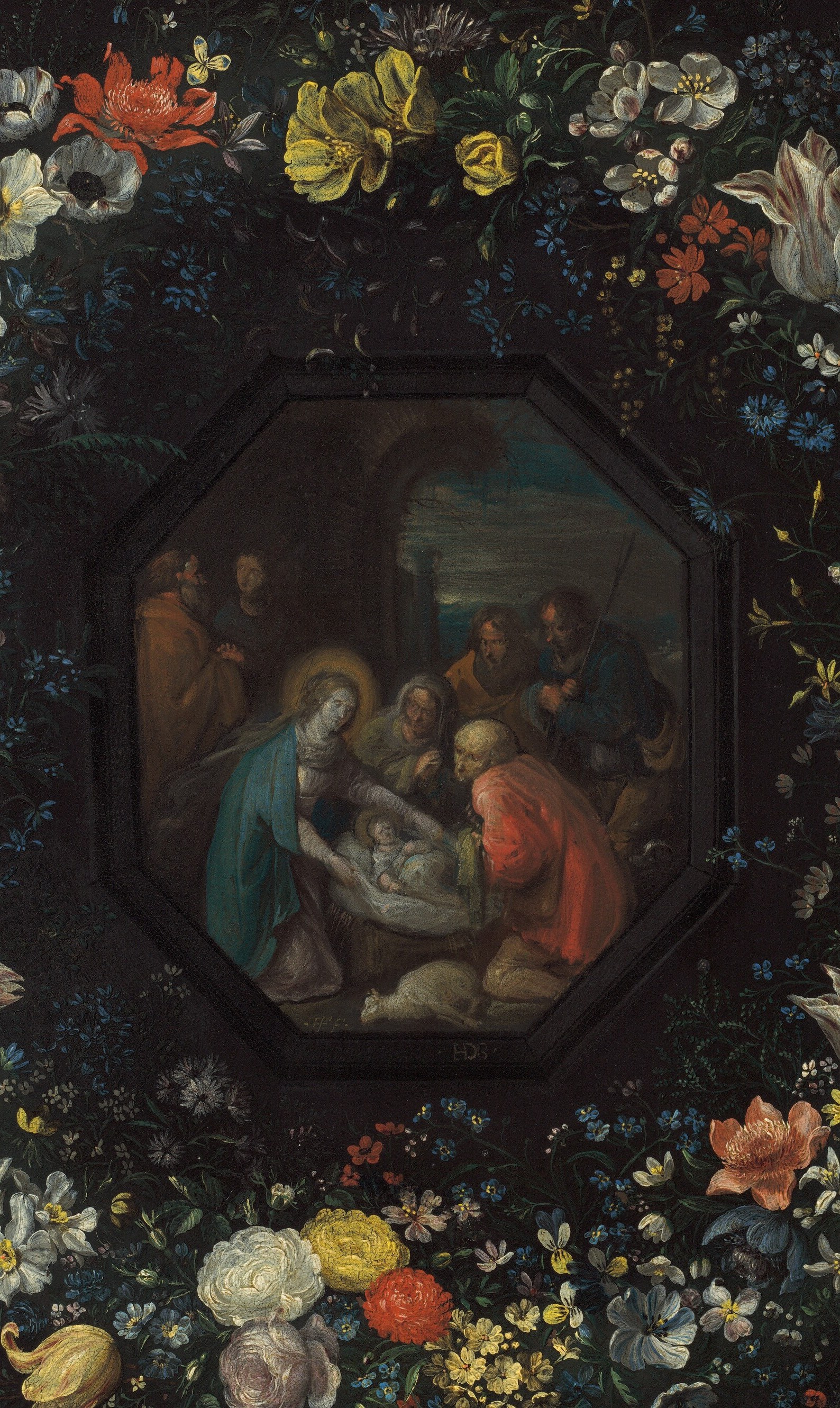
Garland of Flowers with Adoration of the Shepherds, painted by Frans Francken the Younger around 1628, is a luxury object that doubles as a devotional tool. It is painted in oil on a sheet of copper, a support that lets every petal, highlight, and shadow hold a hard, almost enameled clarity. The format is a garland painting: a sacred scene surrounded by a dense, circular floral wreath. What makes this one a quiet scandal is its inversion of importance, the holy narrative is literally boxed inside a frame of worldly display.
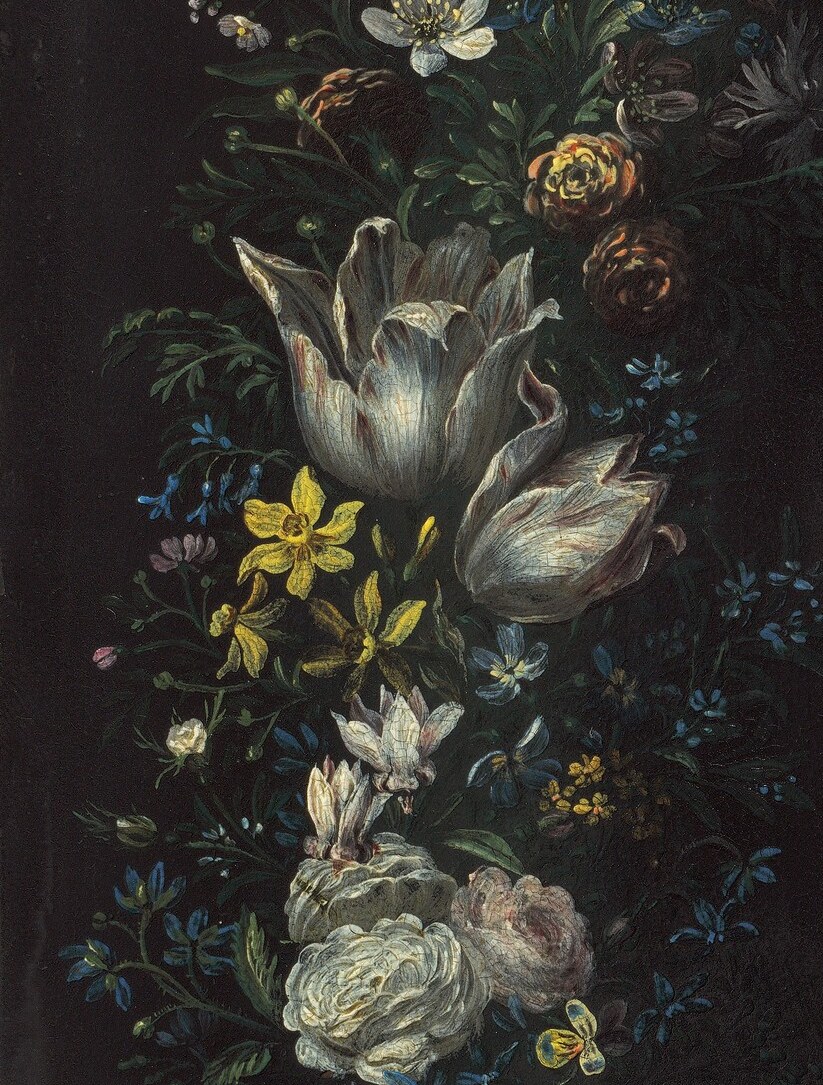
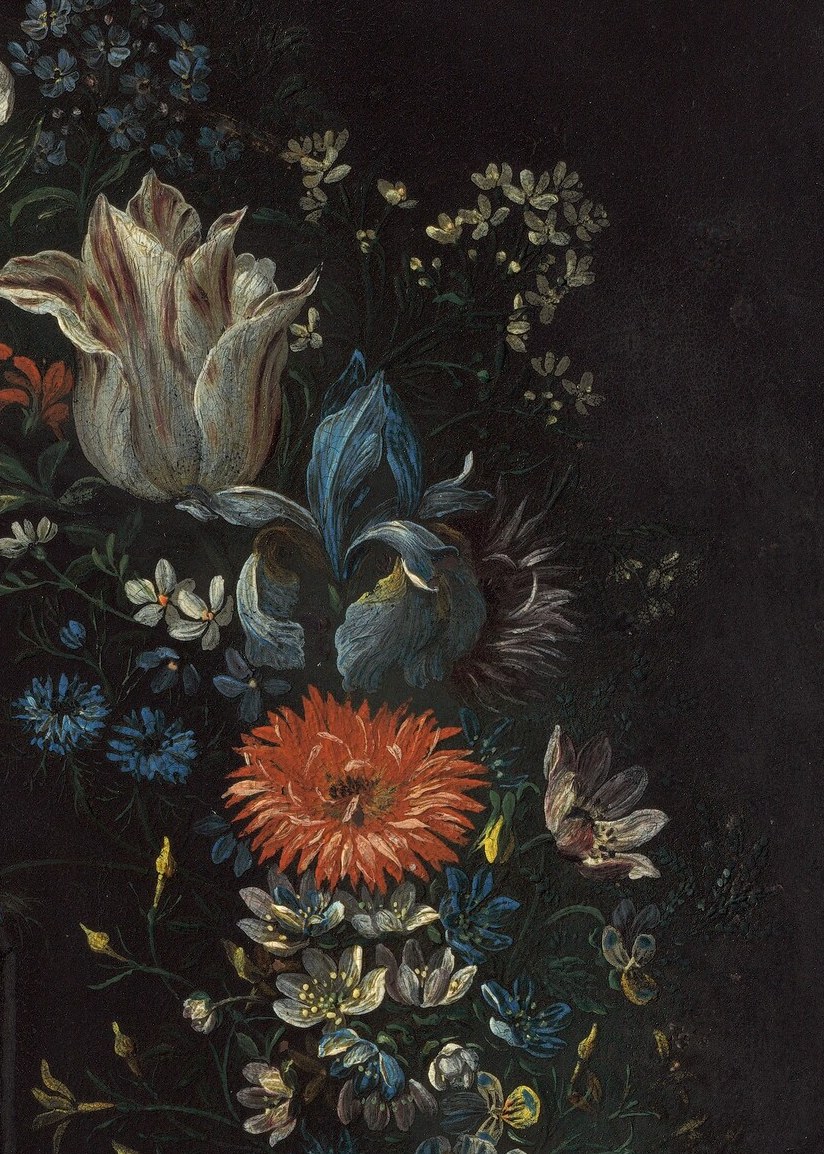
Look first at the bottom edge of the wreath: orange and yellow blossoms cluster like a lit fuse, pulling your eye upward. Mid-left, a single white lily announces the Virgin's purity in the language of Annunciation iconography. At the upper right, red-and-yellow striped tulips are expensive guests, rare collector's specimens, included as a patron's status signal on the eve of the Dutch Tulipomania. The wreath itself is a botanical impossibility, mixing spring lilies, summer roses, and autumn poppies into a garden that exists only in paint.
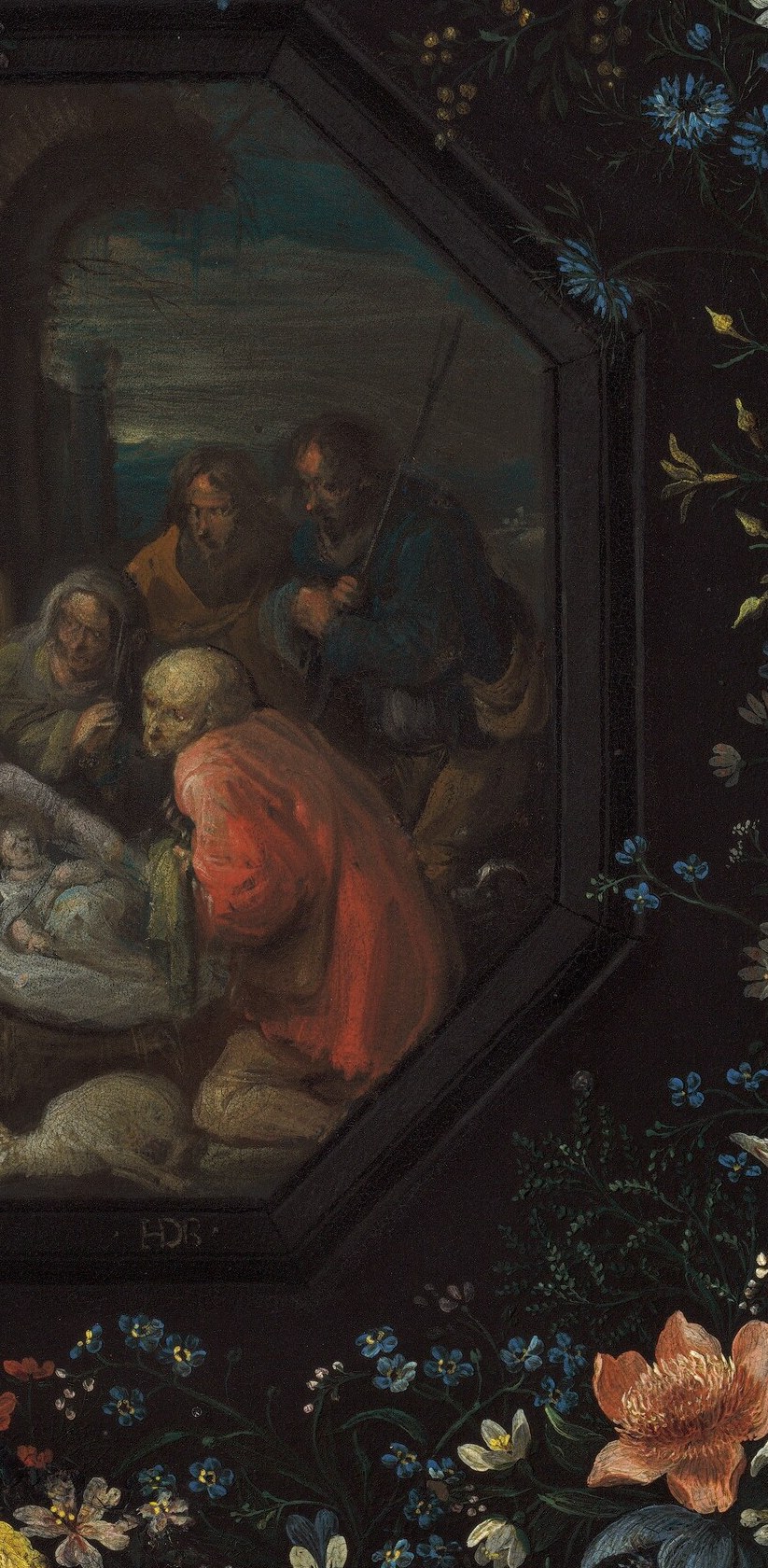
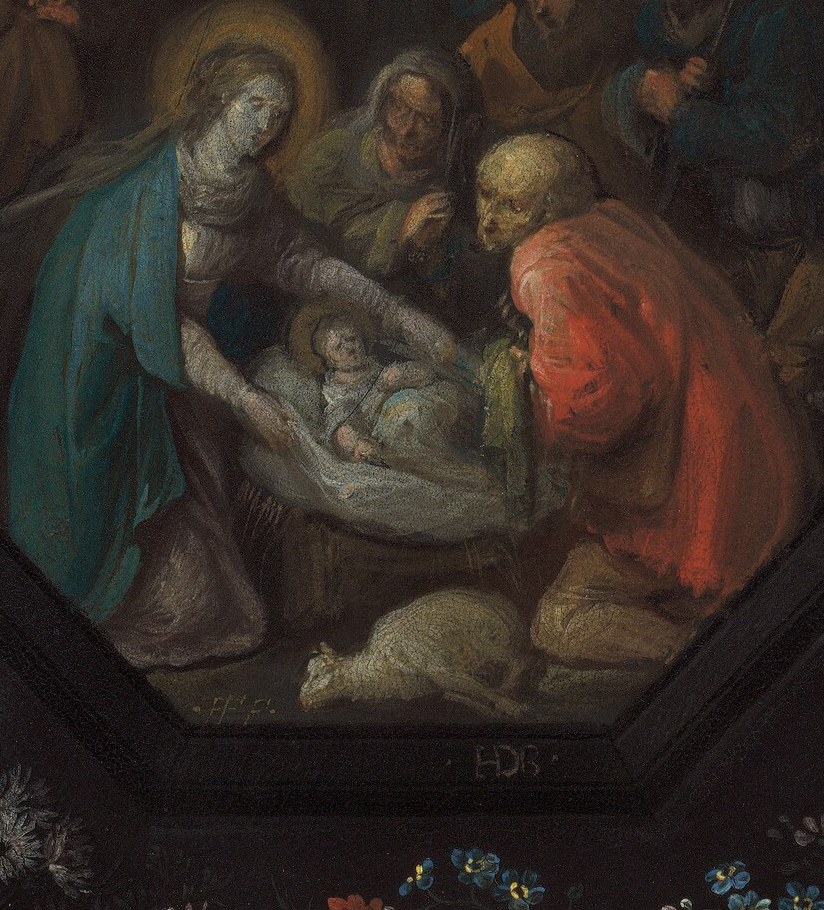
The center tondo is a nocturne. Inside a dark stable, shepherds kneel toward a single point of light: the Christ Child, who glows from within as his own illumination. That is a theological claim made visual, divinity needs no other light source. And tucked among the right arc of the wreath, orange poppies carry a secondary meaning: sleep and death. A whispered memento mori, placed right beside a birth.
Frans Francken the Younger came from a dynasty of Antwerp painters and usually supplied the figures in collaborations with flower specialists. This format drew criticism from some Counter-Reformation rigorists, who saw the lavish garland as distracting ornament that threatened to overwhelm the sacred subject it supposedly served. The painting survives now as a record of that exact tension, between the devotional and the dazzling, which was a live argument in the 1620s.
Details
Transcript
Flowers this lush don't belong in a stable. Tulips, lilies, roses, a garden built out of season. The wreath frames a small, dark painting inside the painting. It shows shepherds kneeling before a newborn child. The only light in the stable comes from the infant himself. This was painted in Antwerp around 1628, on a sheet of copper. The copper made every petal and glow jewel-hard and permanent. Piety and luxury, bolted together. Not everyone approved.