Portinari Triptych by Hugo Van der Goes
The Portinari Triptych, by Hugo van der Goes, c. 1475, is a monumental work housed in the Uffizi Gallery, Florence. It's renowned for its detailed iconography and introduction of Northern European style to Italy.
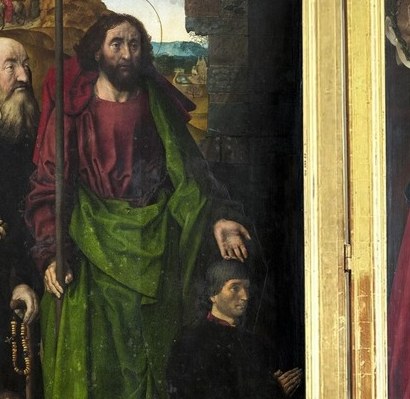
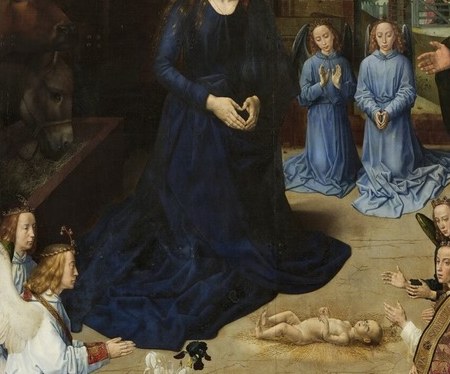
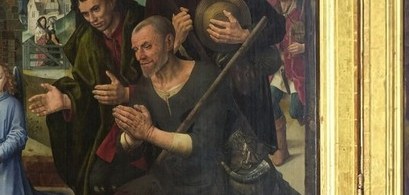
Look closely at the central figure in green, whose commanding gesture guides the scene. Beside him, Mary cradles the infant Jesus, a tender symbol of hope. Notice the shepherd kneeling in fervent prayer, and the figures in the background, representing a wider world's reaction. Even the small white dog is symbolic, representing fidelity.
Commissioned by Tommaso Portinari, an Italian banker in Bruges, this altarpiece traveled from Flanders to Florence. Its arrival significantly influenced Italian Renaissance painting, particularly in realism and color.
This painting is a deeply studied masterpiece, offering a rich visual narrative for those who examine it.
Details
Transcript
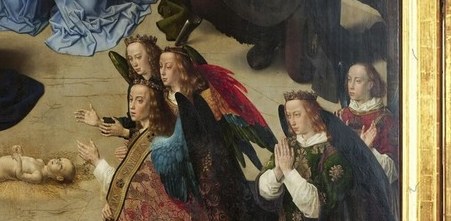
Tommaso Portinari commissioned this altarpiece in 1475. It traveled from Flanders to Italy, a significant introduction. The central figure gestures, a commanding, divine presence. Mary cradles the infant Jesus, symbolizing hope. A shepherd kneels in fervent, humble prayer. These figures represent the world's reaction to the Nativity. The dog here symbolizes fidelity and loyalty. Hugo van der Goes painted the scene with oil on wood.