Roundel with the Nativity by http://www.wikidata.org/.well-known/genid/21874918ac6744af0995e6bc8567cea4
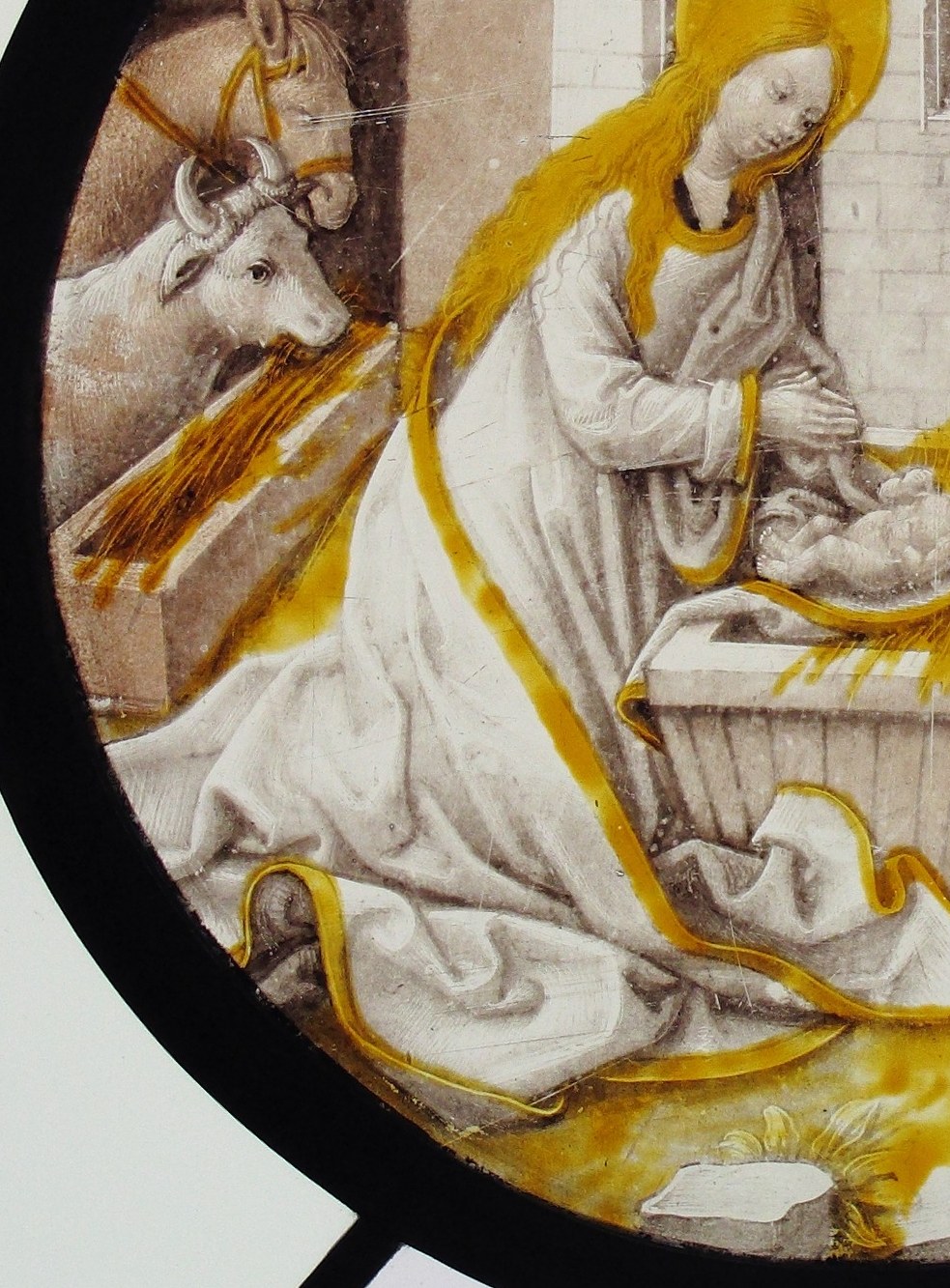
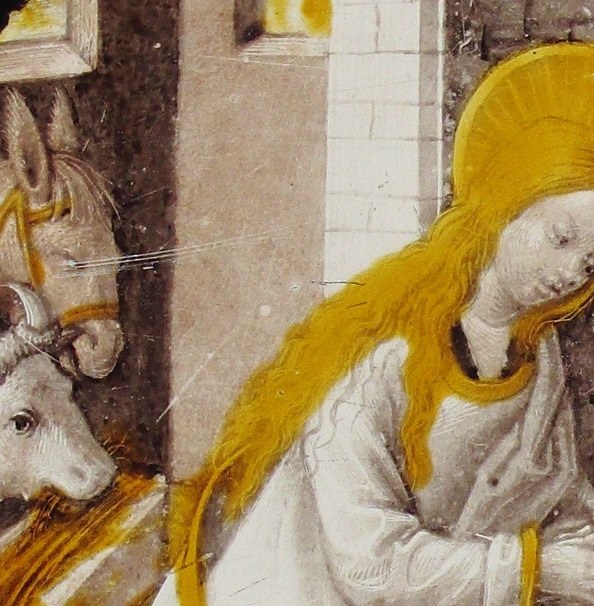
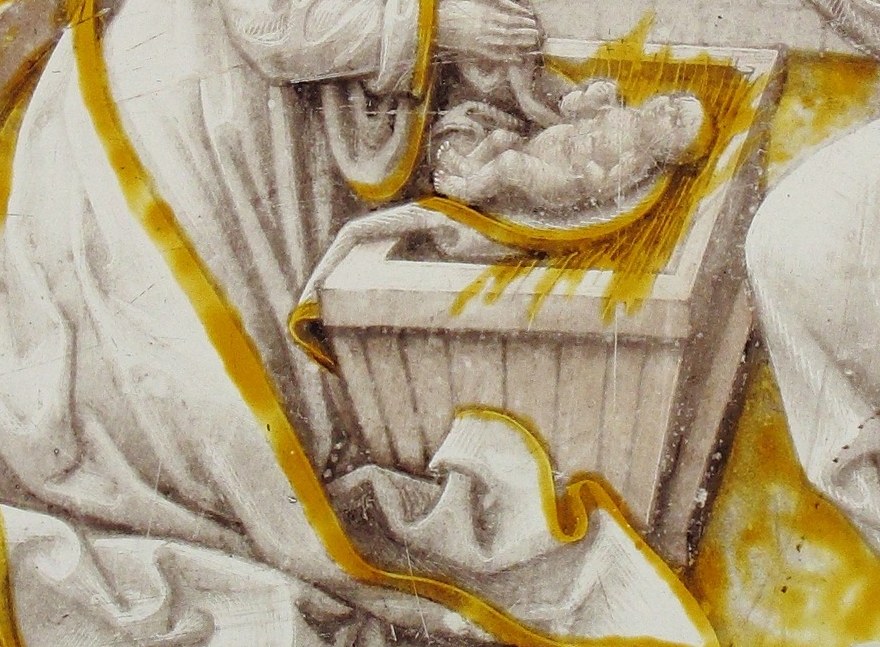
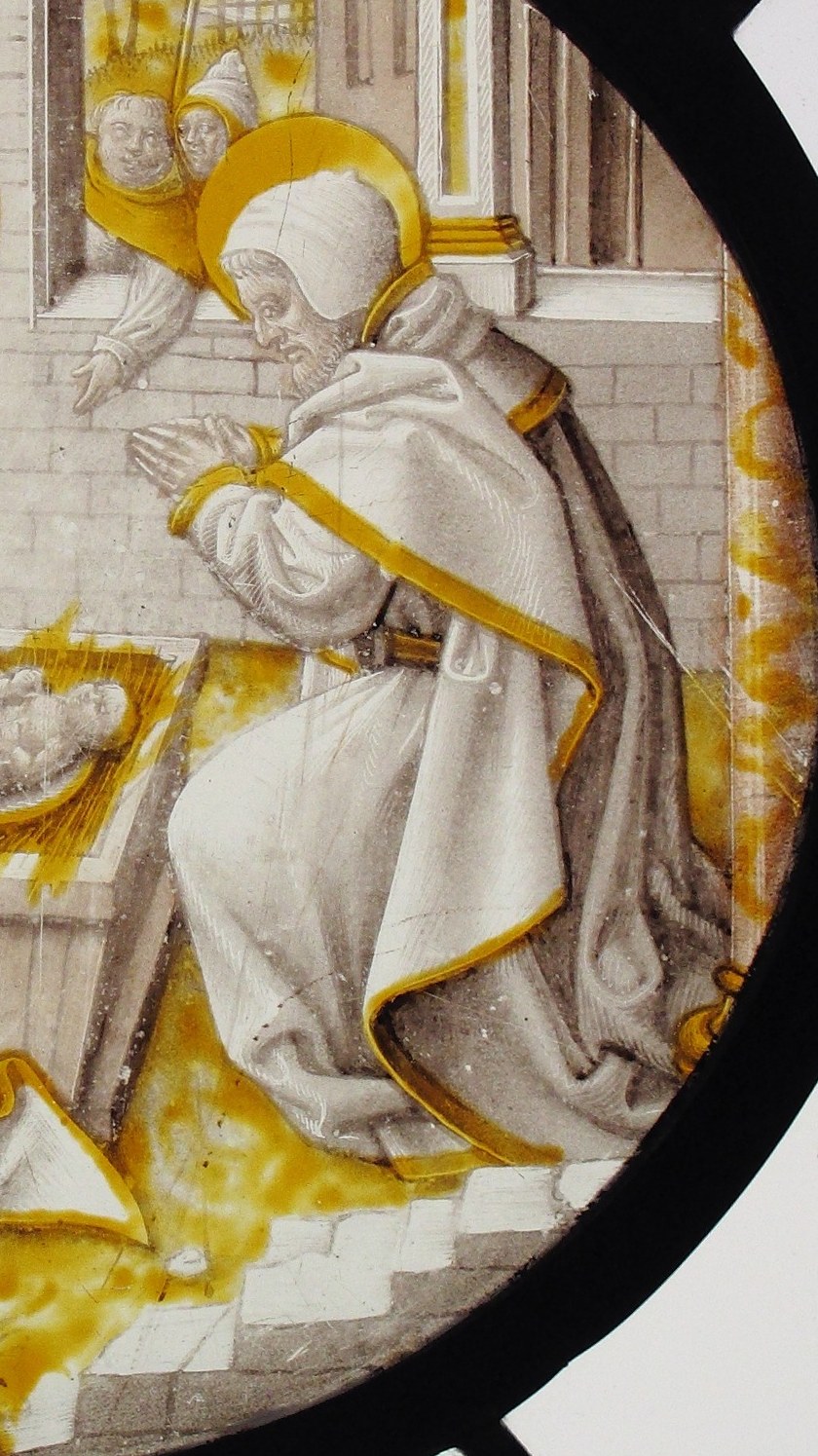
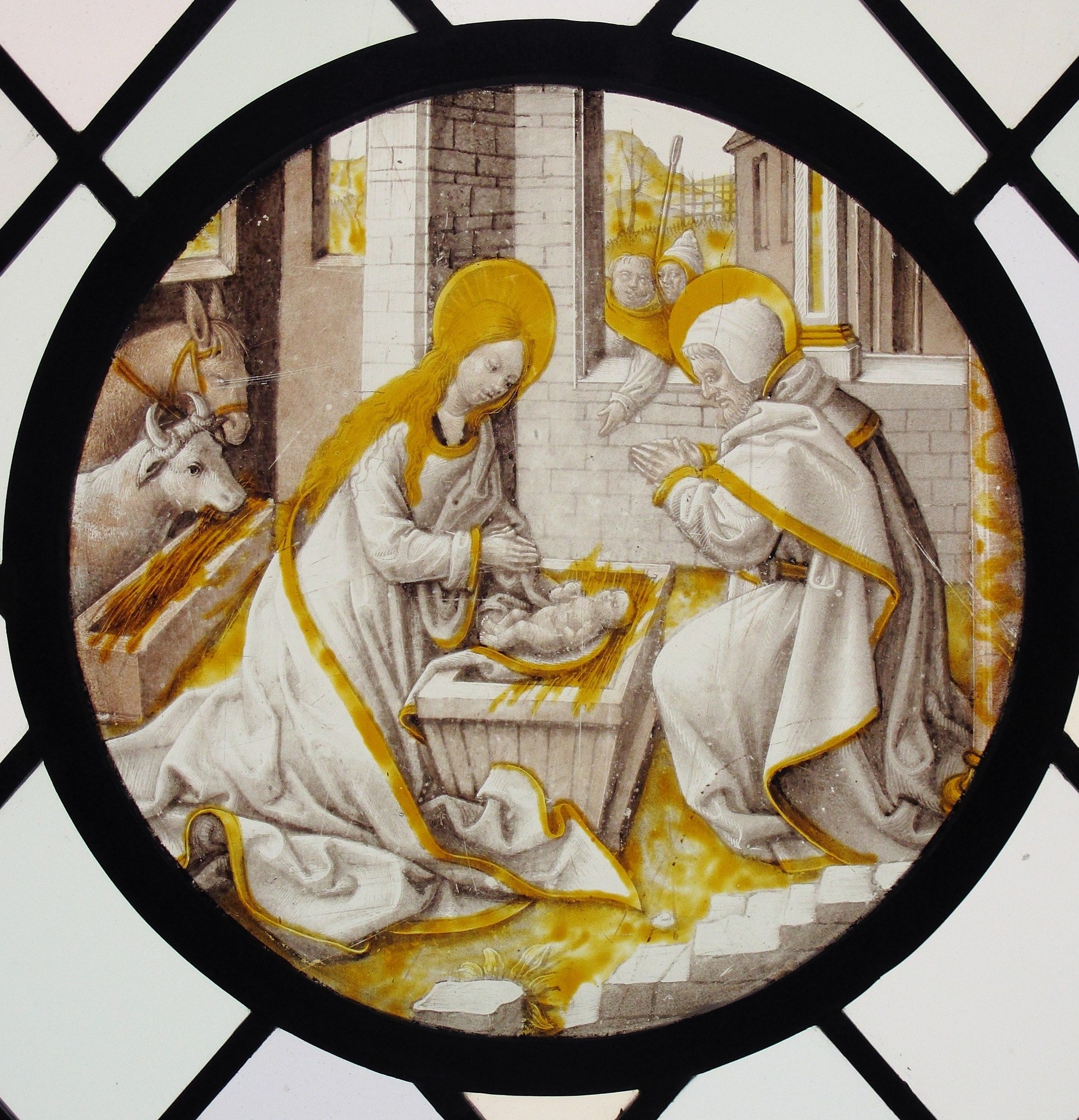
This is "Roundel with the Nativity," painted around 1515 by the workshop of Lucas van Leyden. It lives in the Metropolitan Museum of Art, and for centuries it was simply bricked into a wall.
Look at the center: Mary and Joseph bow toward the tiny swaddled infant. The artist modeled the white robes entirely in grisaille, a monochrome technique that shows off pure draftsmanship. The two golden halos bracket the scene like parentheses, drawing your eye through an arched opening between them and into a world beyond the stable.
The roundel was made for a window in a private home in the northern Netherlands. In 1523, Father Jan de Bakker, a Catholic priest who had begun questioning the use of religious images, came into possession of this glass. The iconoclast riots wouldn't officially start for another forty years, but the Reformation was already simmering. Church investigators charged him with idolatry for possessing it. He refused to recant.
De Bakker was convicted and burned at the stake in The Hague in 1525, the first Protestant martyr executed in the Netherlands. The window itself was simply boarded up and forgotten. When the roundel finally surfaced again centuries later, an ordinary Nativity had become a piece of evidence in one of the bloodiest theological arguments Europe ever waged.
Details
Transcript
It looks like a perfectly quiet Nativity. Painted on glass, in gold, white, and gray. A glass roundel was meant for a window, not a wall. In 1523, a Dutch priest bought this very image. Officials accused him of worshipping a graven image. He was convicted. They burned him at the stake. The glass survived. They boarded up the window.