Cornelis Calkoen on his Way to his Audience with Sultan Ahmed III by Jean Baptiste Vanmour
Jean Baptiste Vanmour, a Flemish-French painter, spent decades in Constantinople, meticulously documenting life during the Ottoman Empire's "Tulip Era." This painting, "Cornelis Calkoen on his Way to his Audience with Sultan Ahmed III," created around 1750, is a vivid record of diplomatic exchange.
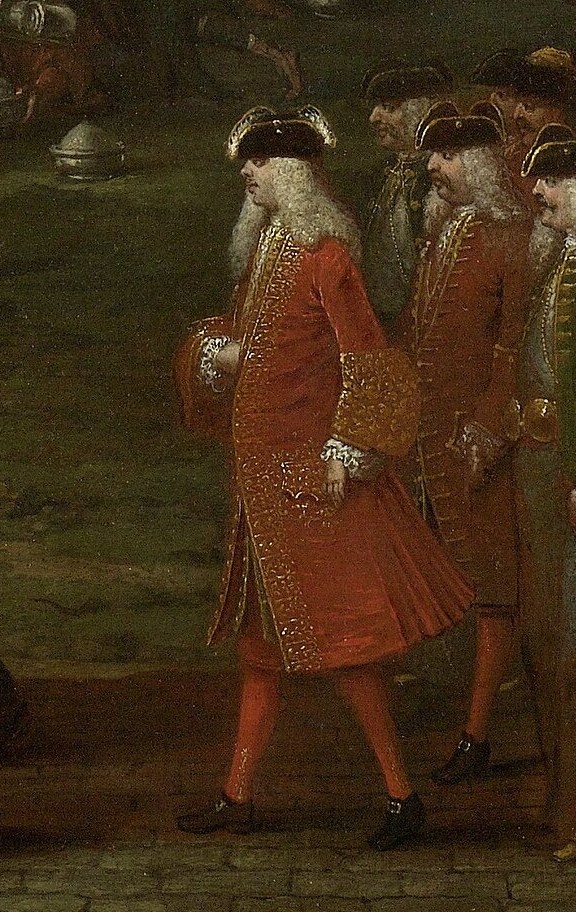
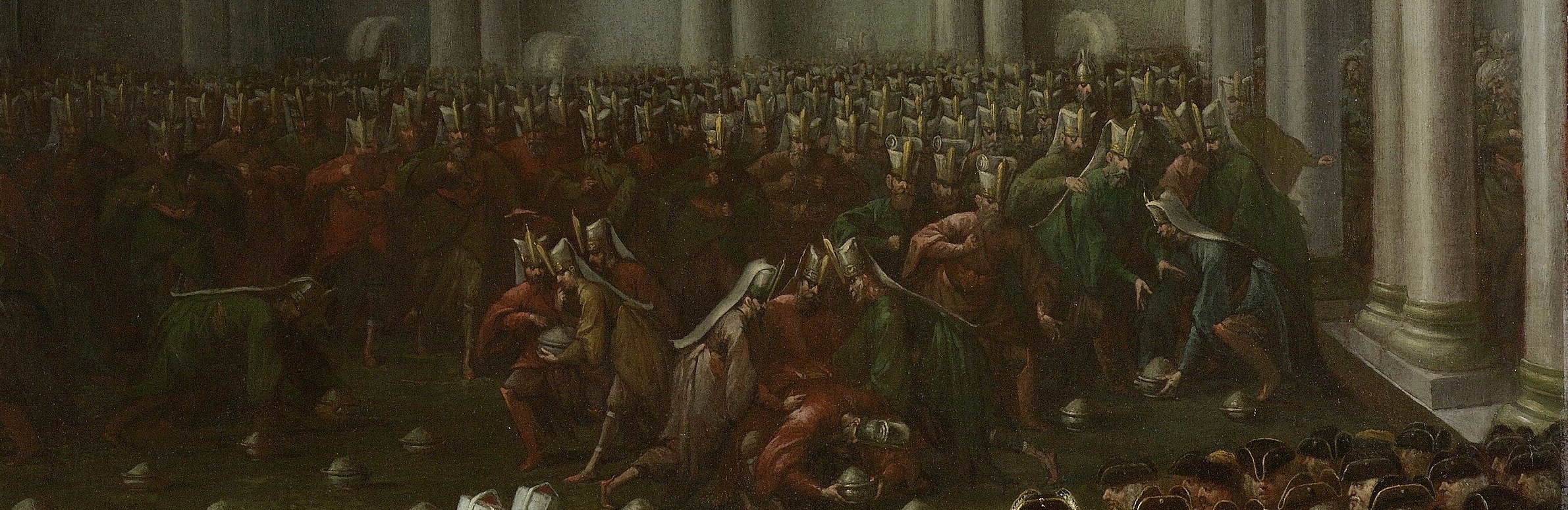
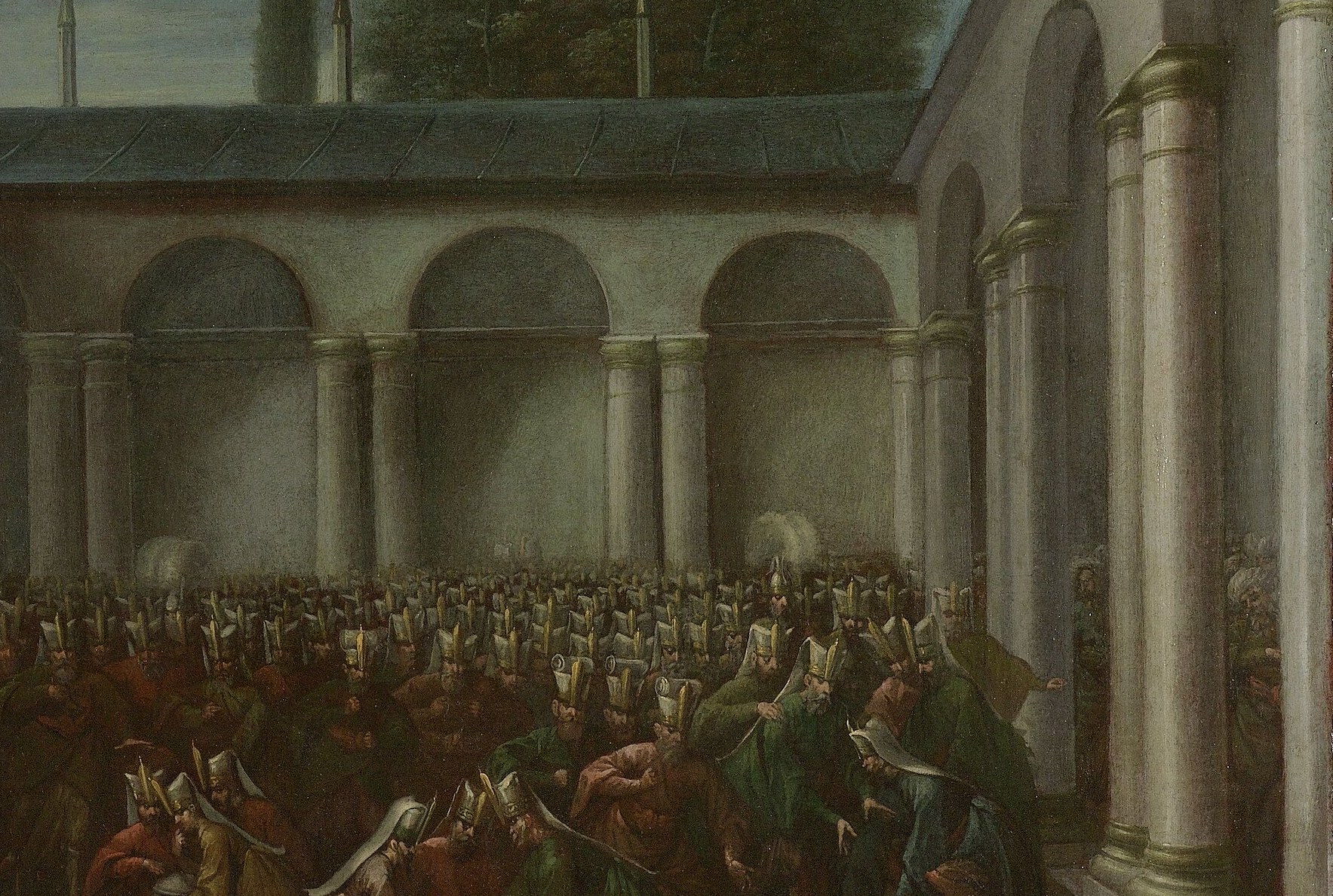
Notice Cornelis Calkoen, the Dutch envoy, in his striking red coat. He is flanked by attendants and rows of Ottoman soldiers, all depicted with Vanmour's characteristic detail and light palette.
The Tulip Era, under Sultan Ahmed III, was a period of cultural openness, where foreign interaction and artistic patronage were encouraged. Vanmour's works provide invaluable insight into the protocols, attire, and grand architectural settings of Ottoman-European relations.
This painting captures a fascinating moment in cross-cultural history, seen through the eyes of an artist who lived within it. What details catch your eye most?
Details
Transcript
This painter lived in Constantinople for decades. He documented life in the Ottoman Empire's 'Tulip Era'. Here, a Dutch envoy, Cornelis Calkoen, goes to meet the Sultan. Rows of Ottoman soldiers line his path, in red uniforms. The Sultan encouraged foreign interaction and artistic patronage. This artwork records early modern diplomatic exchange.