Hagar in the Wilderness by Jean Baptiste Camille Corot
View the artwork: Hagar in the Wilderness →
Camille Corot's Hagar in the Wilderness was bought by the Metropolitan Museum of Art in 1875 for what was then a record sum. It was one of the museum's earliest and most ambitious acquisitions from the European market, a neoclassical biblical scene meant to anchor a fledgling collection. But changing tastes turned it into a liability. As Impressionism and Corot's own later, looser landscapes rose in esteem, this rigorously structured early work came to look like an expensive misstep. Museum leadership quietly moved it into storage, where it sat for decades, nearly forgotten.
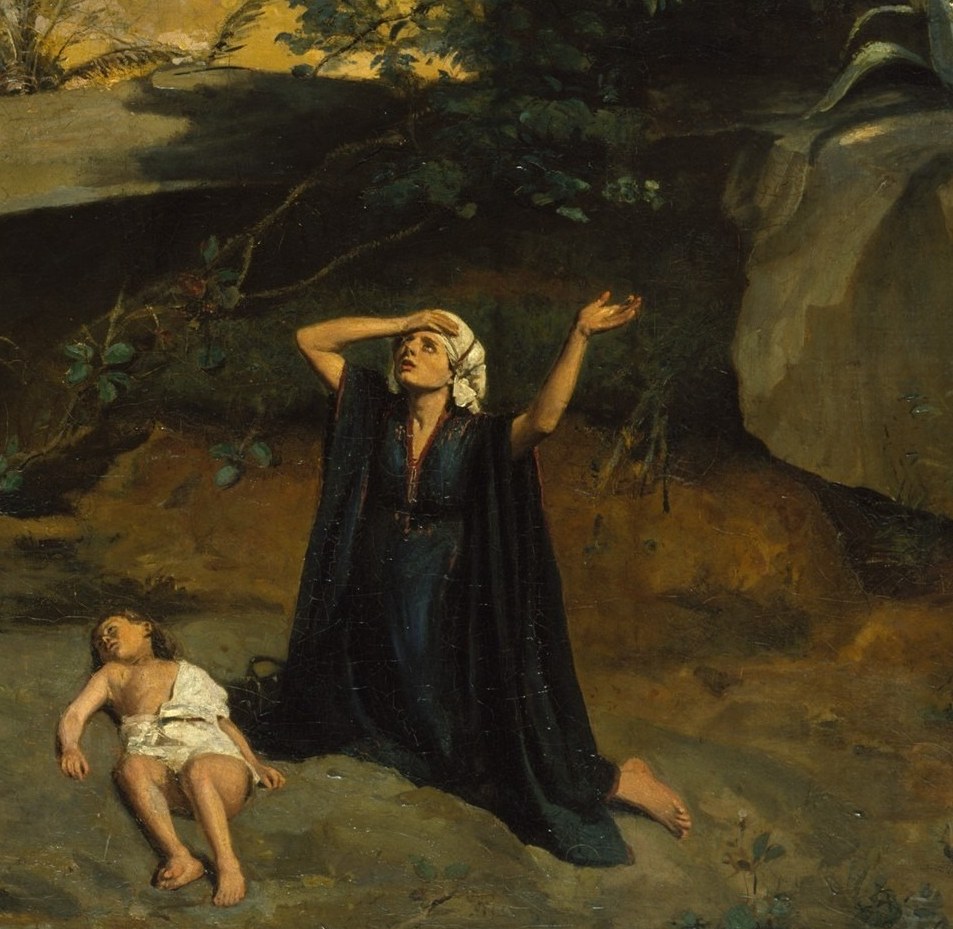
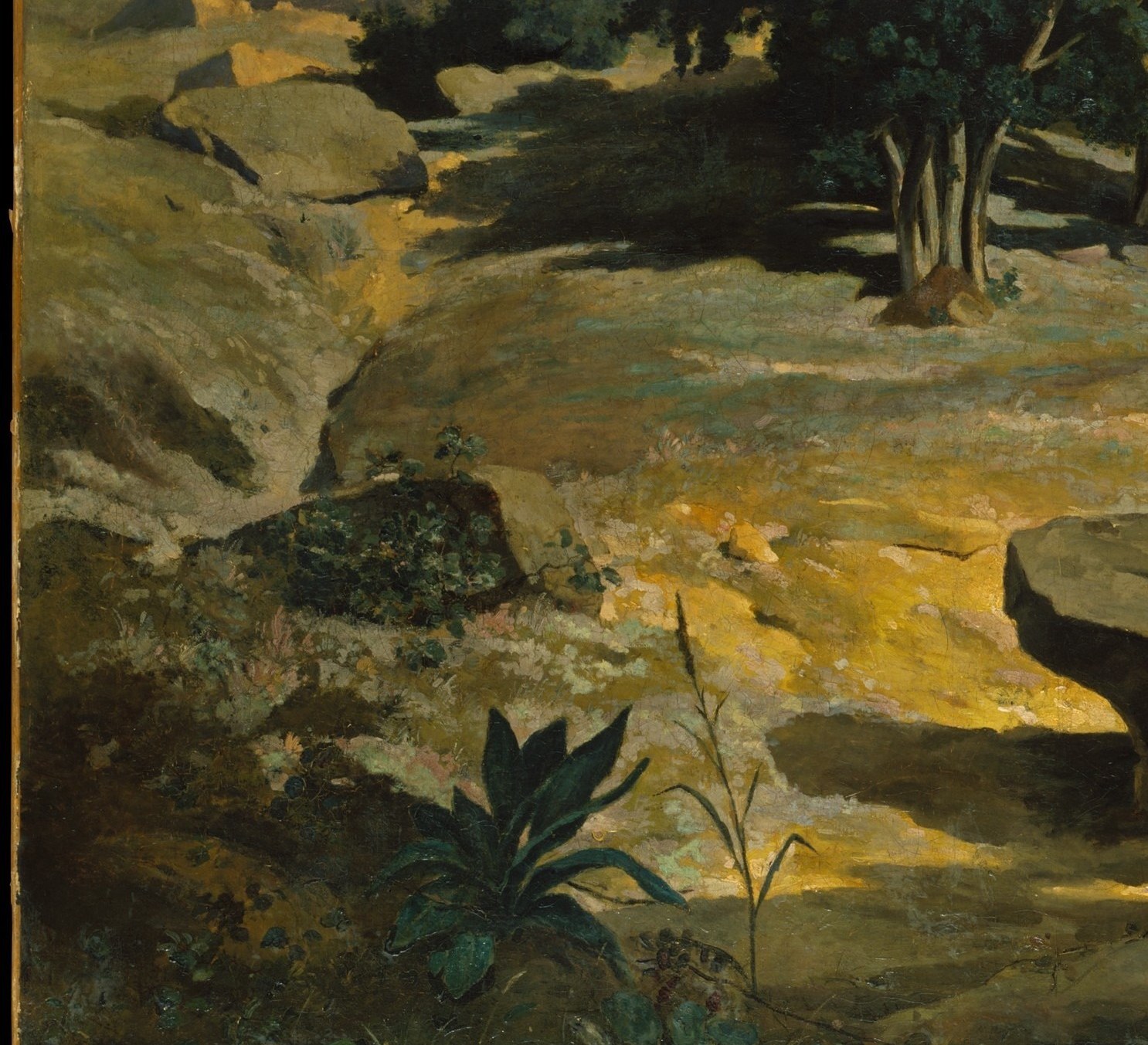
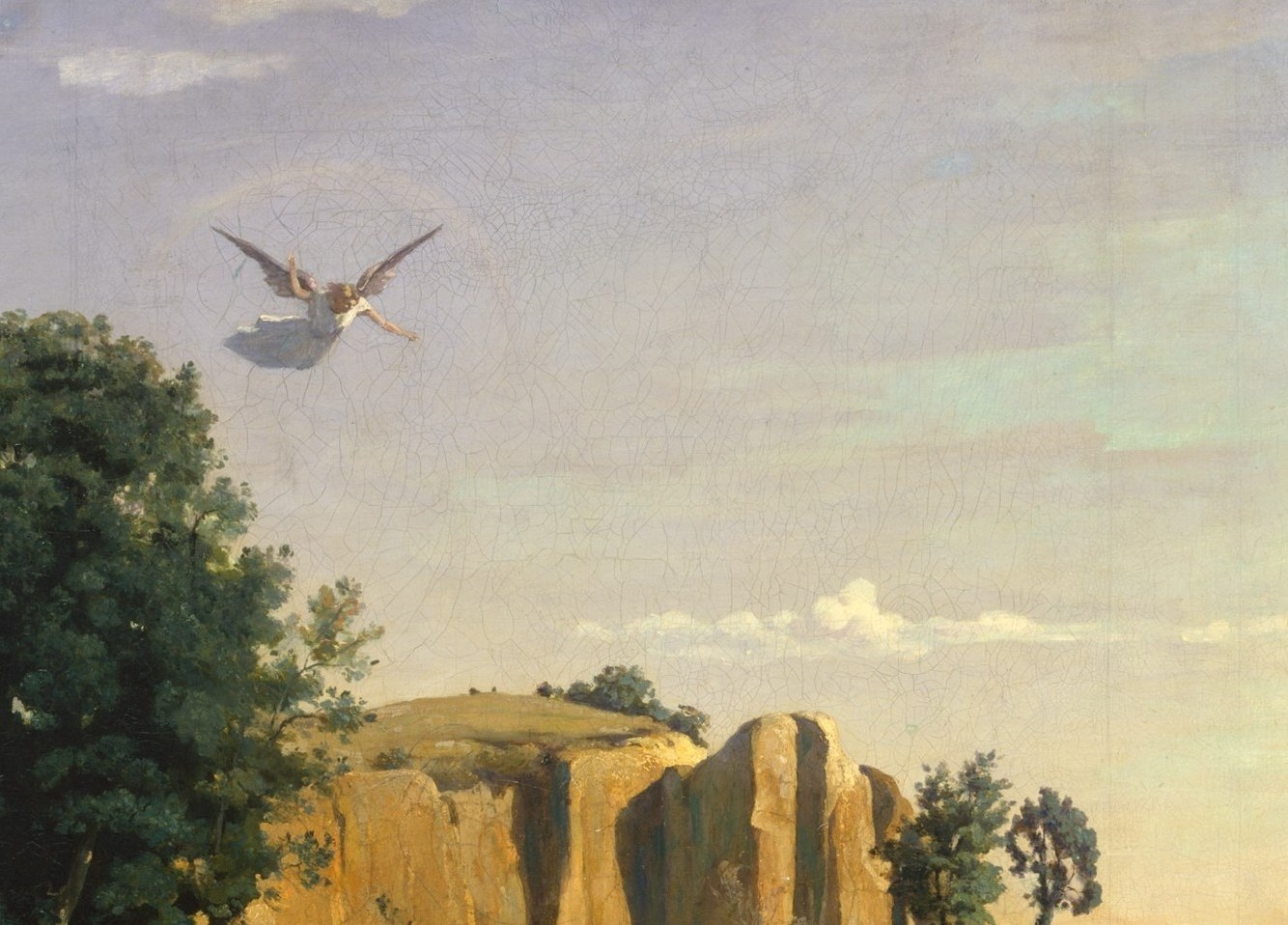
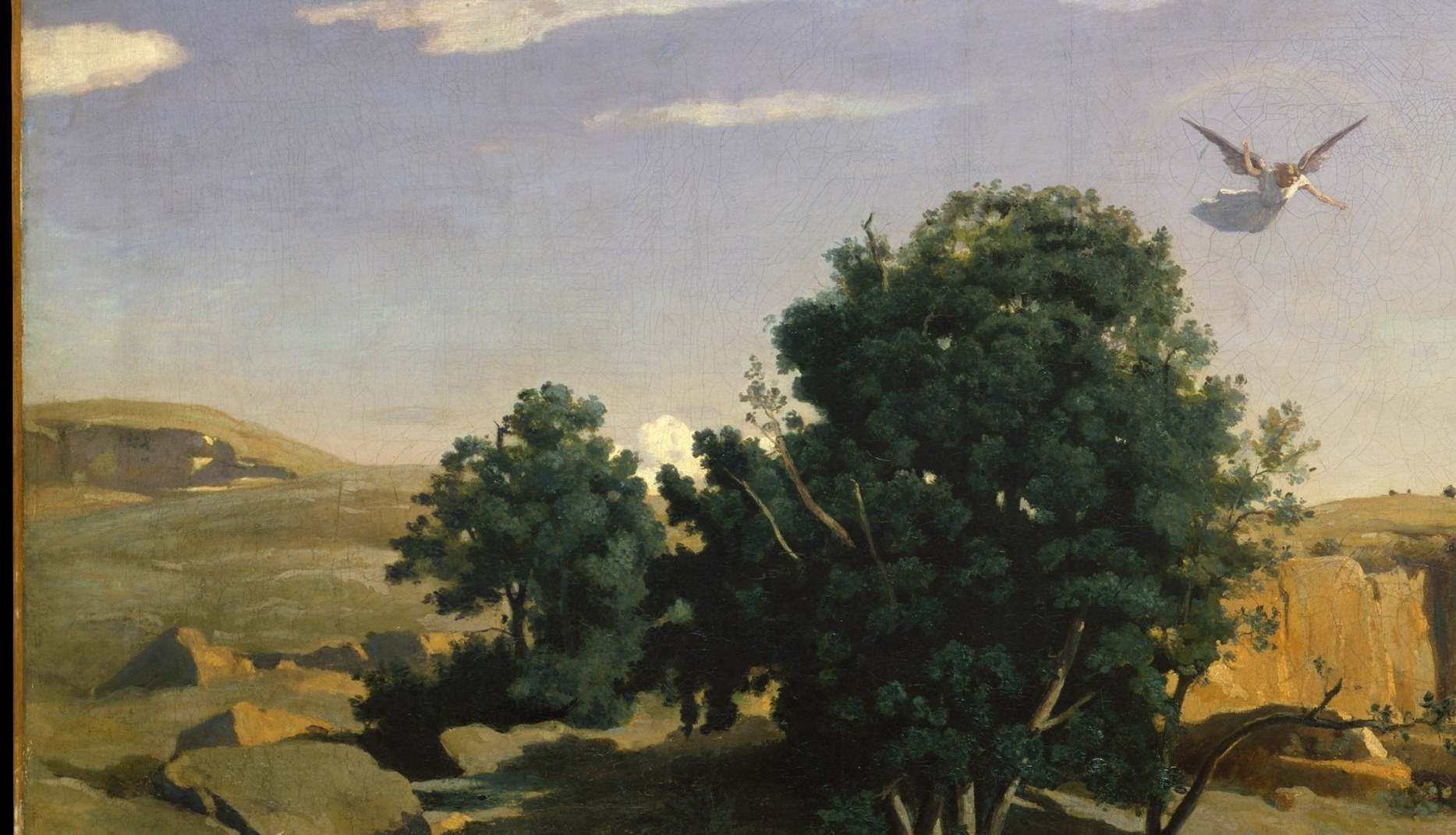
The painting depicts the Old Testament story of Hagar and Ishmael, abandoned in the desert. Look at the boy, Ishmael, lying on the ground beside his kneeling mother. His posture mirrors hers, both faces turned upward toward the pale sky. A winged figure, small enough to miss in reproduction, descends in the upper right, the angel sent to save them. Corot placed his figures in a vast, dry landscape of rocky plateaus, dark trees, and a luminous golden horizon, making the wilderness feel as much a presence as the people.
Corot painted this in 1835, still in his academic phase, heavily influenced by his training under Jean-Victor Bertin and his study of the Italian landscape tradition. The painting's ordered composition and muted, idealized forms belong firmly to the neoclassical world he was already beginning to leave behind. His later career would make him a pivotal bridge to the Barbizon School and Impressionism, which is precisely why this earlier, more formal work fell so far out of fashion after his death.
For most of the twentieth century, Hagar in the Wilderness was a ghost in the Met's own collection, invisible to the public. It has since been reinstalled and reconsidered, not as a mistake, but as a lucid, moving picture from the years before an artist became who we decided he was. Is there a painting you once skipped over that later stopped you cold?
#arthistory #corot #metmuseum
Details

Transcript
In 1875, the Met paid a record price for a painting. Then they locked it in storage. This is the painting. Hagar, cast into the desert with her son. The boy, Ishmael, collapsed beside her. The museum considered it an embarrassing mistake. It stayed hidden for over a hundred years. Today, it hangs in the galleries as a quiet masterwork.