Adoration of the Magi by Sandro Botticelli
Sandro Botticelli's "Adoration of the Magi," painted around 1475, is more than a biblical narrative; it's a subtle snapshot of powerful Florentine society. Commissioned for an altar chapel in Santa Maria Novella, this tempera painting skillfully blends sacred history with contemporary portraiture.
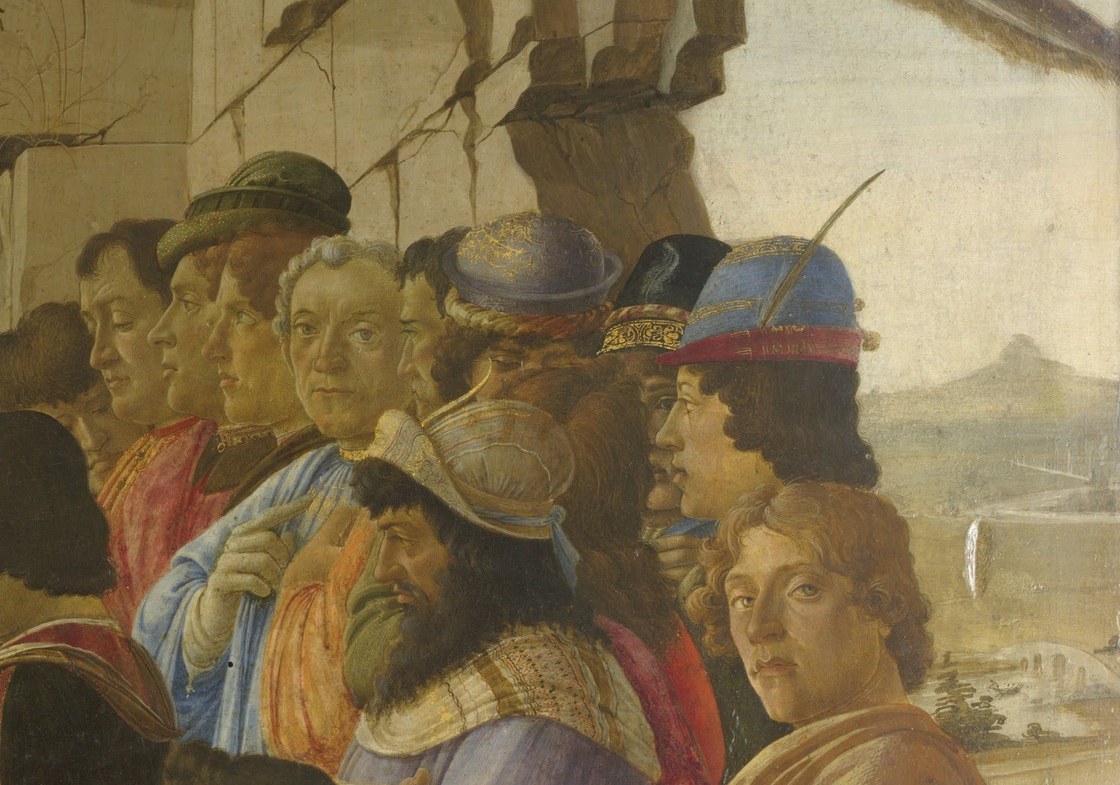
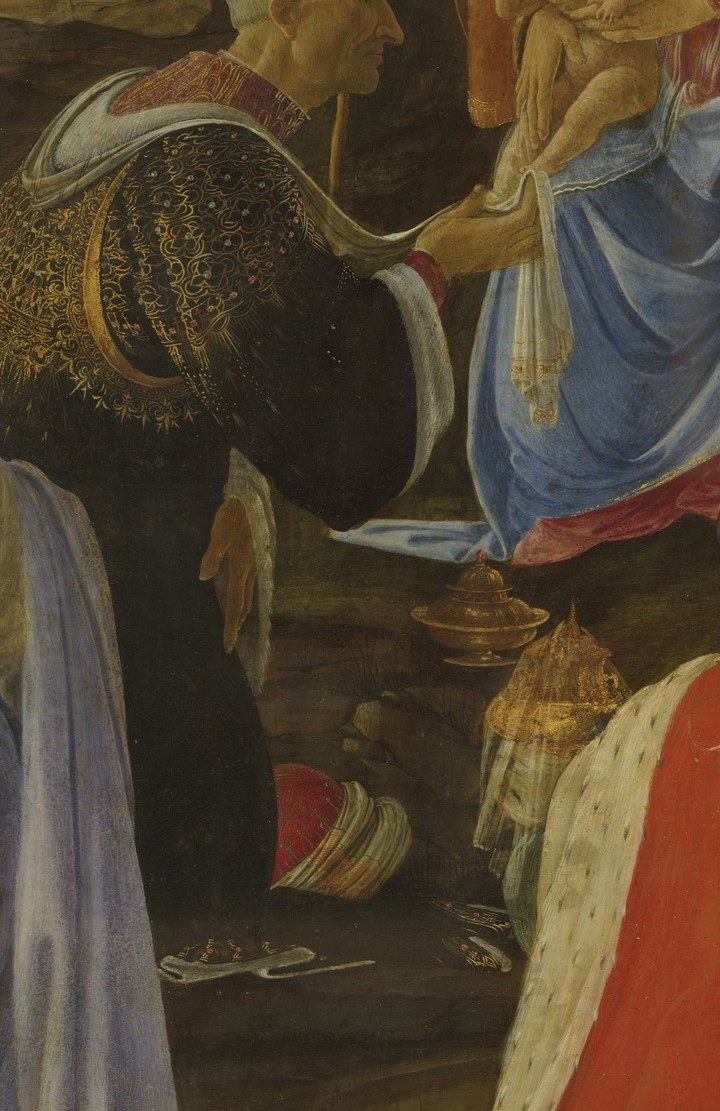
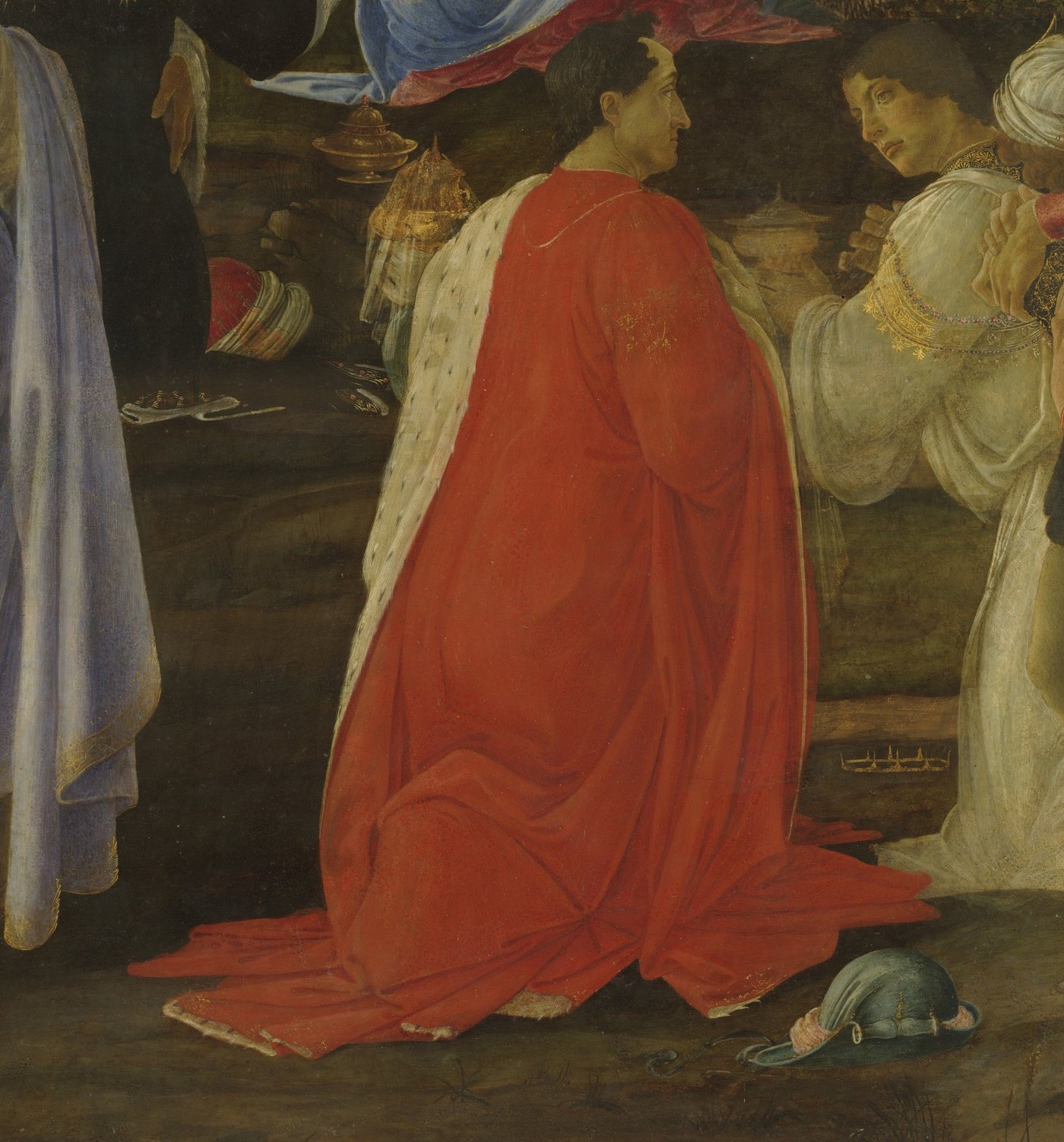
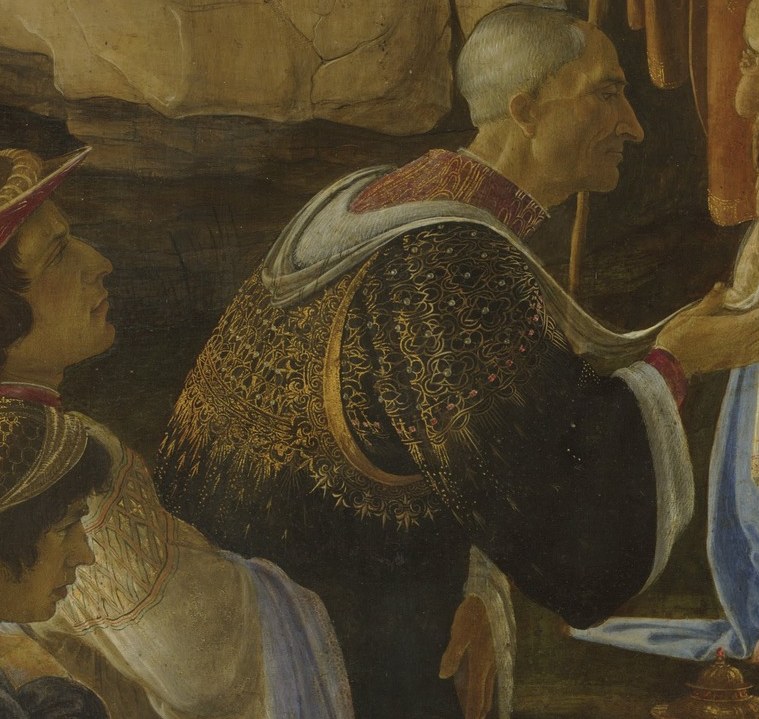
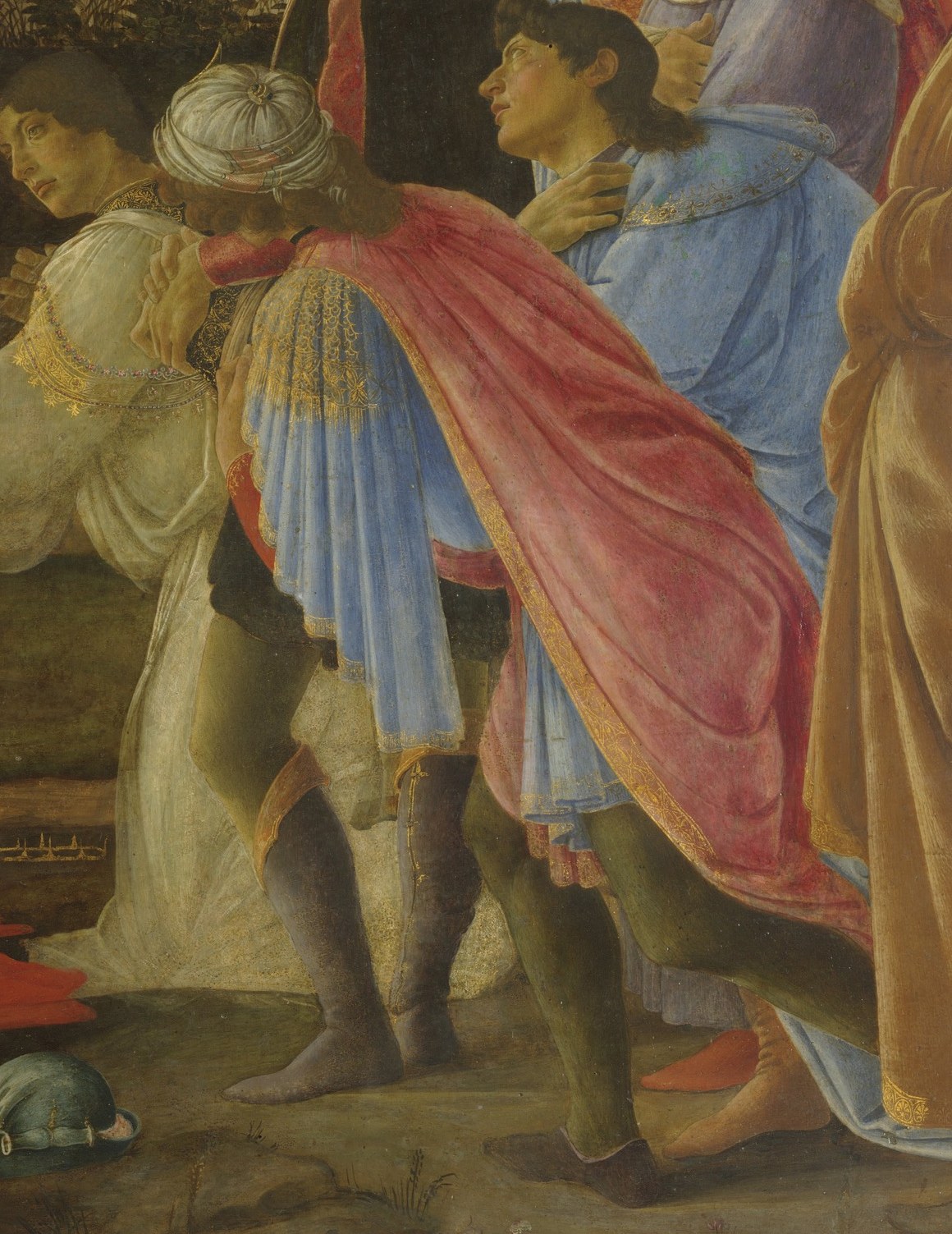
Look closely at the figures gathered around the Virgin Mary and Christ Child. The kneeling king is believed to be Giuliano de' Medici, and the prominent figure in red may be the patron, Gaspare di Zanobi del Lama. Other faces are recognizable portraits of notable scholars and citizens of Florence from Botticelli's era.
This practice was common among wealthy Renaissance patrons, who would subtly incorporate themselves or their associates into religious artworks. It allowed them to display their piety, wealth, and connections to influential figures within a revered context, making the sacred personal.
Botticelli's meticulous detail and luminous colors bring both the spiritual and the societal to life, creating a timeless piece that continues to reveal its secrets. What other familiar faces might be hidden in Renaissance art?
Details
Transcript
This isn't just an ancient story. It's a who's who of Florence, 1475. The kneeling king is thought to be Giuliano de' Medici. This man in red is likely the painting's patron, Gaspare del Lama. Other figures represent scholars and important Florentines of the day. Botticelli painted his contemporaries into this sacred scene. This was a common, powerful move for wealthy Renaissance patrons.