The Mill of Montmartre by Georges Michel
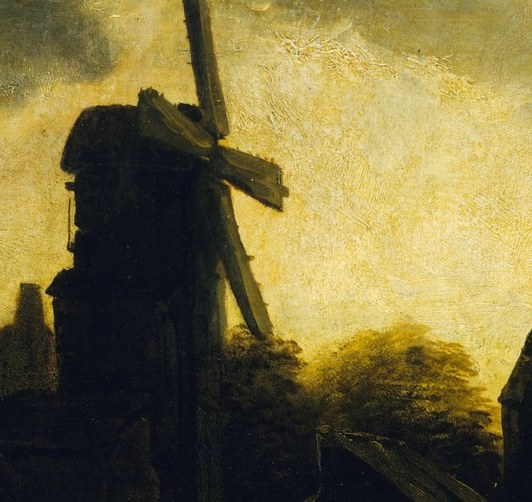
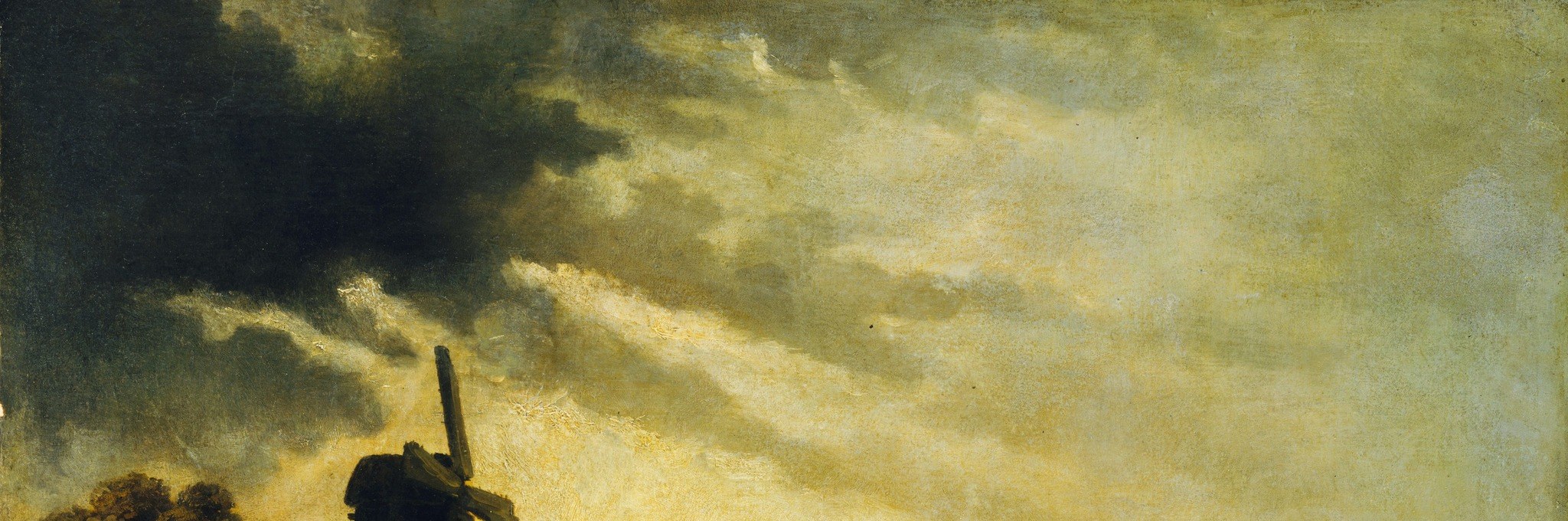
Georges Michel's 1820 oil painting, "The Mill of Montmartre," at The Metropolitan Museum of Art, is an early example of a new direction in landscape art. Michel's work is considered a precursor to the Barbizon School, which valued depicting natural scenes and rural life over idealized classical views.
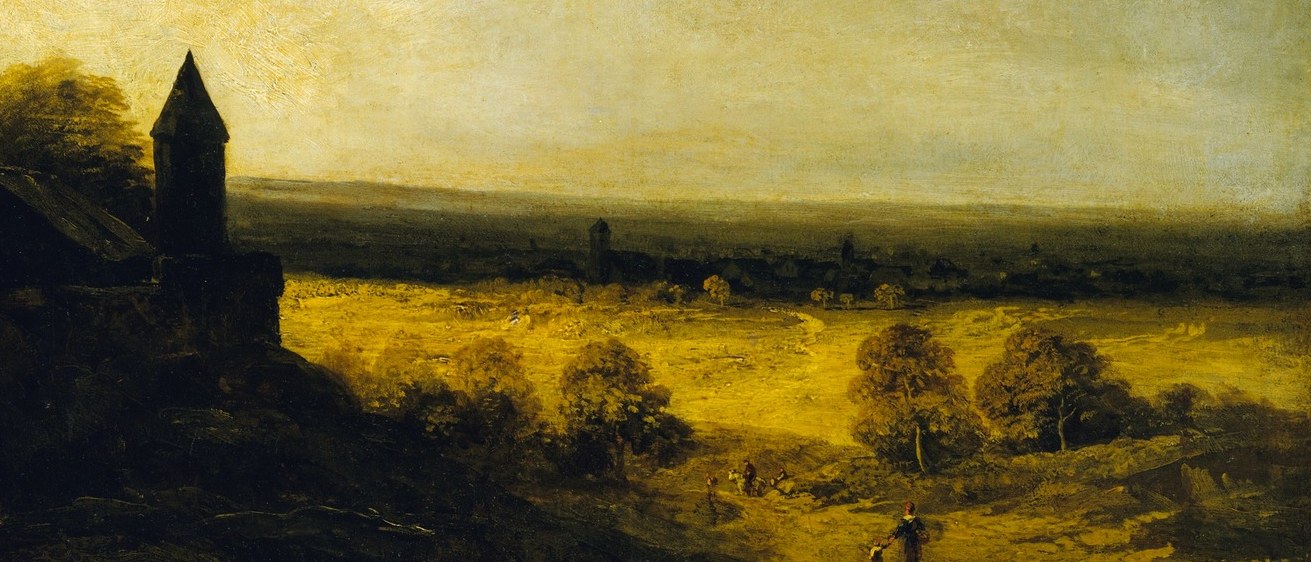
While the dramatic windmill and turbulent sky immediately draw the eye, a closer look reveals a small, lone figure walking along a path far below. This subtle detail grounds the vast landscape, emphasizing the human element within nature.
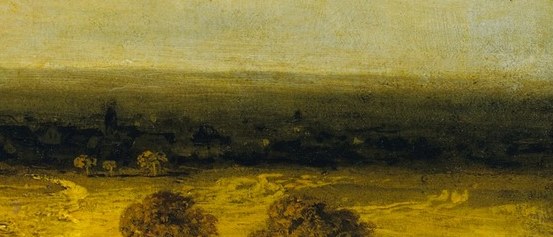
Michel's emphasis on direct observation helped shift the trajectory of landscape painting in France, moving towards a more realistic portrayal of the environment. His use of warm tones and deep shadows creates striking contrasts, highlighting elements like the mill and the small village in the distance.
What other small details do you notice that tell a larger story in this painting?
Details
Transcript
This dramatic landscape captures a moment in rural France. The painter, Georges Michel, anticipated the Barbizon School. His work championed natural scenes, not classical ideals. Most eyes land on the towering windmill against the stormy sky. But look closely, far below the mill. A lone figure walks a path, nearly lost in the vastness. This tiny detail captures the human scale of the landscape.