Sports on a Frozen River by Aert van der Neer
View the artwork: Sports on a Frozen River →
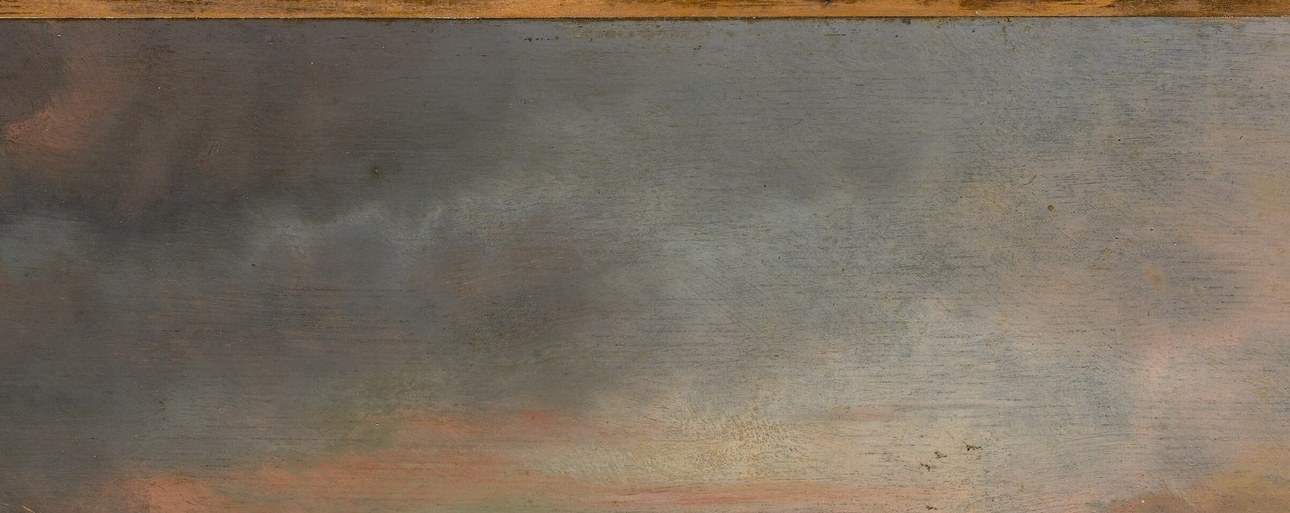
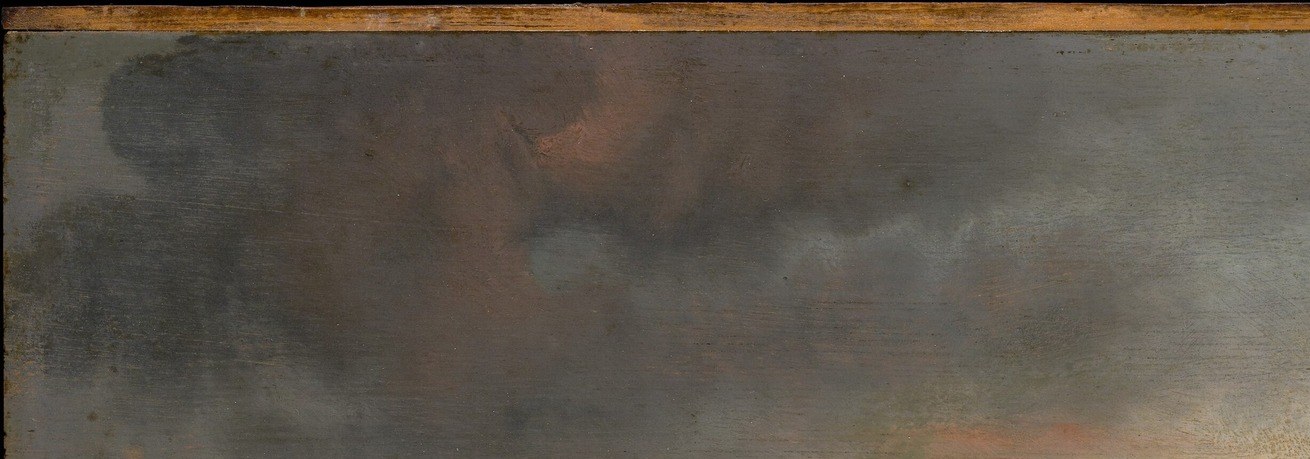
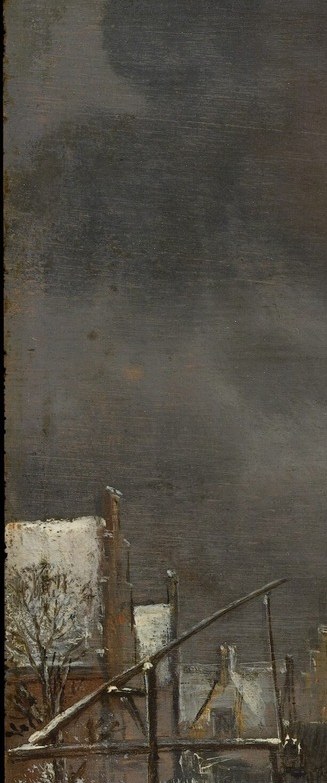
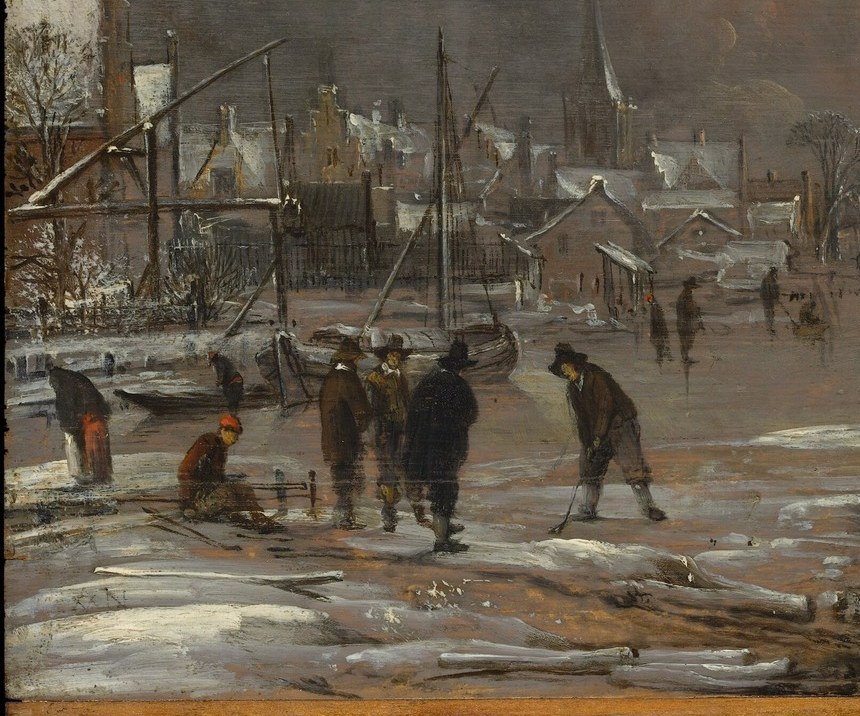
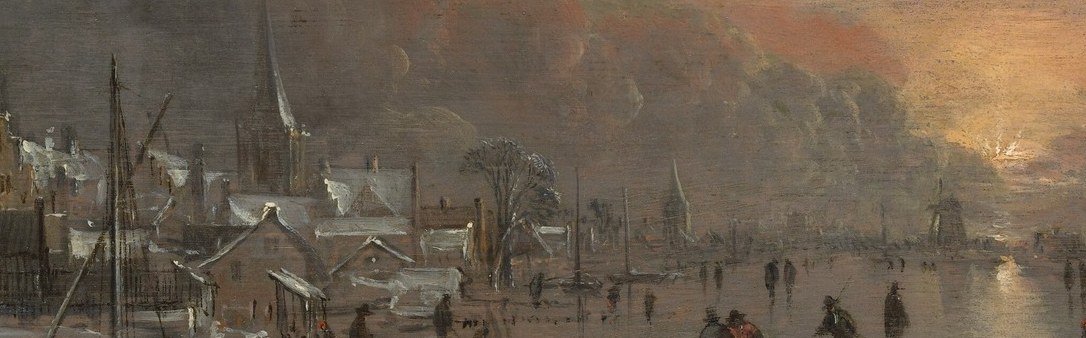
Aert van der Neer's "Sports on a Frozen River" (1660), now in the Metropolitan Museum of Art, captures a moment when the Dutch economy simply had to pause. The frozen waterway that halted the merchant ships also created a vast public square, and in van der Neer's hands it becomes a crisp, democratic portrait of leisure and light.
The first thing the eye catches is the fiery sunset breaking low on the horizon. Van der Neer built his reputation on moonlight scenes, so this dramatic winter sunset is his daytime special effect. Let your eye travel the ice itself, he applied tiny, controlled flicks of paint to make the frozen surface shimmer rather than sit flat. The figures emerge from the gloom as dark silhouettes, a frieze of motion that gives the painting its documentary sweep.
Van der Neer lived and died in comparative obscurity. A contemporary of Aelbert Cuyp, he ran an inn in Amsterdam to make ends meet, and his work sold for very little during his lifetime. After his death in 1677, his paintings were so undervalued that at one auction a work by him fetched just five guilders. The scene he painted here outlasted his own poverty by centuries.
A frozen river can grind a maritime empire to a halt. But it can also hand an entire town a day off. Van der Neer saw both things in the same frame and chose to paint the party.
#arthistory #dutchgoldenage #aertvanderneer
Details
Transcript
The Dutch Golden Age ran on water. When it froze solid, the ships stopped. And an entire town walked onto the ice. These men play kolf. Golf descends from it. Van der Neer worked the ice with tiny, precise flicks. Look at the lone walker. Scale. He was famous for moonlight. This is his other light. He died poor. A frozen river paid more than he did.