Artwork
Sports on a Frozen River
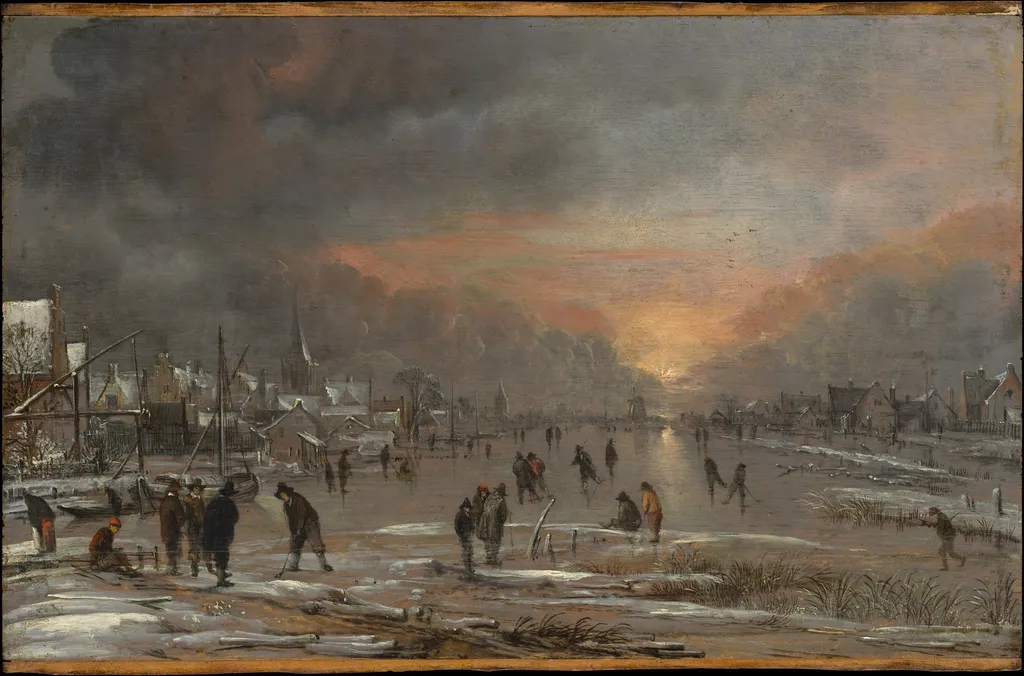
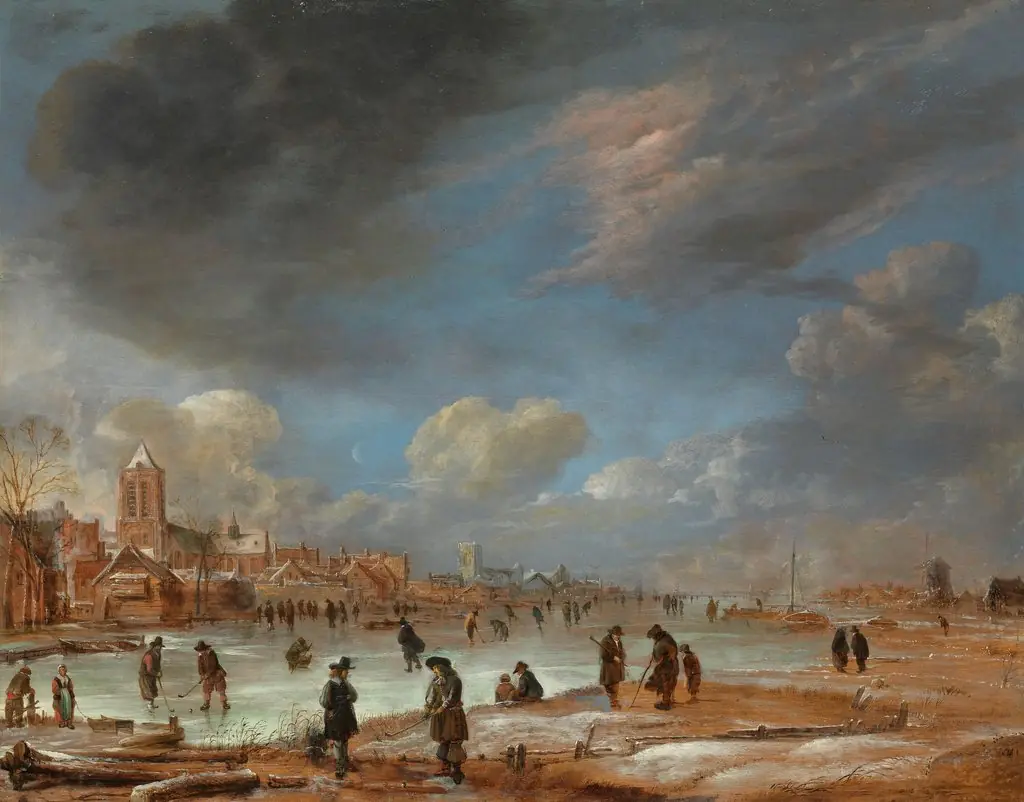
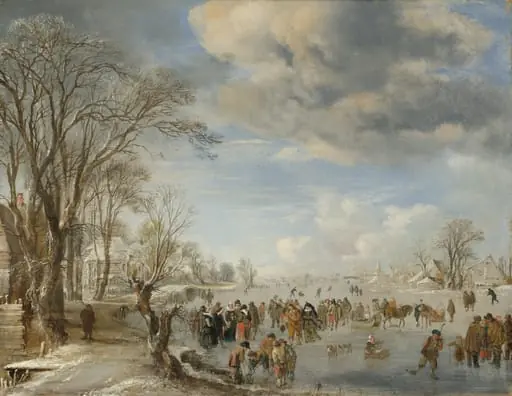
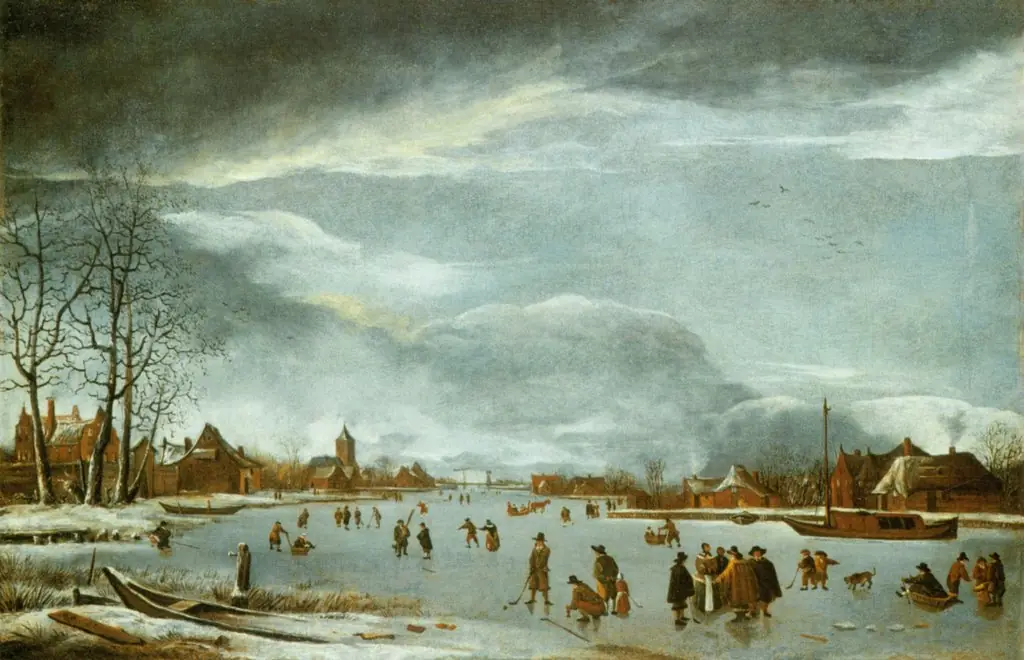
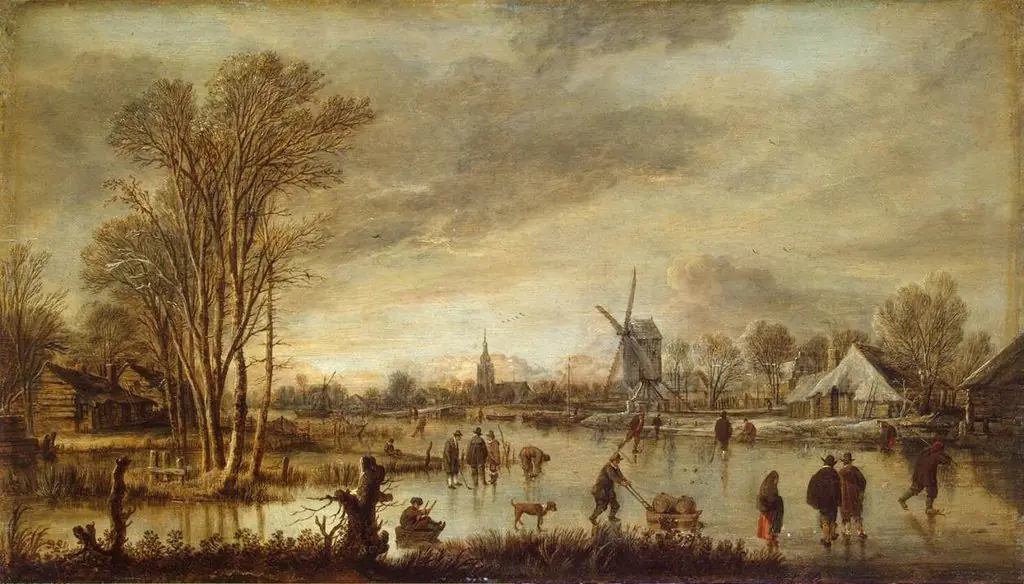
Sports on a Frozen River is an oil painting by the Dutch Golden Age artist Aert van der Neer. It dates from 1660 and is held in the collection of the Metropolitan Museum of Art.
About this work
Subject & Meaning
Figures populate the ice, engaged in activities such as skating and ball games, which transform the frozen surface into a communal stage for leisure.
The scene centers on a broad frozen river animated by winter pastimes that define the composition’s iconography. Figures populate the ice, engaged in activities such as skating and ball games, which transform the frozen surface into a communal stage for leisure. The low, slanting light of late afternoon or early evening bathes the gathering in a cool glow, emphasizing the season’s chill and the reflective quality of the ice.
These elements together evoke a sense of shared human experience within the natural world, where the river’s stillness underfoot becomes a platform for social connection. The work thus represents the intersection of seasonal rhythm and communal life in seventeenth-century Dutch culture.
Technique & Style
The work is an oil painting executed on a wooden panel, measuring approximately 23 cm in height by 35 cm in width and dated to 1660. It belongs to the landscape genre and was created by Aert van der Neer, whose practice typically employed oil binders on panel supports. The composition depicts a frozen river scene with figures engaged in ice skating and ice hockey, rendered under an evening sky, characteristic of Dutch winter scenes of the period. The painting is part of the Metropolitan Museum of Art collection, having been acquired by Michael Friedsam.
History & Provenance
Sports on a Frozen River is an oil-on-panel landscape painted by Aert van der Neer in 1660 (date, dimensions 23 × 35 cm). The work remained in the collection of Michael Friedsam before entering the Metropolitan Museum of Art, where it is presently housed (provenance). No documentation of a commission for the painting is known (commission).
Its creation history is documented through contemporary records of the artist’s output in 1660, and the painting is classified as a winter genre scene depicting ice skating and ice hockey (creation history, dating).
Sports on a Frozen River is an oil on panel painting by Aert van der Neer, dated 1660, currently housed in the Metropolitan Museum of Art in New York. The work entered the museum as part of the Michael Friedsam bequest and is catalogued within the museum's inventory of European paintings. Its subject matter - winter scenery with ice skating and ice hockey - aligns with the Dutch Golden Age fascination with seasonal landscapes.
The painting's dimensions are 23 x 35 cm, and it is classified as a landscape genre piece. Exhibition records for the piece are not documented in the available sources.
Legacy
The work is regarded as a quintessential example of Dutch Golden Age winter scenery, and its status as a flagship piece in the Metropolitan Museum of Art’s collection reflects its enduring reputation. Owned originally by Michael Friedsam, the painting’s display alongside other masterworks highlights its recognized importance within the canon of landscape painting. As a 1660 oil on panel depicting an ice‑skating scene, it continues to inform scholarship on early modern representations of leisure and climate, cementing its legacy as a benchmark for later artists exploring similar subjects.
Overview
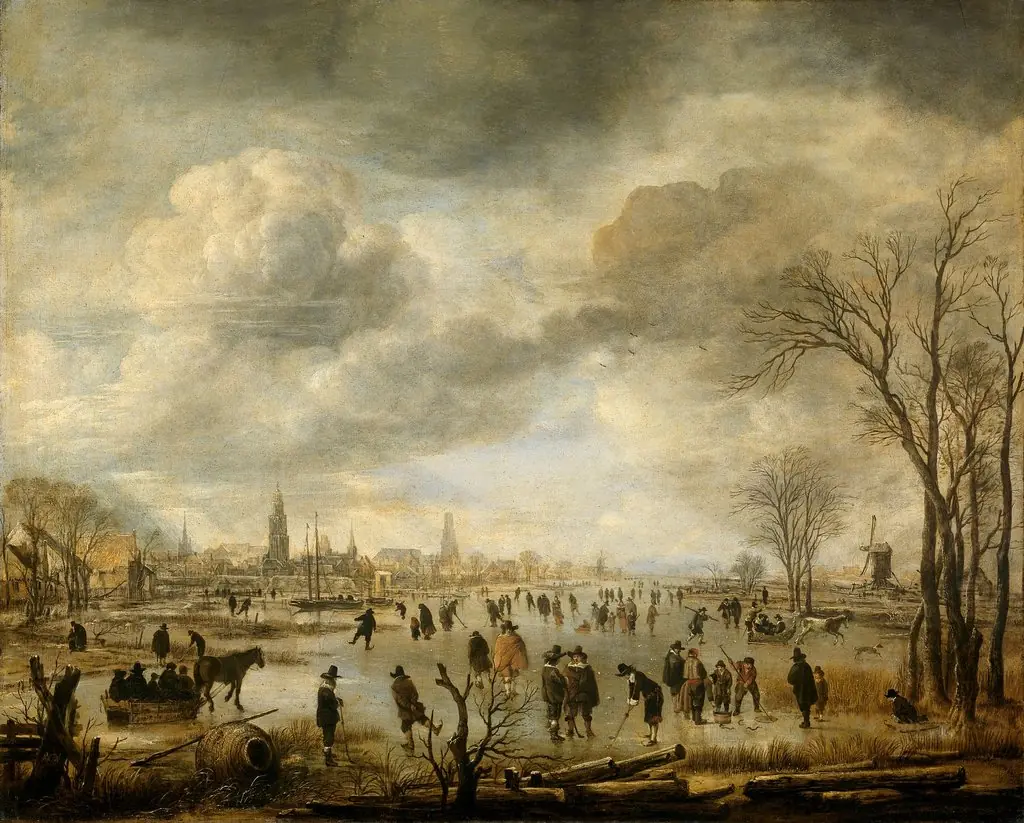
Painted in 1660, Aert van der Neer's Sports on a Frozen River depicts a bustling winter scene on a Dutch waterway during the Little Ice Age. The composition centers on a wide, ice-covered river populated by numerous figures engaged in seasonal recreation. Skaters glide across the foreground, while others gather in groups or play a game resembling kolf, an early form of field hockey, using sticks and a ball.
Several large ships are immobilized by the thick ice, emphasizing the severity of the freeze. The background features a shoreline lined with buildings and windmills, rendered with the atmospheric perspective characteristic of the artist. Van der Neer employs a low horizon to maximize the expanse of the sky, which transitions from dark, swirling clouds to a luminous orange glow at the horizon, suggesting either dawn or dusk.
This work exemplifies the artist's mastery of nocturnal and twilight landscapes, a specialization that defined his career. While he initially painted daylight scenes, van der Neer became renowned for his ability to capture the subtle effects of moonlight and firelight on snow and ice. This painting reflects the Dutch Golden Age interest in genre-infused landscapes that document contemporary life and the specific climatic conditions of the era.
Own this work as a print
Artist & collection
Artist
Aert van der Neer, or Aernout or Artus (c. 1603 – 9 November 1677), was a landscape painter of the Dutch Golden Age, who specialized in small night scenes lit only by moonlight and fires, and snowy winter landscapes,…