Flowers in a Vase by Simon Pietersz Verelst
View the artwork: Flowers in a Vase →
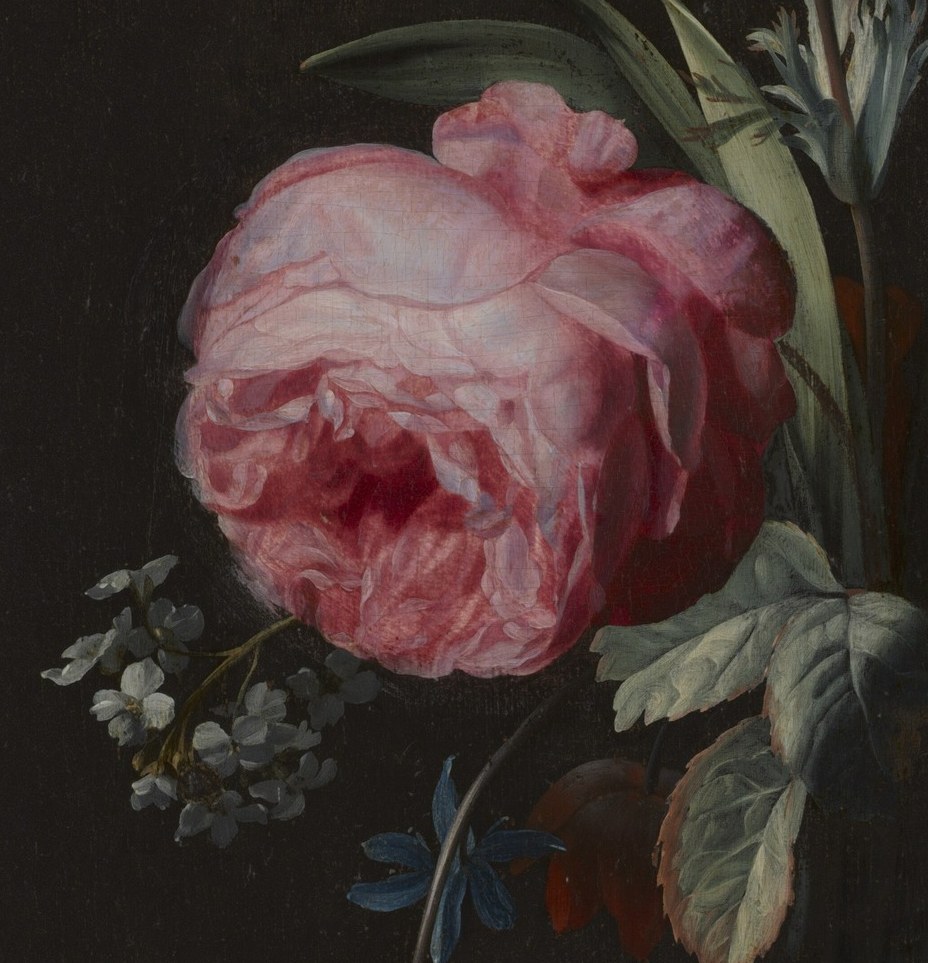
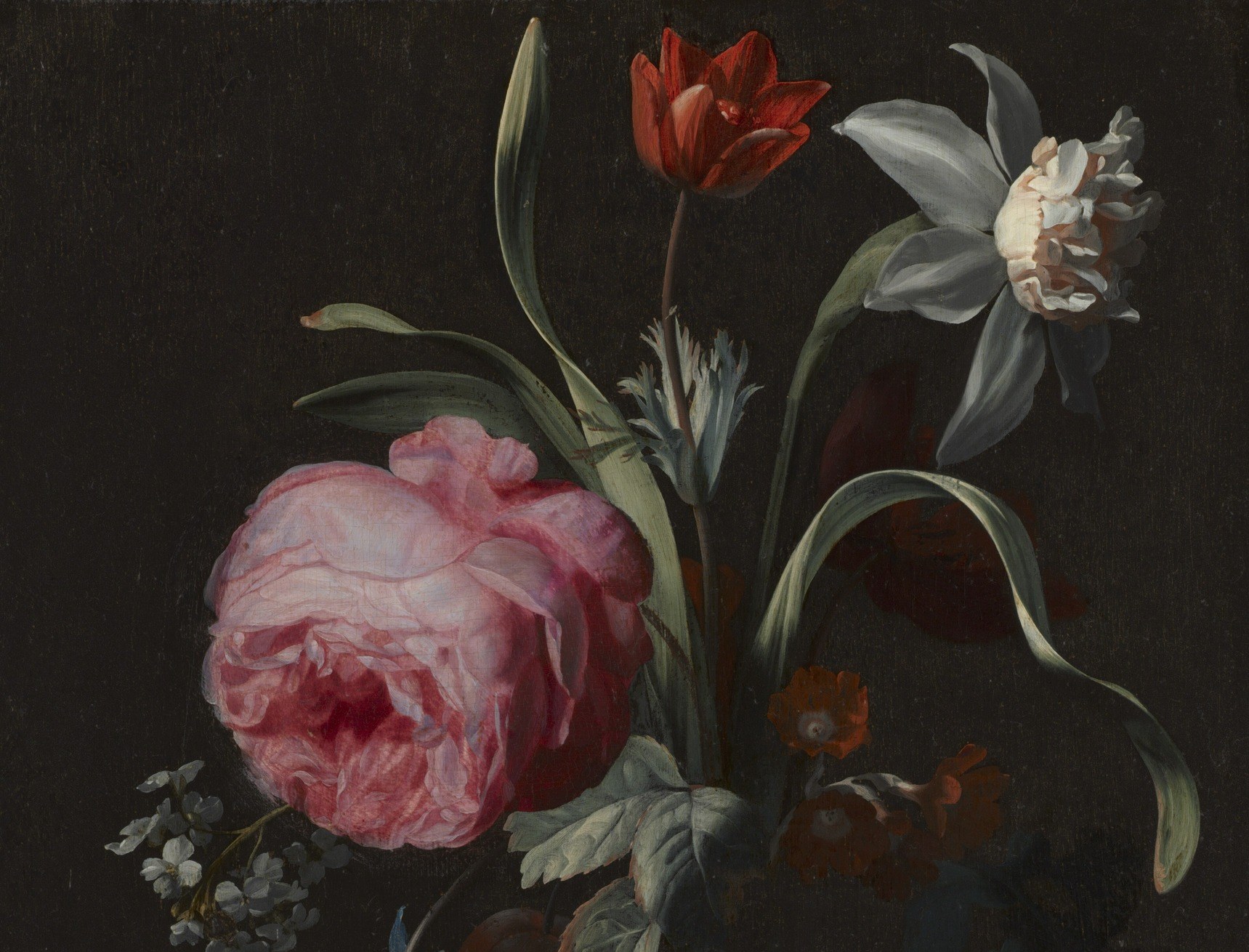
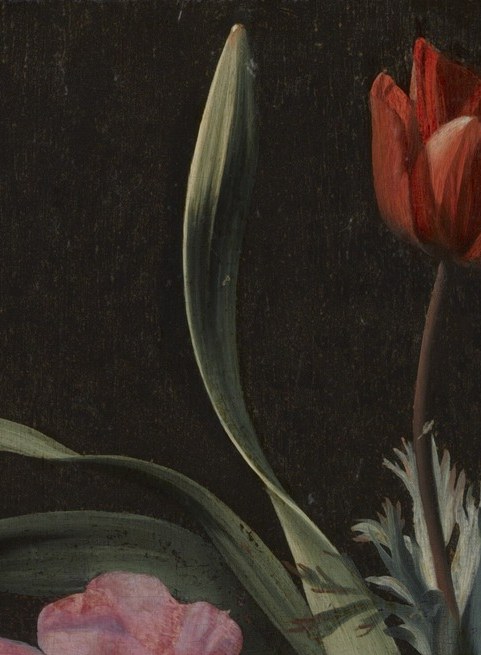
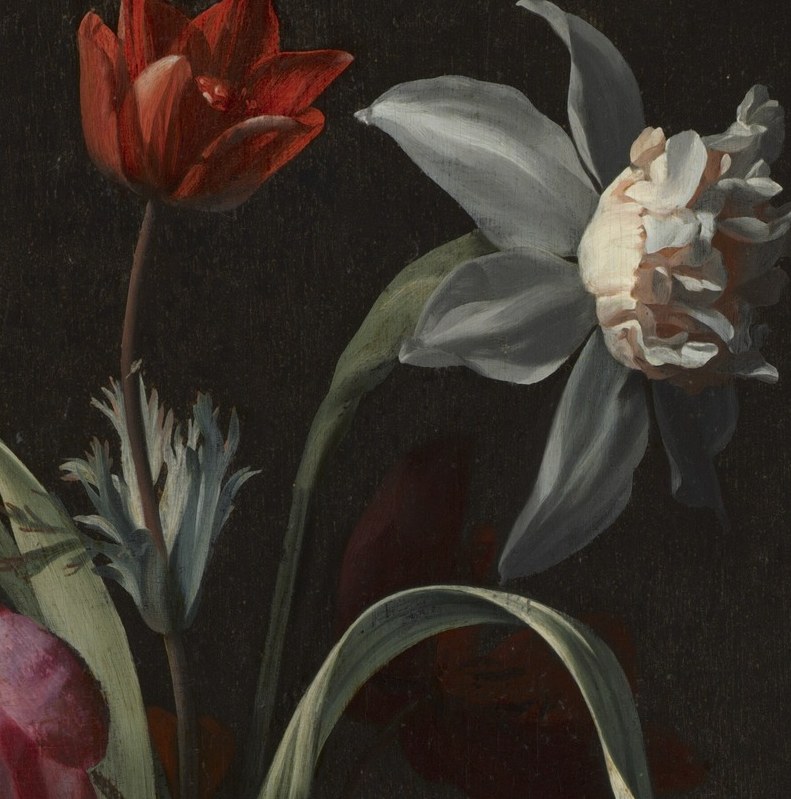
Simon Pietersz Verelst painted Flowers in a Vase in 1669, at roughly twenty-five years old. By then, the tulip market had already crashed spectacularly, yet the bloom here still commands a painter’s full attention, isolated against a velvety void like evidence laid out on a slab.
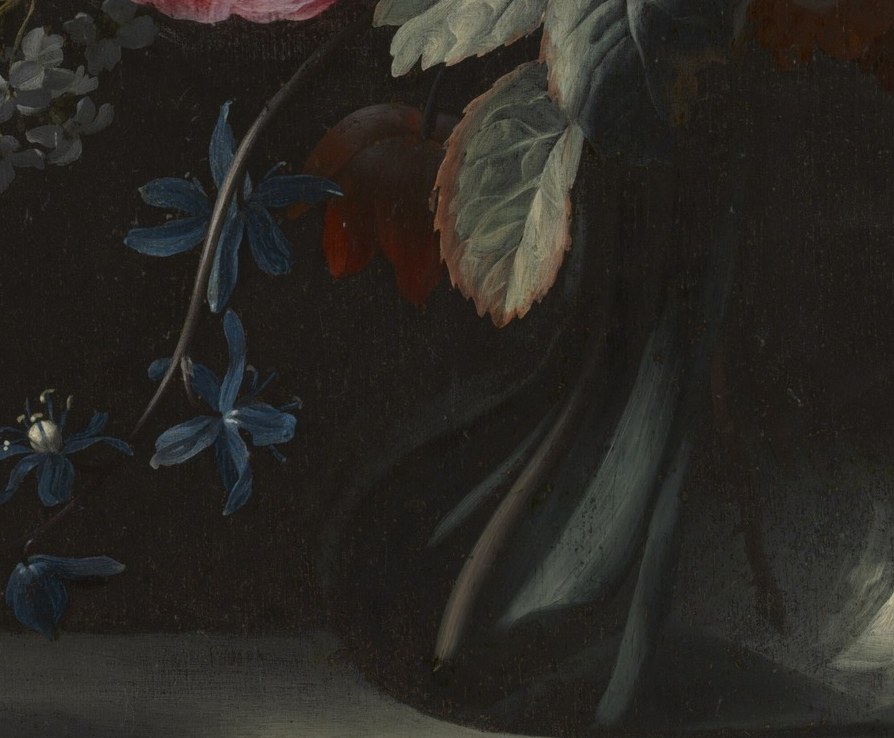
Look at the refracted stems inside the glass vase. Verelst meticulously bent the stalks where they cross the waterline, a Dutch specialty called ‘trompe-l’oeil’ that weaponized optics to trick the eye. Scan the ledge for the snail: a slow creature on cold stone, classic vanitas shorthand for time advancing whether you notice it or not. The narcissus droops right, past its prime, while a tight bud on the left has not yet opened. In a single frame, Verelst compressed the arc of an entire life.
The true crime here is the subject. Dutch flower paintings were luxury decoys for collectors who could not afford actual imported gardens. Every petal is a confession: beauty distracts, status blinds, and the most exquisite things rot fastest. Verelst knew that a painted dewdrop outlasts the living flower it mirrors, and that is the most unsettling trick of all.
What small, time-marking detail did you notice first?
#arthistory #dutchgoldenage #vanitas
Details
Transcript
1669. A Dutch painter sets out to do the impossible. Make you believe a dewdrop is wet. Now look at the stems through the water. They bend where they enter. Light obeys him. This is not just a painting. It is a crime scene. The white narcissus droops. Overripe. It will not last the week. Tulip bulb prices collapsed thirty years before this was painted. But here, a single bloom still costs a small fortune.