Artwork
Flowers in a Vase
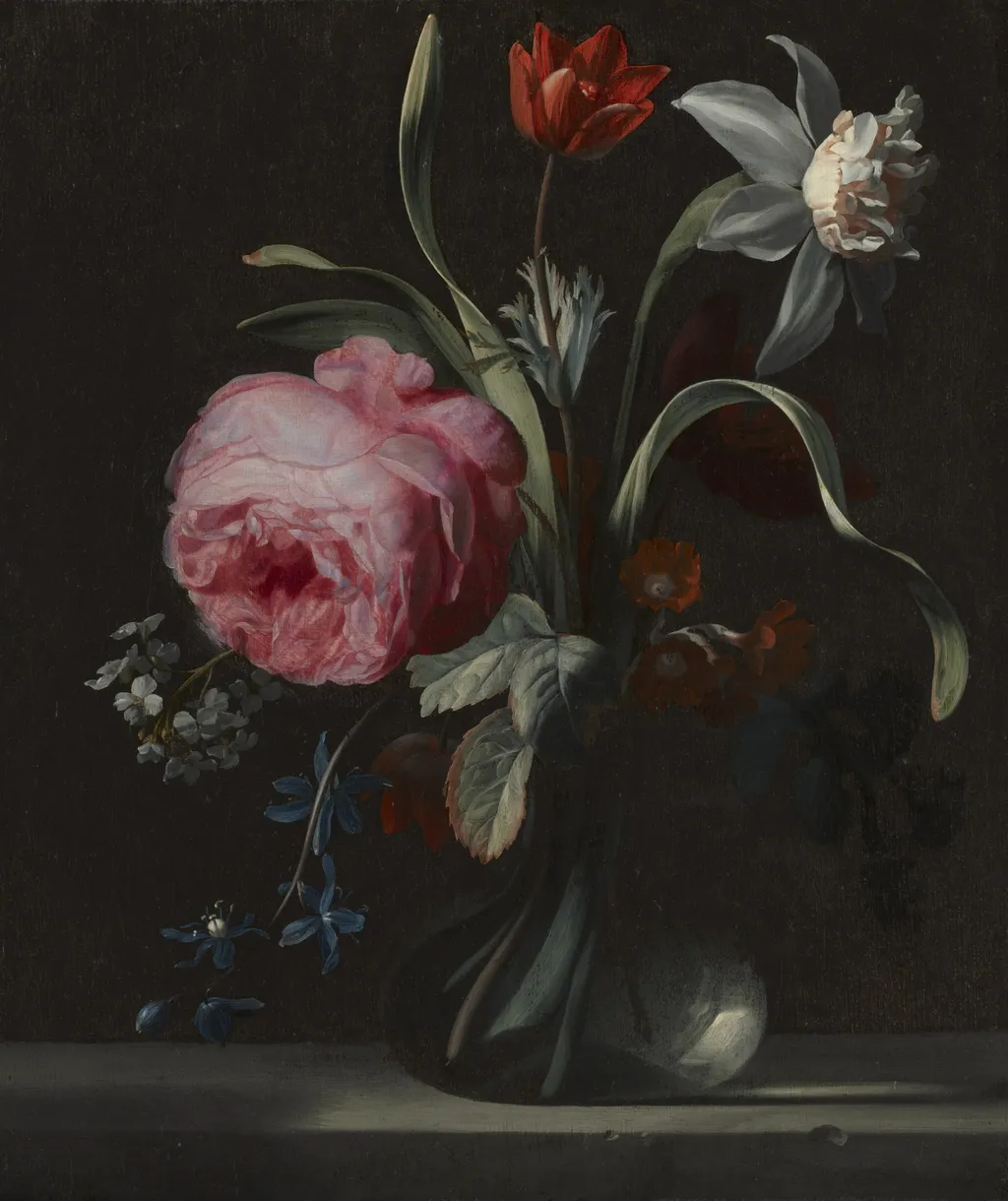
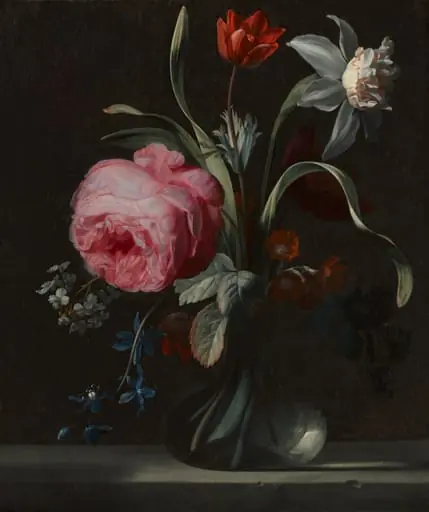
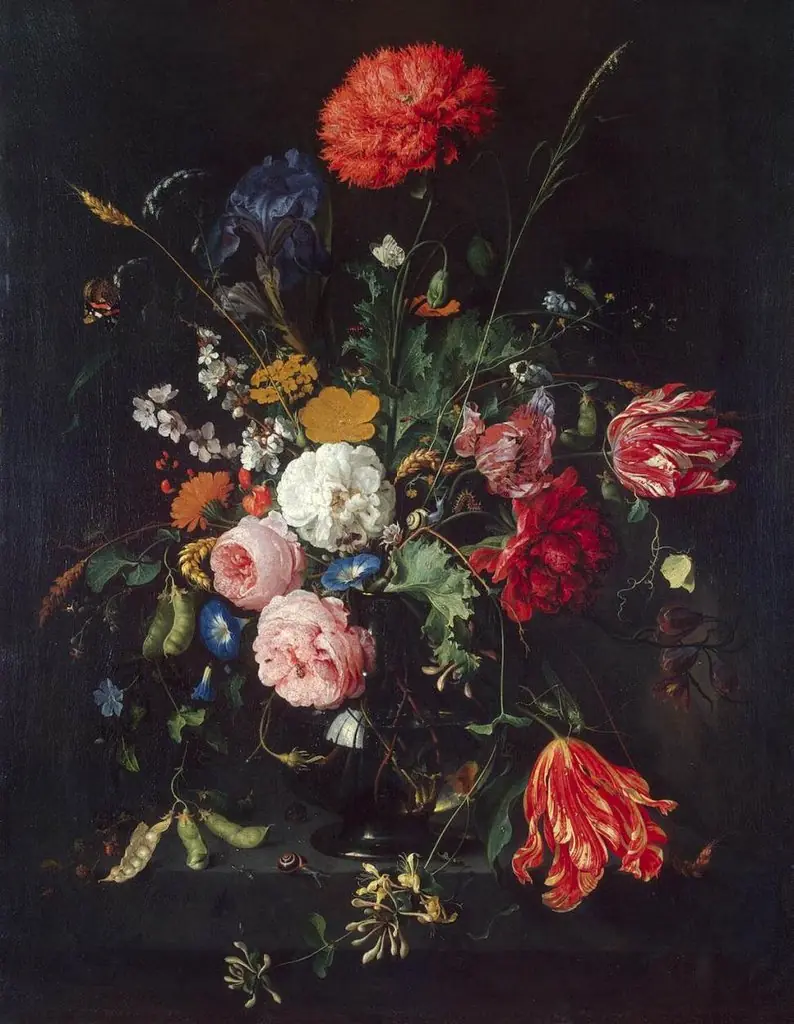
Flowers in a Vase is an oil painting by Simon Pietersz Verelst. It dates from 1669 and is held in the collection of the Cleveland Museum of Art.
About this work
Subject & Meaning
The depiction of specific flower species reflects the era’s fascination with botanical accuracy and the symbolic association of fleeting beauty with transience.
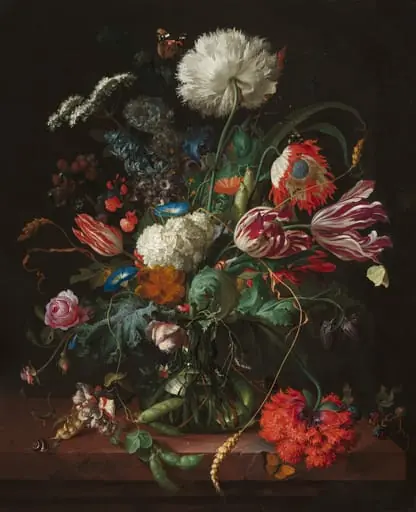
The painting presents a carefully observed bouquet of peonies (Paeonia), tulips and other blossoms arranged in a ceramic vase, a composition typical of Dutch Golden Age still‑life works. The depiction of specific flower species reflects the era’s fascination with botanical accuracy and the symbolic association of fleeting beauty with transience. Executed in oil on canvas in 1669 by Simon Pietersz Verelst, the piece exemplifies the still‑life genre’s focus on everyday objects rendered with meticulous detail, as recorded in the Cleveland Museum of Art’s catalogue and corroborated by scholarly reference.
Technique & Style
The work is an oil painting created in 1669 by Simon Pietersz Verelst, classified as a still‑life. It is executed in oil paint on a canvas support, as indicated by its classification as a painting and the use of oil paint as the medium. The composition depicts a bouquet of Paeonia and tulips arranged in a vase, reflecting the meticulous botanical observation typical of Dutch floral still‑life of the period. The rendering emphasizes naturalistic detail and balanced arrangement, characteristic of 17th‑century Dutch still‑life practice.
History & Provenance
The painting Flowers in a Vase was created by Simon Pietersz Verelst in 1669 in the Netherlands, as indicated by the work’s date and its place of execution. Executed in oil on canvas, it depicts a bouquet of peonies, tulips and other flowers in a vase. The artwork entered the Cleveland Museum of Art in 1982 and is now housed there under accession number 1982.246.
No information about a specific commission or earlier owners is provided in the available sources; the painting’s provenance is therefore traced directly from the artist to its current museum holding.
Overview
Painted in 1669 by Simon Pietersz Verelst, Flowers in a Vase is a quintessential example of Dutch Golden Age still life. The composition centers on a dark, reflective vase resting on a ledge, overflowing with a dense bouquet of tulips, roses, and other seasonal blooms in shades of pink, red, white, and yellow. Verelst renders the flora with meticulous precision, capturing the delicate translucency of petals, the texture of leaves, and the subtle interplay of light and shadow that defines the forms.
The arrangement is set against a stark, dark background, a technique that isolates the subject and heightens the vibrancy of the colors while emphasizing the artist's technical virtuosity. Created when Verelst was approximately twenty-five years old, this work reflects his training in the tradition of floral painting and his reputation for producing highly detailed, illusionistic images. The painting exemplifies the period's fascination with natural beauty and the fleeting nature of life, themes often associated with vanitas symbolism, though presented here through a focus on aesthetic perfection and botanical accuracy.
Context
While specific details about the artist of Flowers in a Vase are not provided, the work's detailed botanical rendering aligns with traditions found in still life painting. Viewers who appreciate the meticulous depiction of flowers and the interplay of light and shadow in this piece may find stylistic parallels in the work of artists such as Simon Pietersz Verelst, known for his own contributions to floral still life.
Own this work as a print
Artist & collection
Artist
Simon Pietersz Verelst (1644–c. 1710-1717) was an Anglo-Dutch painter. He is known for outstanding flower and fruit still life paintings.