Stage Design for Cleopatra by Robert Delaunay
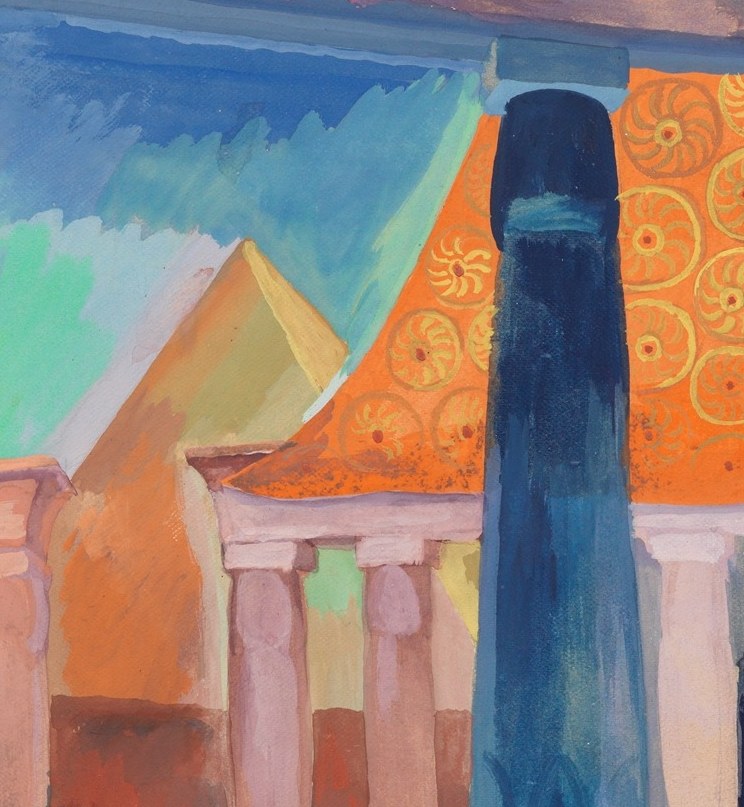
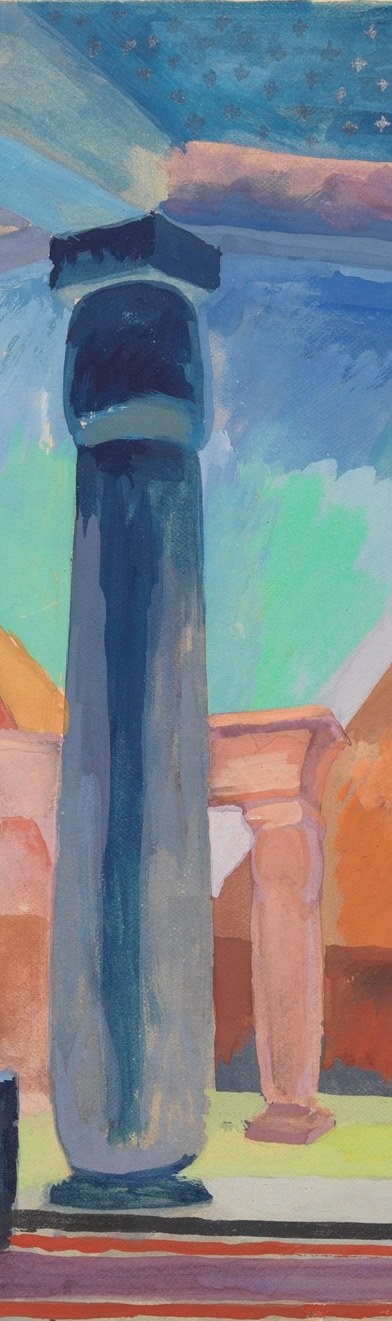
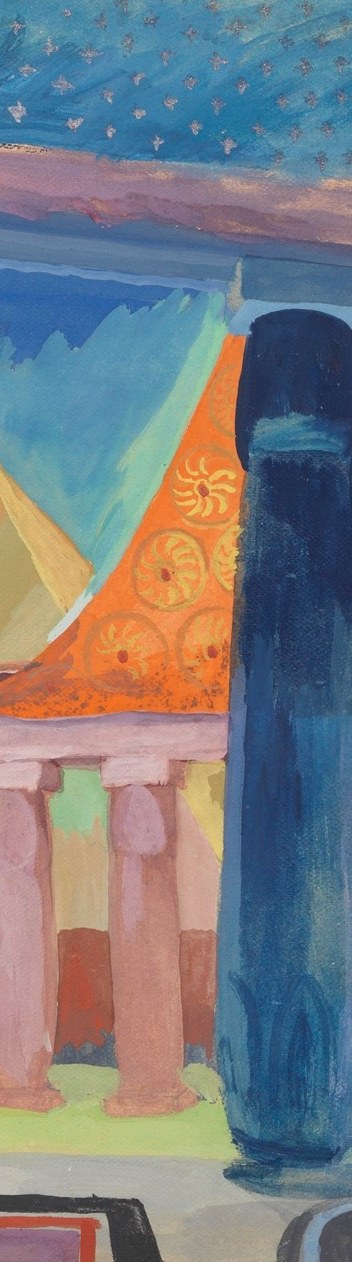
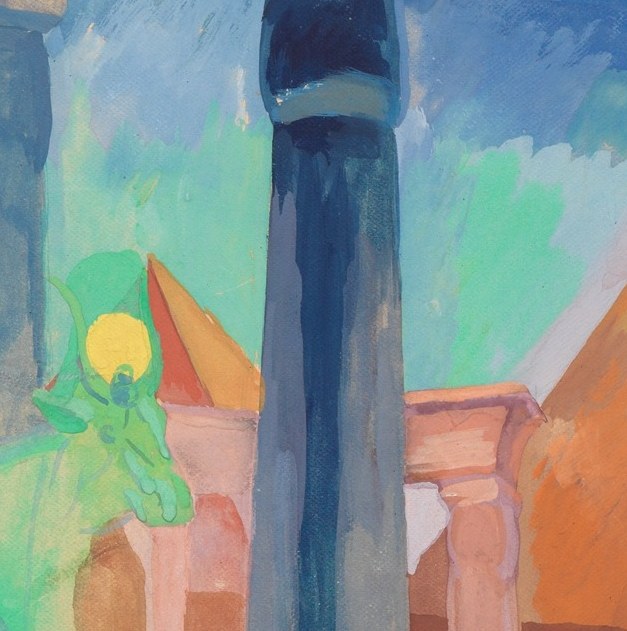
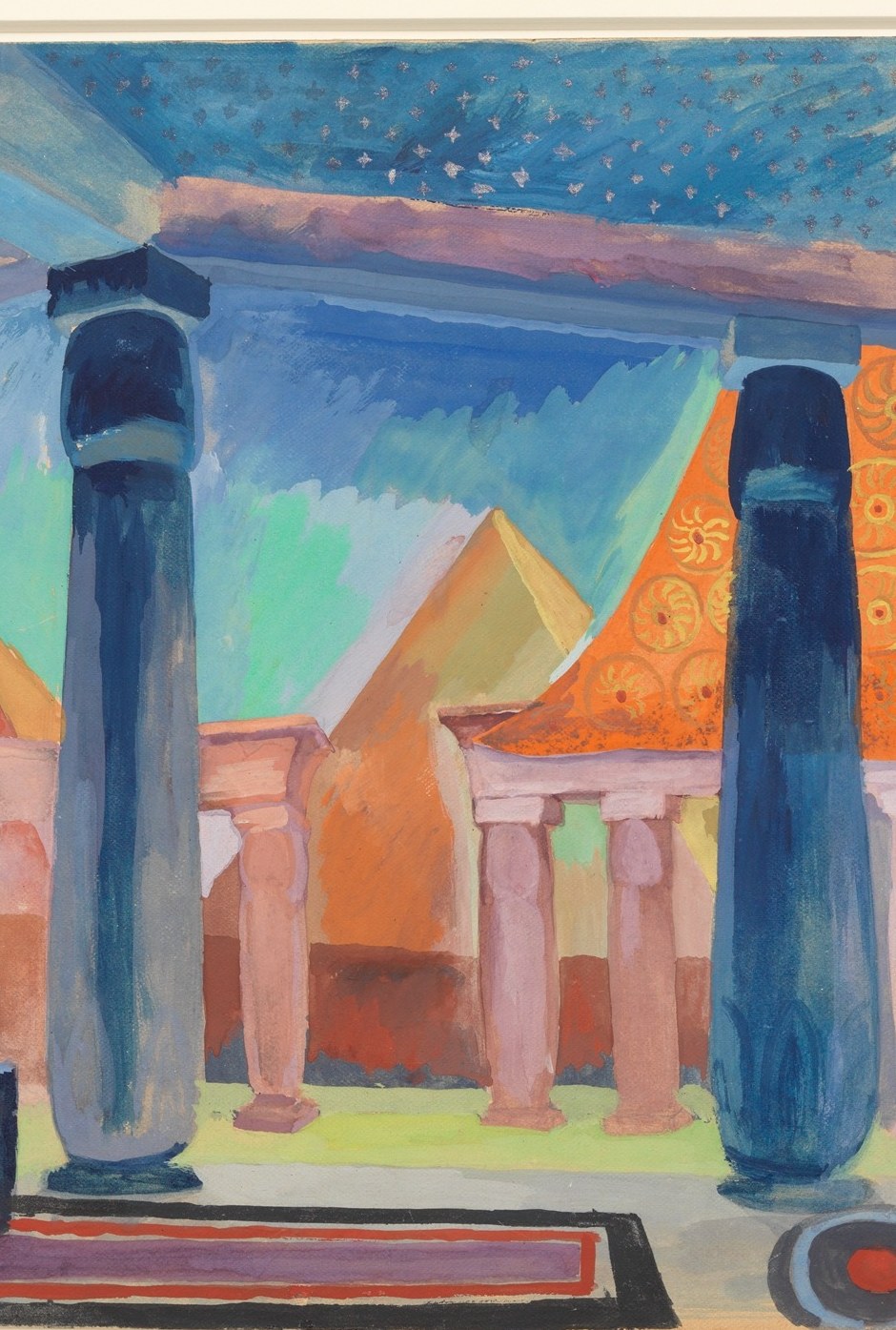
This is Robert Delaunay's "Stage Design for Cleopatra," a graphite drawing from 1918 now in the collection of The Metropolitan Museum of Art. It is a working theatrical set design, not a finished painting, and the production it was made for was never realized.
Look closely at the decorations spiraling up the two central columns. They are not hieroglyphics or traditional motifs. They are abstract color wheels, a direct application of Delaunay's Orphist theory to the stage. Notice the visual vibration between the warm orange pyramid in the center and the cooler teal pyramid behind it on the left. Even the sky is a Simultanist experiment, shifting from deep cobalt to a lighter teal in a wash of blue.
Delaunay, who co-founded the Orphism movement with his wife Sonia, was fascinated by the way pure, contrasting colors could create a sense of dynamic movement. In 1918, applying this radical modern language to a historical drama like Cleopatra was a provocative synthesis of the ancient and the avant-garde. The visible graphite underdrawing on the columns reveals this as a private moment of conception, where a mathematical theory of color was dressed in the architecture of antiquity.
It is a project that exists only in potential, a vibrant world of light and geometry that audiences never got to see.
Details
Transcript
In 1918, the Paris stage needed an ancient Egypt. This was a design for a play called Cleopatra. The sets were never actually constructed. Look at the columns framing the pyramid. The orange patterns are not Egyptian. They are color wheels. Delaunay believed contrasting colors created visual rhythm. He called it Simultanism. The orange pyramid vibrates against the teal one. A modernist secret, hidden inside a story from the ancient world.