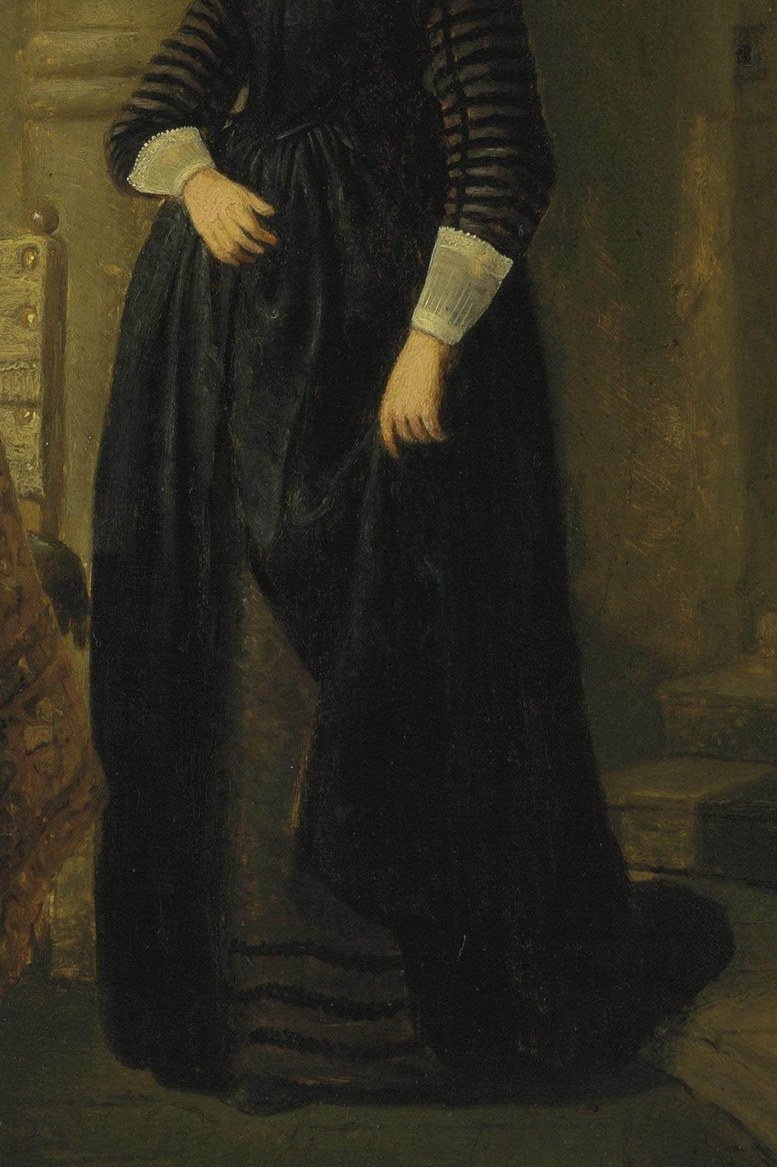
Portrait of a woman, standing full length in an interior by Rembrandt
Rembrandt's 'Portrait of a woman, standing full length in an interior' (1630) at The Metropolitan Museum of Art showcases his incredible mastery of light.
Notice how the light from an unseen source in the background illuminates her face, collar, and hands. It creates a striking contrast with the surrounding shadows, making her presence truly powerful.
This technique, known as chiaroscuro, was a hallmark of Rembrandt's work during the Dutch Golden Age. He used it to model figures, create depth, and evoke a sense of drama and volume in his portraits.
It is a testament to his skill that after nearly four centuries, the painting still captivates with its profound sense of realism and human presence.
Details

Transcript
This painter was a master of capturing light. See how light from an unseen doorway illuminates her face? It glances across her starched white collar. Then it softly defines the delicate curve of her left hand. Her face emerges from shadow, luminous and alive. This dramatic contrast of light and dark is called chiaroscuro.