Basket of Fruit by Bartolomeo Cavarozzi
Bartolomeo Cavarozzi painted Basket of Fruit around 1620, and it is currently held in a private collection.
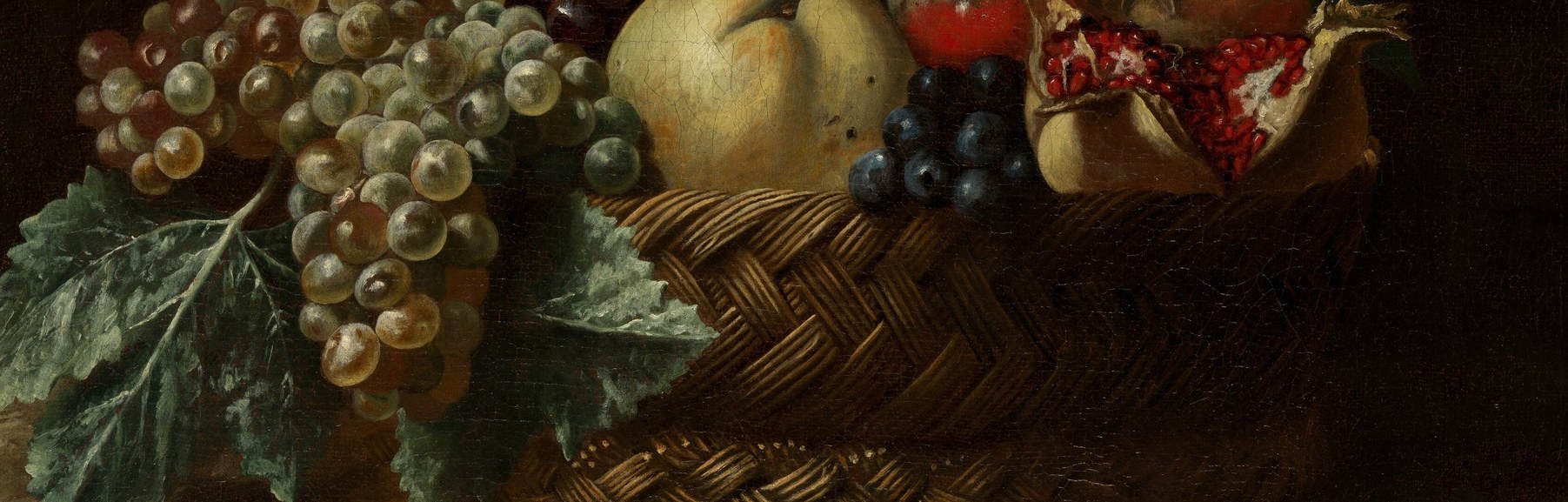
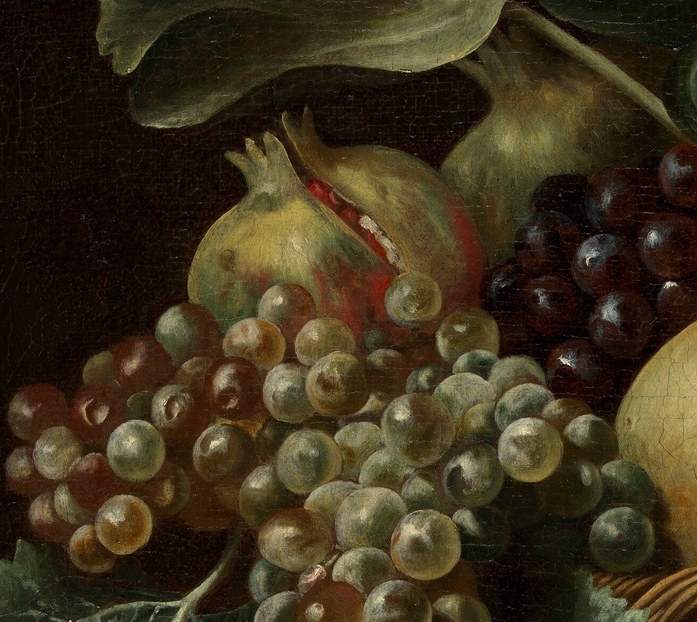
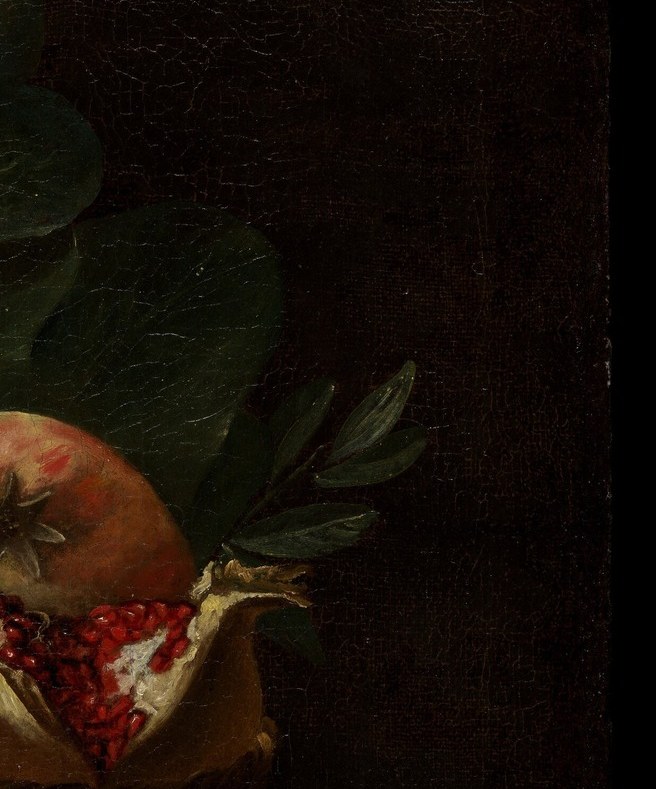
Start with the pomegranates. The split fruit on the right spills its jewel-like seeds under the strongest light, a classic vanitas emblem of abundance that also hints at mortality. Then find its twin in the upper left corner: a whole, uncut pomegranate, crown intact and nearly swallowed by the dark background. Together they frame a quiet argument about wholeness and inevitable rupture.
Cavarozzi trained in Rome under Giovanni Battista Crescenzi and became one of the most distinctive Caravaggisti, later helping to carry Caravaggio’s dramatic lighting into Spain. Here, he applies that tenebrist method to a still life, collapsing the background into near-void so light alone defines the fruit. Watch how the pale grapes glow with sub-surface scattering centuries before optics named it, and how the woven basket, every diagonal strand, serves as a deliberate test of texture and illusion.
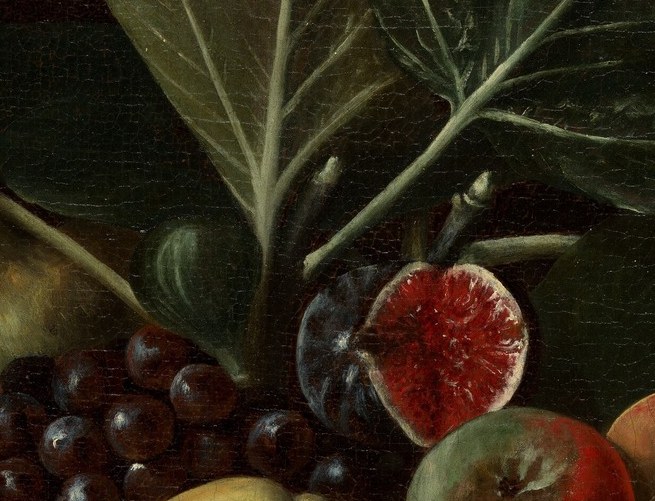
There is also a single wilting fig leaf draped over the basket rim, easy to miss. It is the smallest, quietest signal in the painting that all of this is already fading. What do you notice that most people scroll past?
Details
Transcript
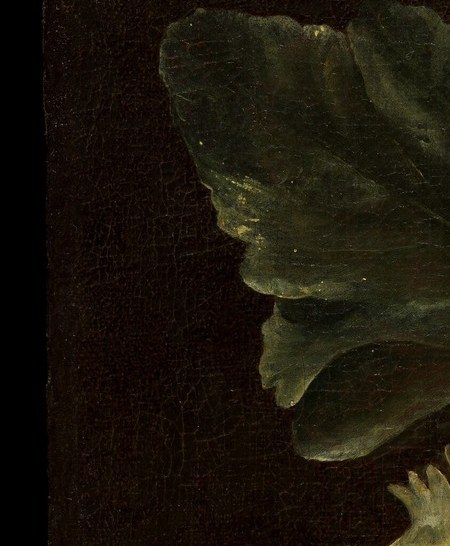
At first glance, it reads as a simple harvest scene. A woven basket, heavy with late-summer fruit. Cavarozzi painted this in Rome, around 1620. He was a follower of Caravaggio, obsessed with light on skin. Look at the grapes. Light passes through each translucent berry. But the real meaning sits in shadow, at the far left margin. A single uncut pomegranate, mirroring the split one on the right. Wholeness and rupture. A vanitas symbol of life and its end.