The Valley of the Nervia by Claude Monet
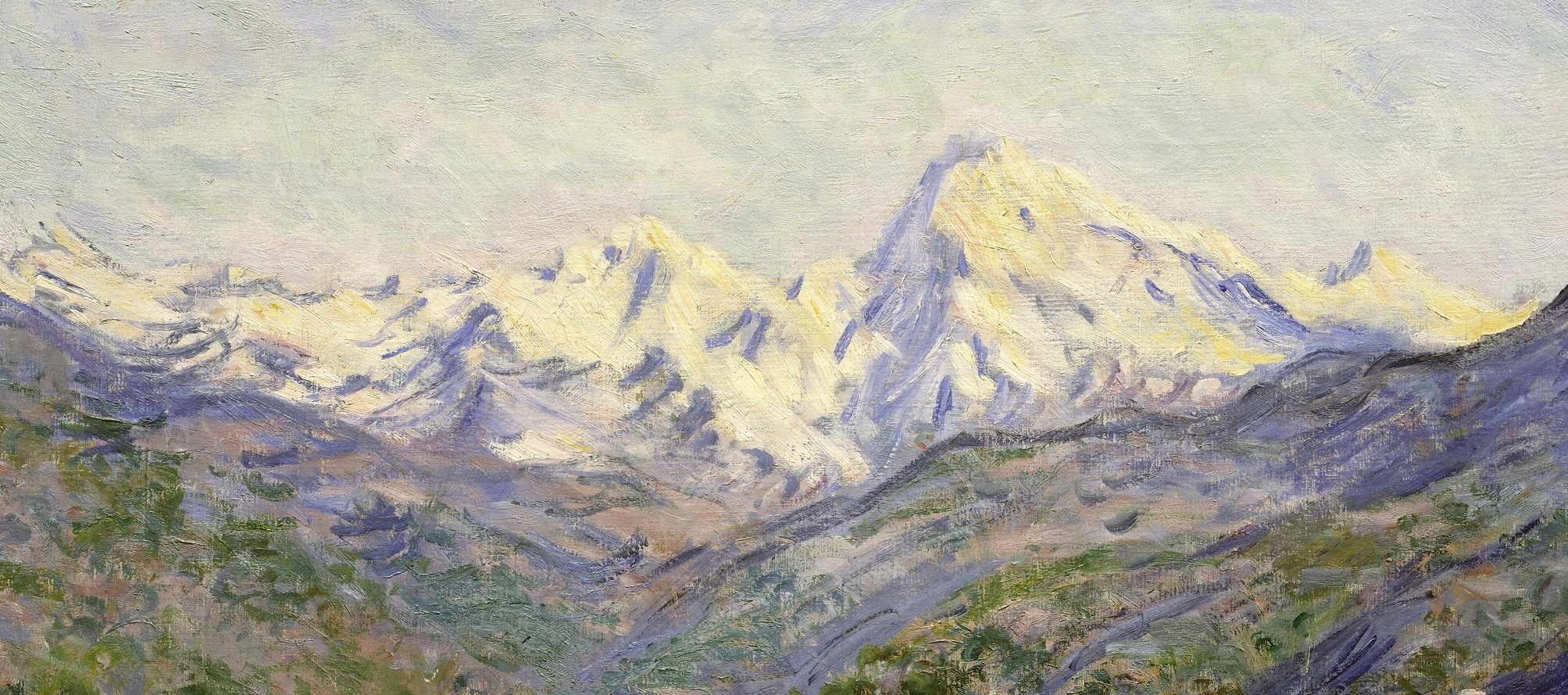
Claude Monet painted *The Valley of the Nervia* in 1884, and it now lives at the Metropolitan Museum of Art. He was 43 years old when he traveled to Bordighera on the Italian Riviera in January of that year, and he found the light so powerful it practically unmoored him.
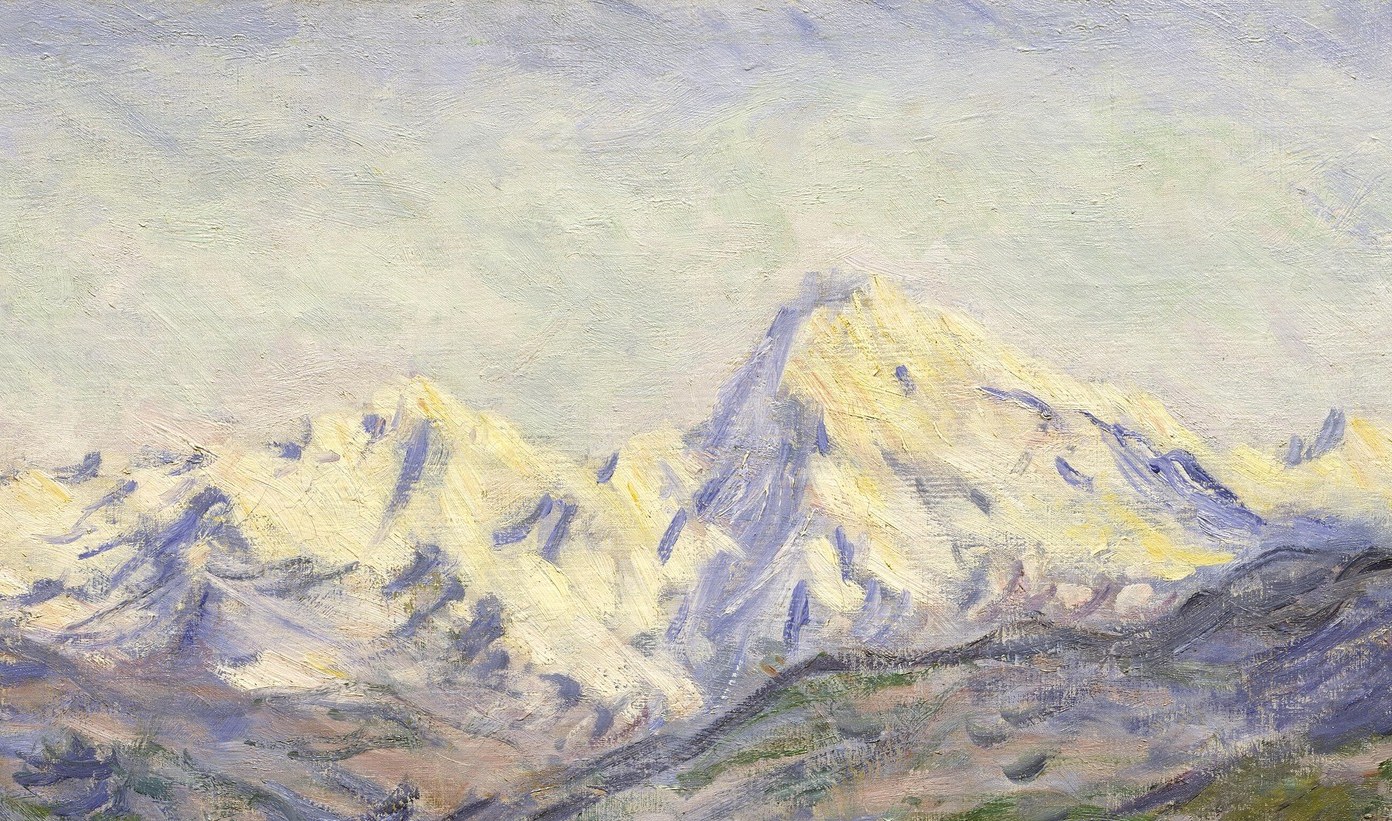
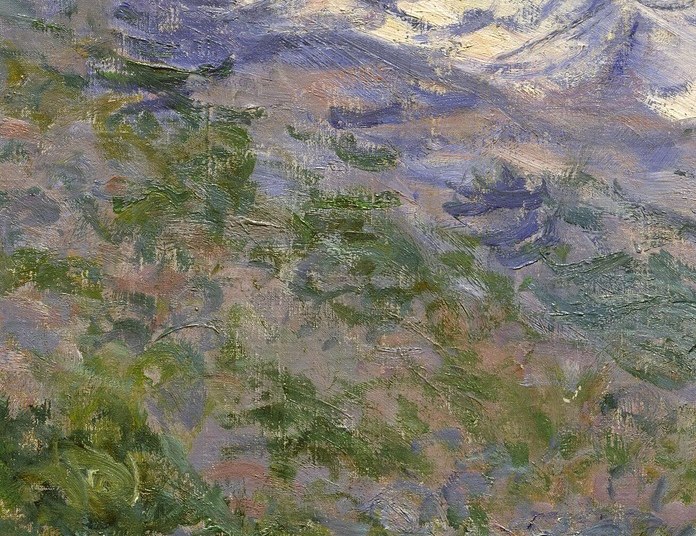
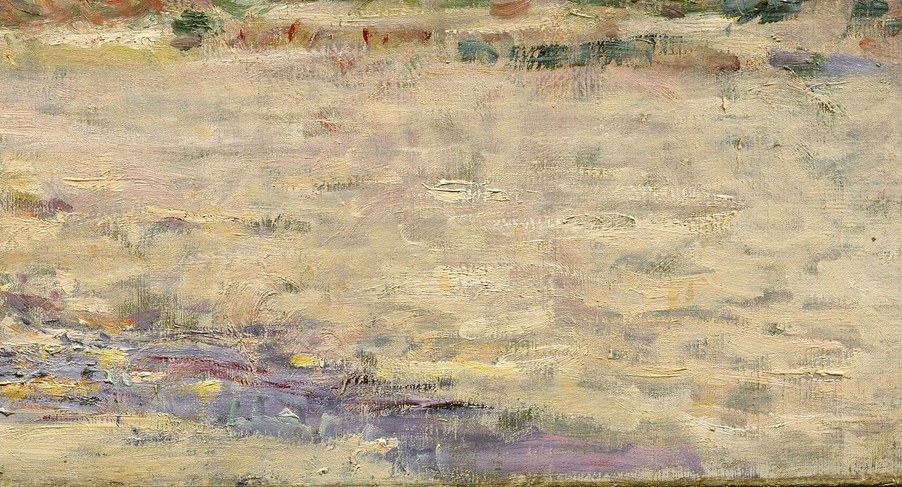
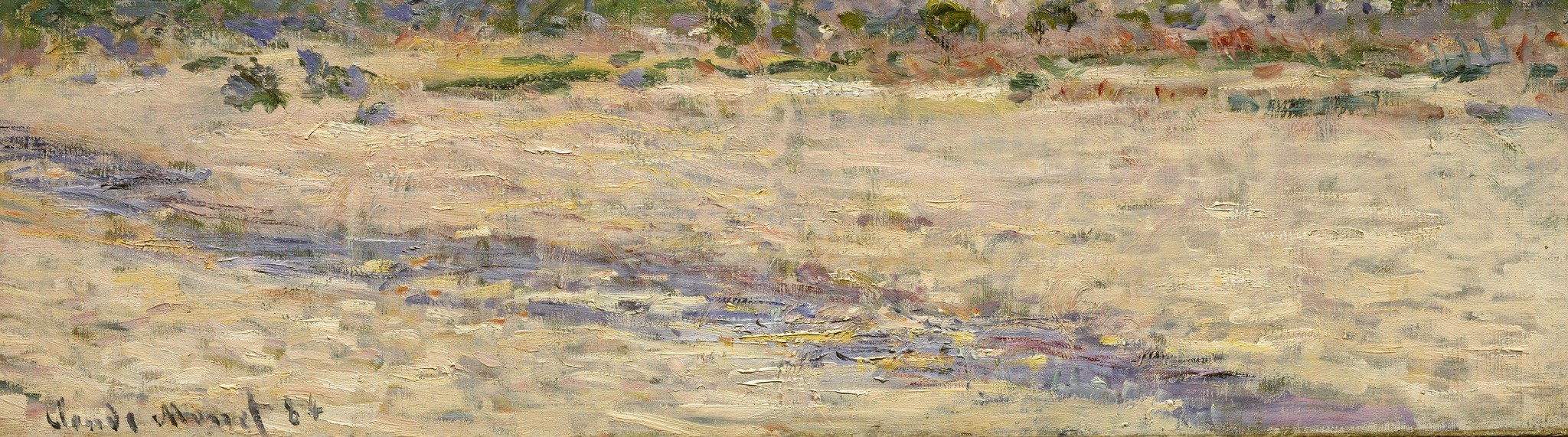
Look first at the snow on the peaks, that near-blinding lavender-white is the emotional anchor of the painting. Then look at the mountain flanks. Monet used cool violet and purple where an academic painter would have used grey or brown. He was arguing that shadow is not a darkening of local colour but a new colour entirely. The foreground is a different argument: those broken ochre and green dabs read as pure pigment up close, demonstrating how Impressionist touch constructs form from mark-making alone.
Monet went to the Riviera at the urging of his dealer Paul Durand-Ruel, who wanted Mediterranean landscapes for his Paris gallery. The artist wrote home to Alice Hoschedé complaining about the crushing weight of the sunlight, he was literally labouring under it, painting outdoors for hours, but he stayed three months and produced around fifty canvases. He left almost broke, having spent his travel money on paints.
This painting is a way-station between his earlier, softer Impressionism and the serial, almost abstract surface of the late Water Lilies. You can see him learning, in real time, that light is not something you depict. It is something you build.
Details
Transcript
Monet arrived on the Italian Riviera in January 1884. He was stunned by the light. Those violet slopes are not grey shadow. They are pure colour. Monet painted light as colour, not tone. Down here, thick impasto builds the foreground from individual marks. No other painter had pushed the mark this far from the motif it describes. Monet left Italy with 50 canvases and no money. He was just getting started.