View of Haarlem from the Northwest by Jacob van Ruisdael
Jacob van Ruisdael's "View of Haarlem from the Northwest," painted in 1668, offers a detailed and striking panorama of the Dutch city during its Golden Age. This masterpiece, held at the Gemäldegalerie Berlin, showcases the landscape and the vital industries that shaped the region.
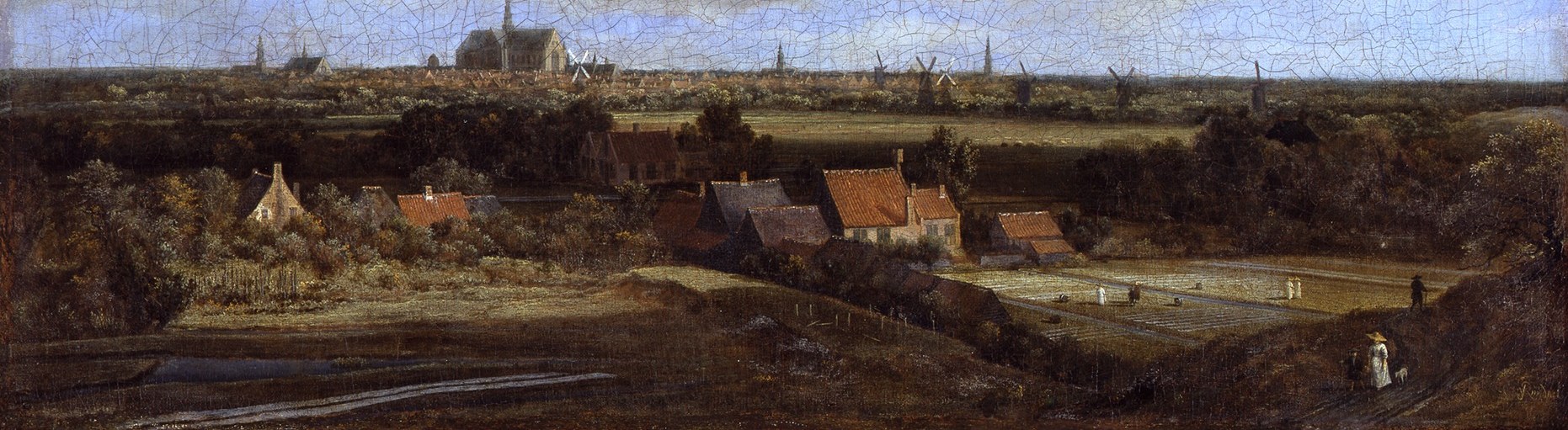
Observe the vast fields in the foreground, not green but bleached white. These are bleaching fields, central to Haarlem's renowned linen industry. The tiny figures working in these fields and the distant windmills highlight the scale of human endeavor and the technological reliance of the era.
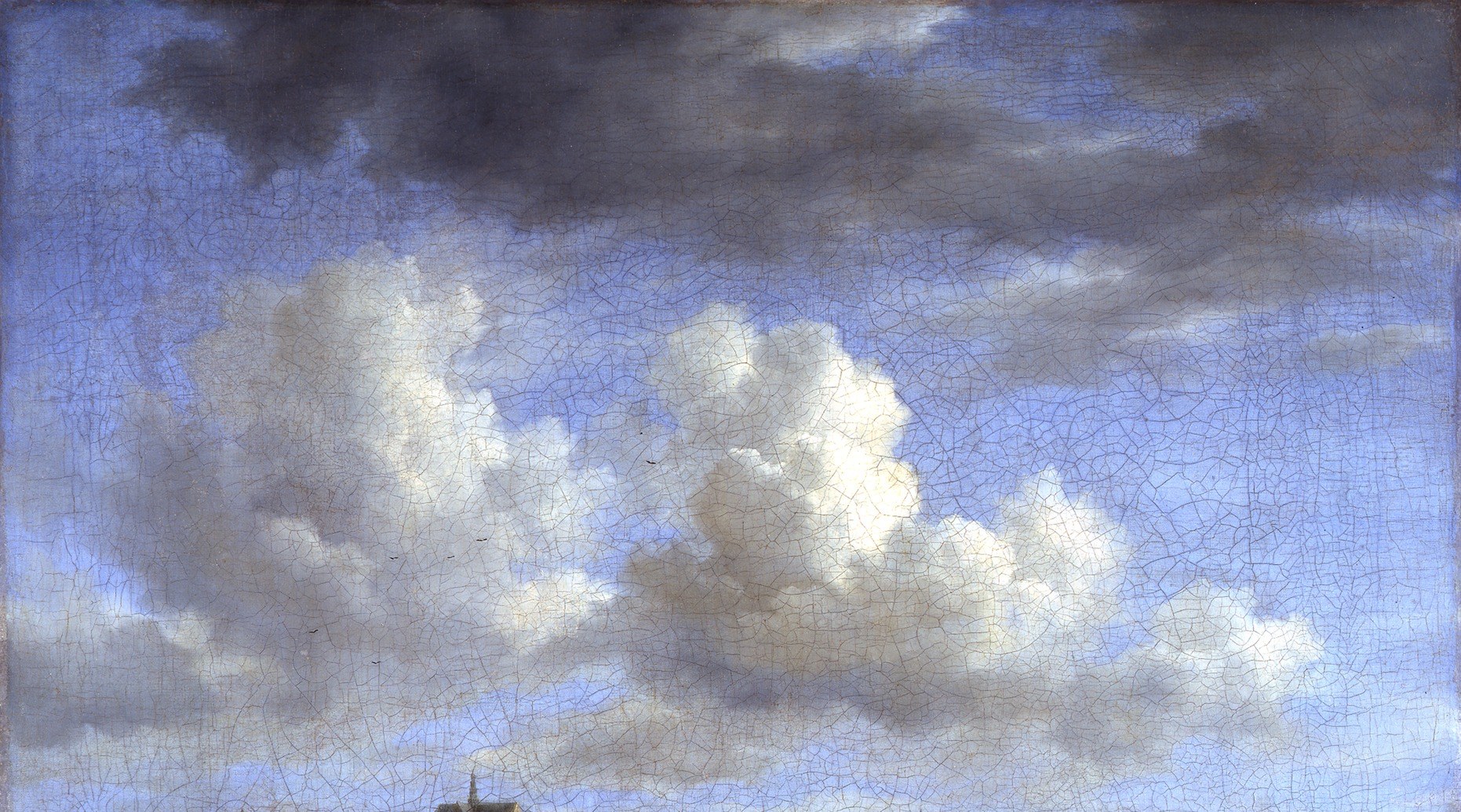
Van Ruisdael, a pre-eminent landscape painter, captures the interplay of urban and rural life with his characteristic naturalism and an almost sculptural quality in his skies. His focus on recognizable Dutch towns within idealized natural settings was a hallmark of his career.
This painting is a window into 17th-century Holland, celebrating its civic pride, economic activity, and the unique beauty of its landscape. What details do you find most compelling?
Details
Transcript
This is Haarlem, Holland, in 1668. Its towering Grote Kerk dominated the skyline then, as now. Look closely at the fields, they are not green. These are bleaching fields, where Haarlem's linen was dried. The city's economy relied on this centuries-old industry. Windmills powered much of the process. This painter was famous for his dramatic skies.