Album of Seasonal Landscapes, Leaf B (previous leaf 1) by Xiao Yuncong
What looks like a serene spring landscape is a survival document. This is Album of Seasonal Landscapes, Leaf B, painted by Xiao Yuncong in 1668. It lives at The Cleveland Museum of Art.
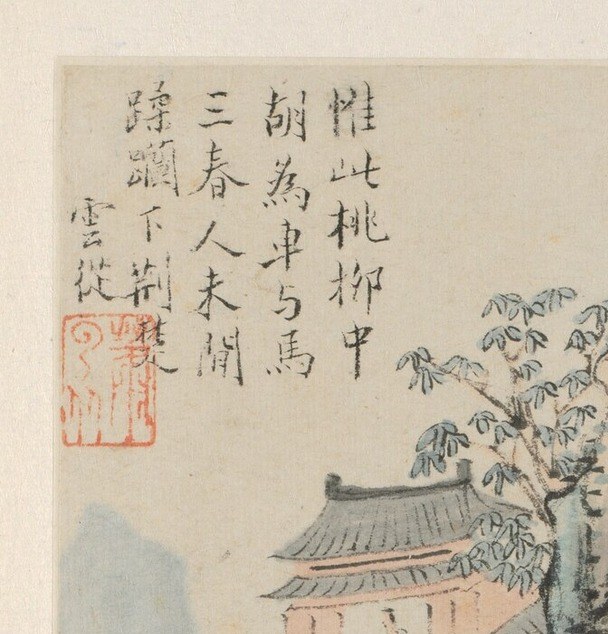
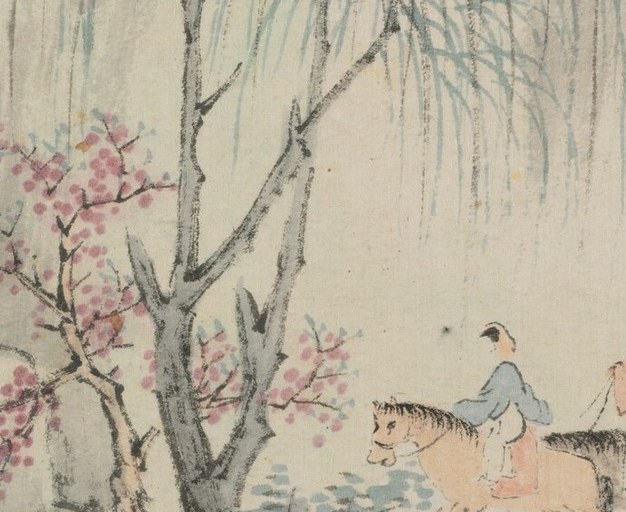
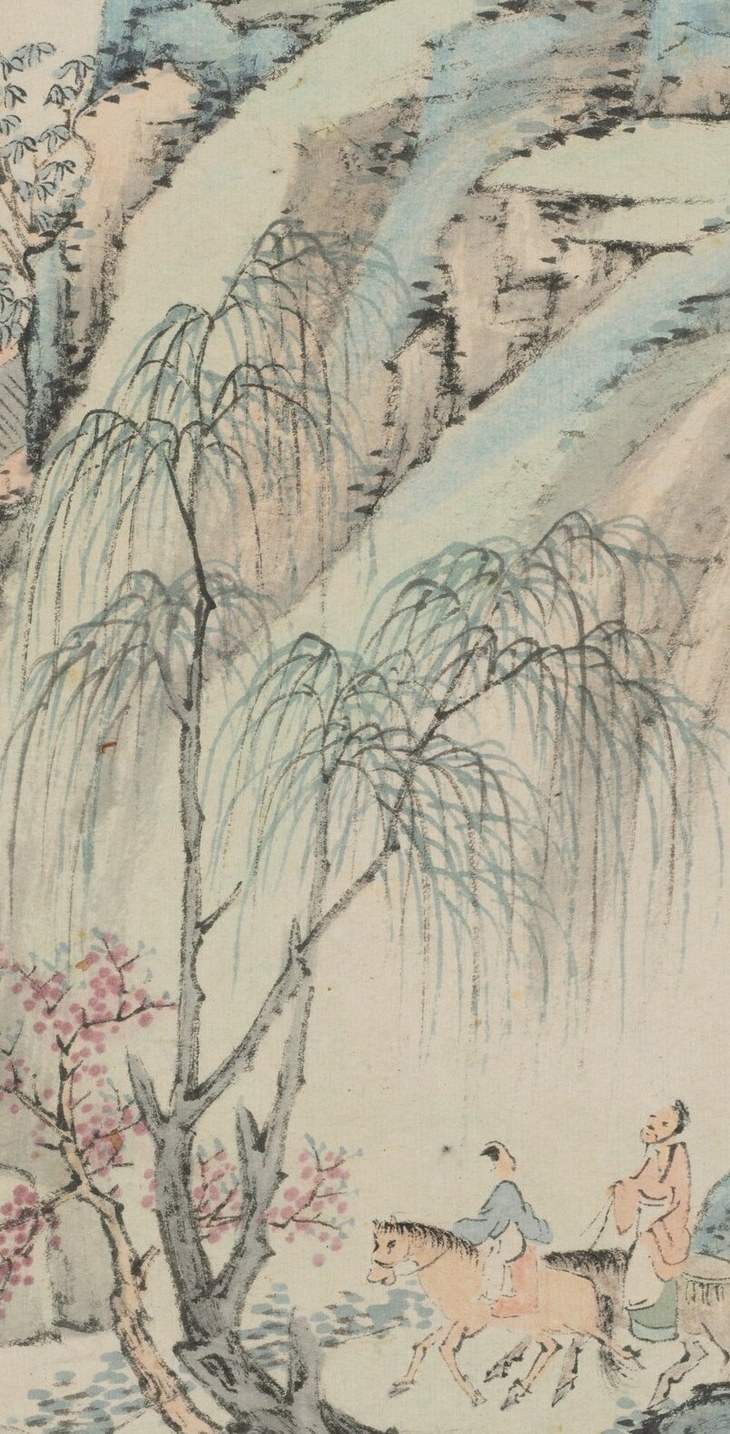
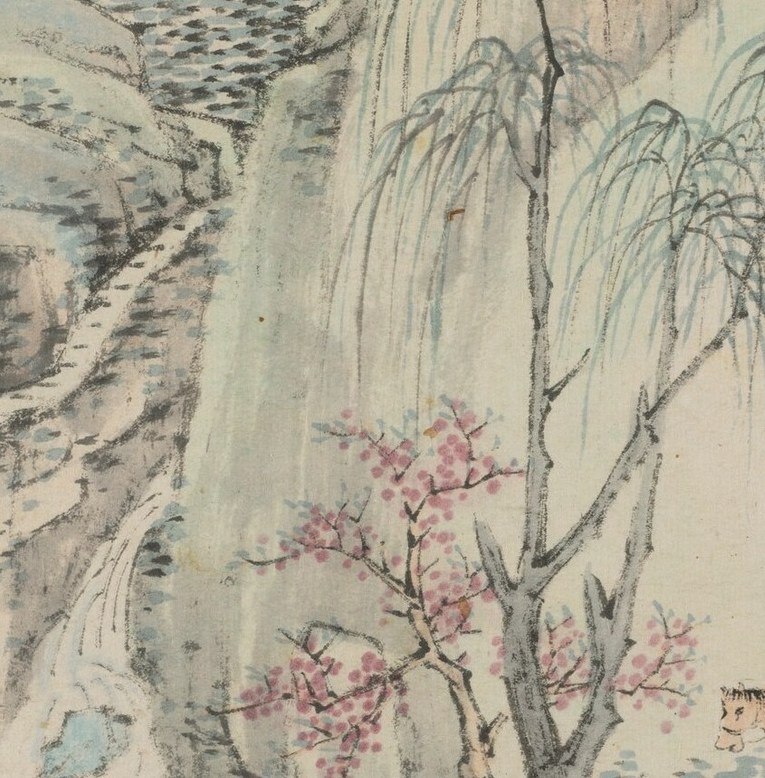
The composition is quiet: a pavilion tucked into the hills, two travelers on horseback crossing a stone bridge, and a weeping willow draped over a rocky path. But the real action happens in the upper left, where the artist brushed a poem about a 'guest' adrift in spring, seeking shelter.
Xiao Yuncong was a Ming loyalist who lived to see the dynasty fall to the Manchu Qing. He never took office under the new rulers. For a scholar-painter in his position, landscape became a vehicle for coded feeling: the season, the wanderers, and especially the inscribed poem were freighted with meanings the wrong reader would miss.
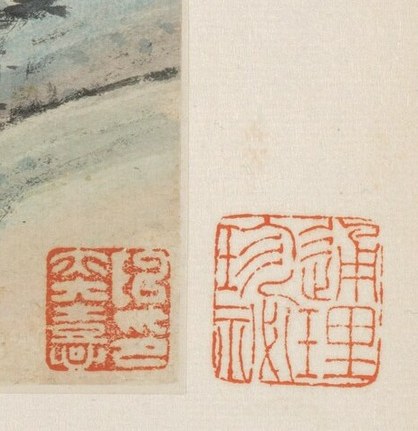
The leaf contains two red collector seals from Qing imperial collections. That means this small, personal message of displacement was later acquired, stamped, and absorbed by the very dynasty it quietly mourned. It was kept not for its dissent, but for its beauty.
Details
Transcript
He painted this in 1668. The Ming dynasty he served had fallen. Now look at the poem inscribed in the upper left. It speaks of a 'guest' adrift in spring, yearning for refuge. The painters who survived the conquest learned to speak in code. Below the poem, two red seals mark the leaf's passage through time. These are the stamps of Qing imperial collectors. The victors who read his work. A poem of silent dissent, preserved inside the conqueror's own album.