Left wing of a triptych with the donor Matelief Dammasz and St Paul (inner wing) by Maarten van Heemskerck
This striking panel by Maarten van Heemskerck, painted in 1564, is the left wing of a triptych, now housed in a museum. It features Saint Paul alongside a contemporary donor, Matelief Dammasz, whose desire for lasting legacy is etched into the painting itself.
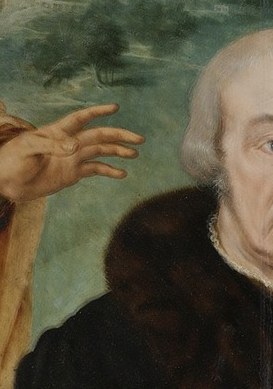
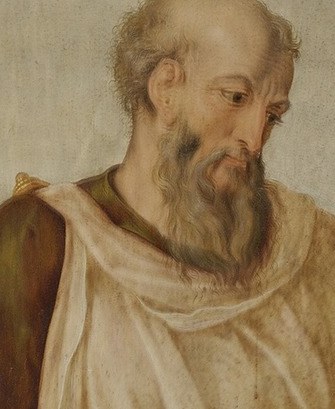
Look closely at the details: Saint Paul is recognizable by the sword, a symbol of his martyrdom. The donor, Matelief Dammasz, has his name inscribed directly onto the panel, ensuring his identity is clear for posterity. His family's coat of arms further reinforces his lineage and status.
In the Northern Renaissance, commissioning religious art was a common way for wealthy patrons to display their piety and ensure their memory endured. Heemskerck, a Dutch painter influenced by his time in Italy, masterfully blended religious narrative with portraiture, a characteristic of the period. This piece reflects his Italianate style, while maintaining a clear, linear composition typical of Dutch art.
By including these personal details, Dammasz made sure his connection to this sacred work would never be forgotten. What other symbols do you notice that speak to identity or belief?
Details

Transcript
This man wanted his good name to live forever. This is Saint Paul, identifiable by his sword. The inscription is the donor's name: Matelief Dammasz. The coat of arms is his family's heraldic symbol. By commissioning art, his name and family lived on.