The Adoration of the Magi by Botticelli, Sandro
View the artwork: The Adoration of the Magi →
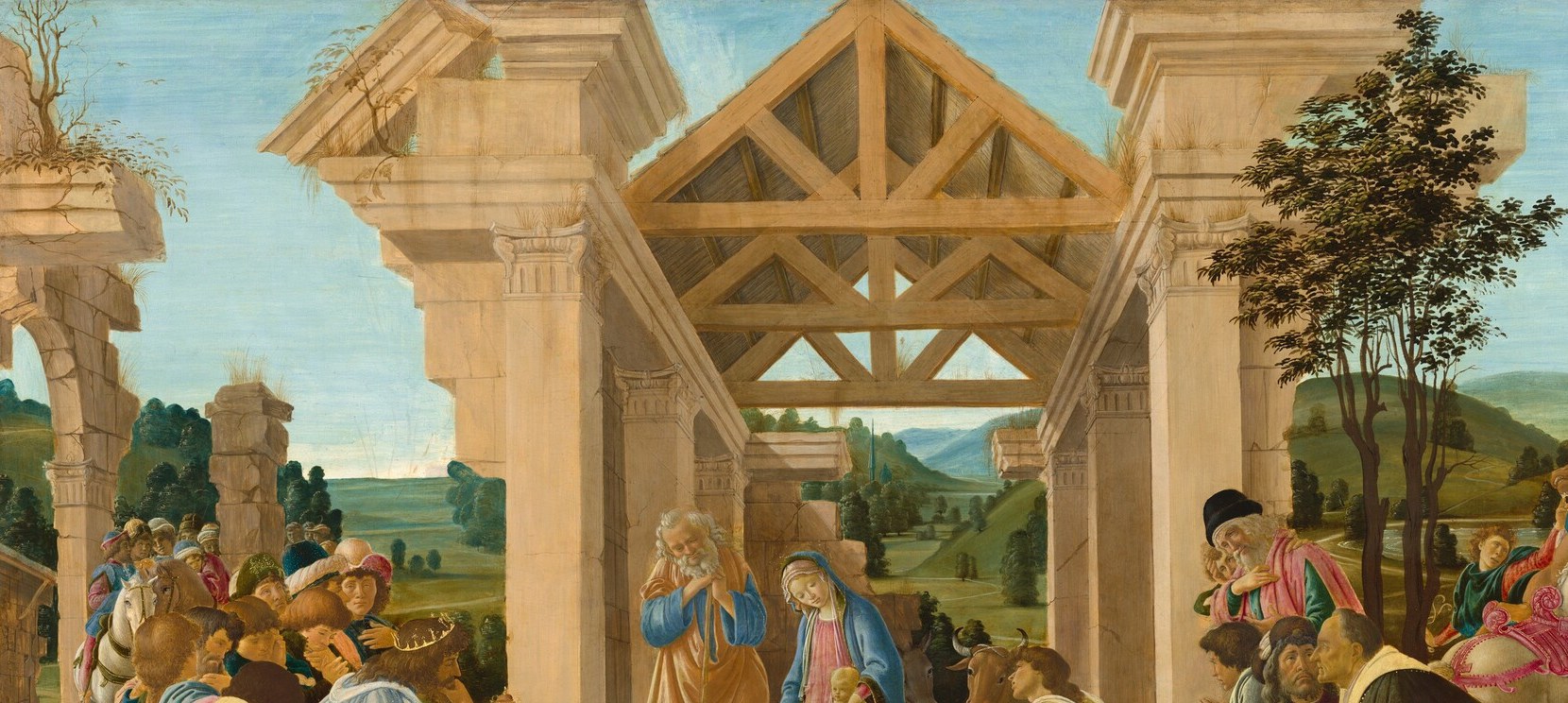
On the surface, Botticelli's Adoration of the Magi in the National Gallery of Art is a familiar scene: three kings paying homage to the infant Christ. Painted around 1478 to 1482 in tempera and oil on a poplar panel, it is a smaller, more introspective version of a subject Botticelli returned to several times.
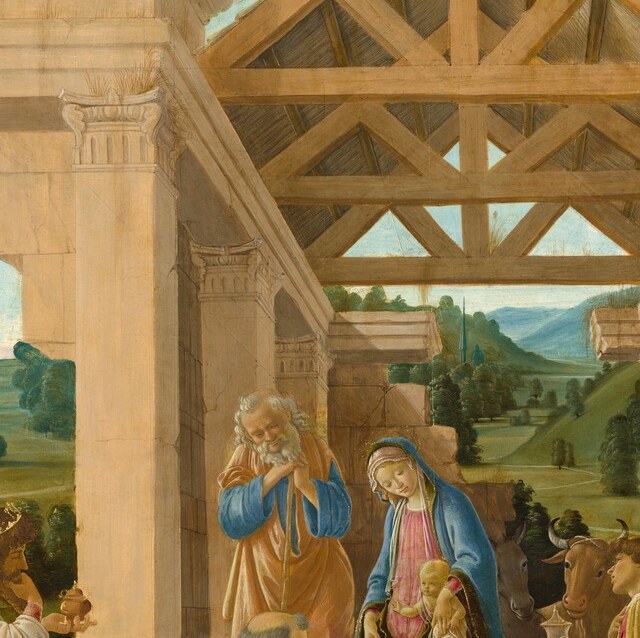
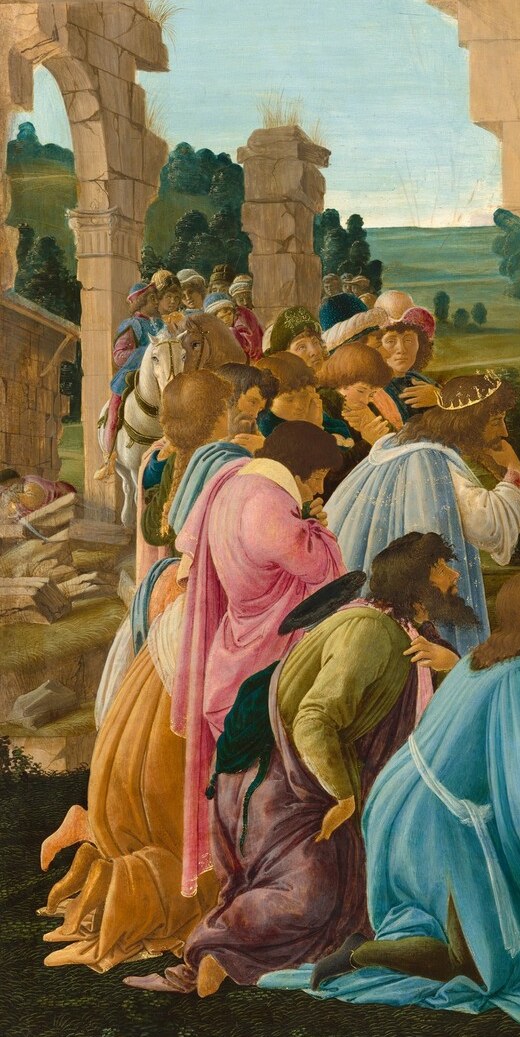
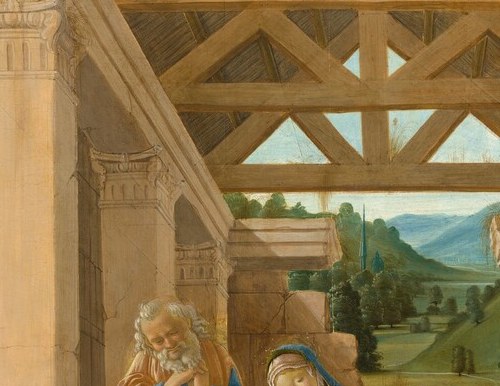
Look first at the architecture. The holy family sits not in a stable but inside a ruined classical temple. Rough wooden beams span broken marble columns. It is a creed stated in stone: Christianity rising within the ruins of pagan Rome.
Now look at the far right edge. A groom wrestles a rearing white horse. This is not a random stable animal. Scholars link it to the ancient Dioscuri horse-tamer sculptures Botticelli studied while in Rome working on the Sistine Chapel. While every figure in the center kneels in stillness, untamed pagan energy strains at the very margin of the painting. It is a tiny allegory most visitors walk straight past.
Botticelli painted this panel during his time in Rome under Pope Sixtus IV. It later passed through the hands of Dominique Vivant Denon and Czar Alexander I before Andrew Mellon bought it in 1931 and gave it to the National Gallery in 1937. What other details do you notice at the edges of a crowded painting?
#arthistory #botticelli #renaissanceart
Details
Transcript
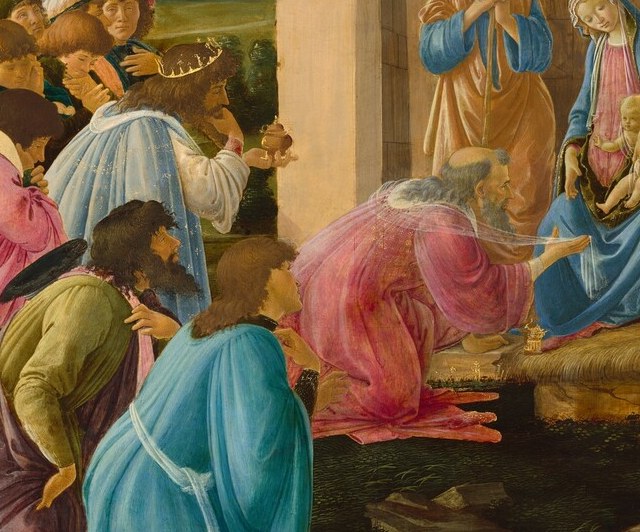
A ruined temple. A sacred child. A crowd of kings. Botticelli built this scene on a classical ruin. Christianity rising from Rome. The three Magi represent the three ages of man. All of them kneel. Every figure in the crowd is fixed on the infant. Every face is reverent. But look at the far right margin. Something is breaking free. A wild white horse, rearing. A groom wrestling to hold it back. It echoes the ancient Dioscuri horse-tamers. Pagan energy, still straining. Botticelli painted this in Rome, studying those very statues.