Artwork
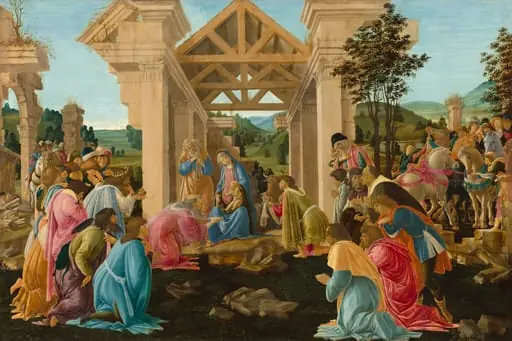
The Adoration of the Magi
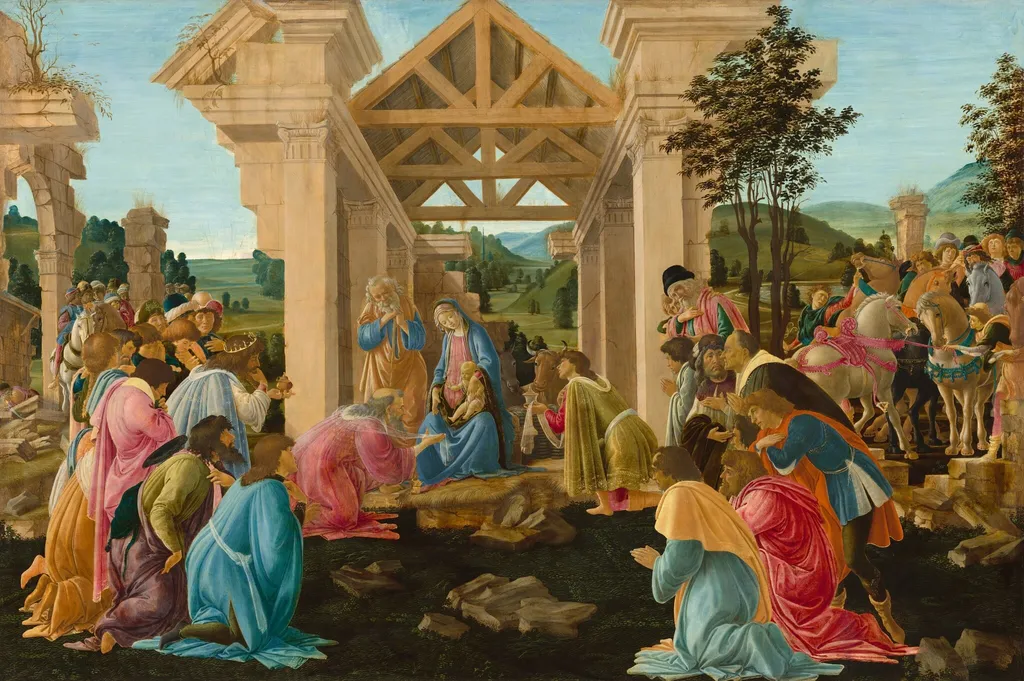
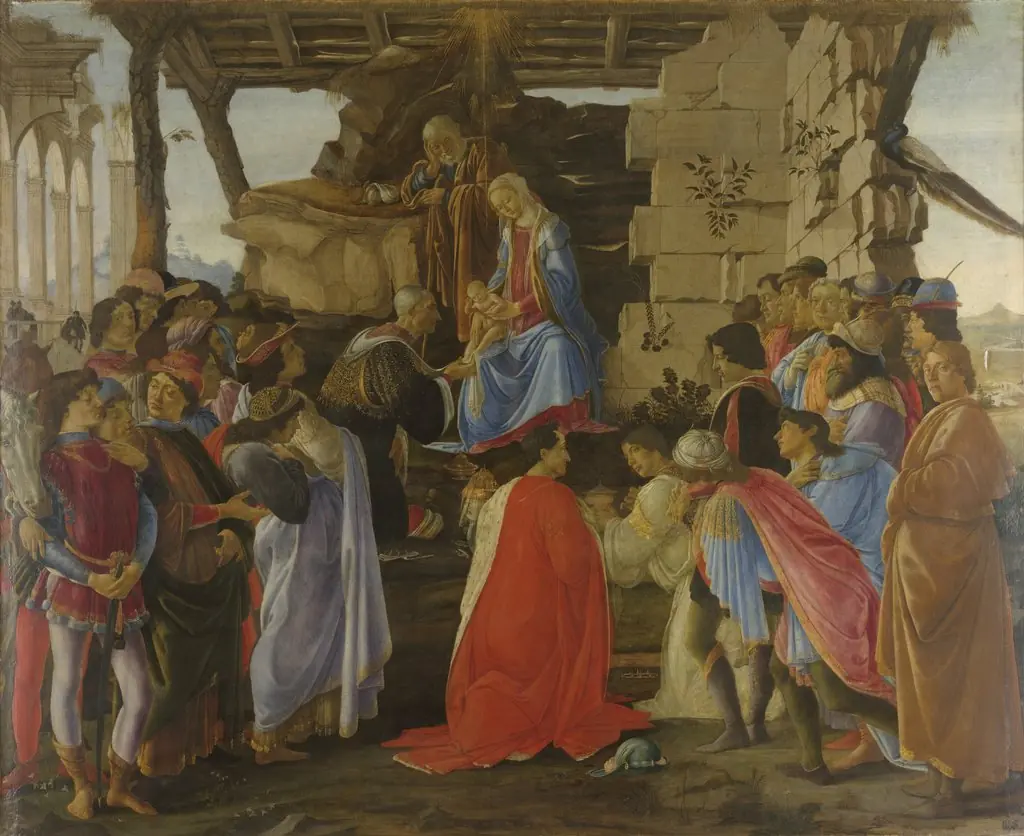
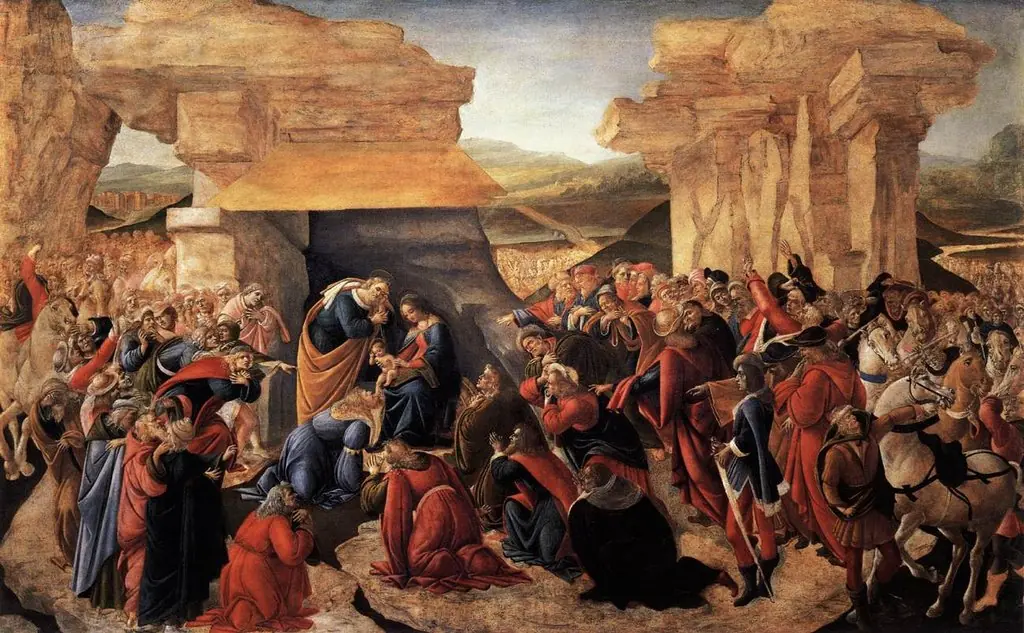
The Adoration of the Magi is a tempera painting by the Early Renaissance artist Sandro Botticelli. It dates from 1480 and is held in the collection of the National Gallery of Art.
About this work
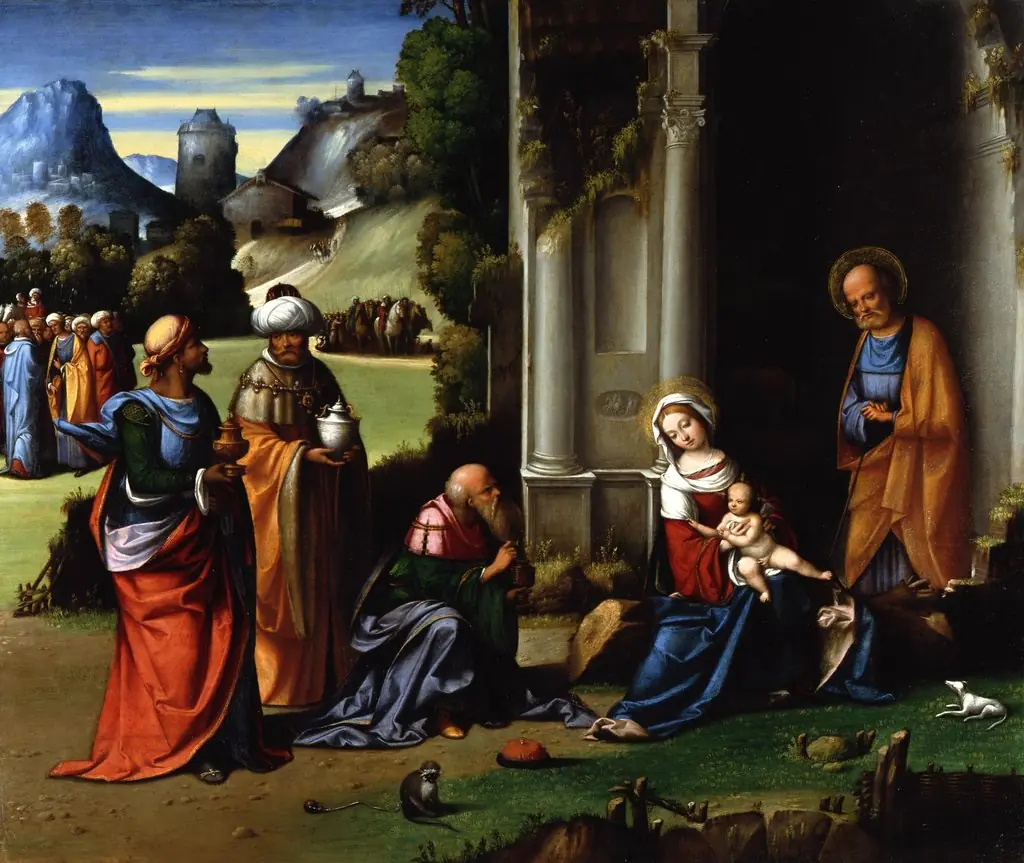
In a crumbling Roman temple, the Three Kings kneel before the Christ Child, their bodies angled in devotion rather than parade.
In a crumbling Roman temple, the Three Kings kneel before the Christ Child, their bodies angled in devotion rather than parade. Botticelli painted the Adoration around 1480, probably while in Rome frescoing the Sistine Chapel for Pope Sixtus IV. A groom wrestling a horse in the background echoes the classical Dioscuri sculptures he would have seen in the city. The poplar panel now belongs to the National Gallery of Art.
Subject & Meaning
The painting depicts the Adoration of the Magi, a standard Christian iconographic theme showing the three Magi visiting the newborn Jesus. The Holy Family, Mary, the Christ Child, and Joseph in the background, is centrally placed within a ruinous classical stable, a motif that likely symbolizes the supersession of pagan antiquity by Christianity. The three Magi are portrayed in successive stages of homage: the eldest (Melchior) prostrate before the Child, the middle-aged (Balthazar) kneeling, and the youngest (Gaspar) standing with his crown still on, yet to kneel.
The processions flanking the scene include numerous figures thought to be portraits of Botticelli’s contemporaries, though none have been identified. The idyllic landscape and rigorous perspective convey a sense of ordered devotion, reinforcing the work’s meaning as a visual meditation on Christ’s epiphany and universal recognition.
Technique & Style
Executed in tempera on a poplar panel (approx. 70 × 102 cm), the painting employs an Early Renaissance technique that combines smooth tempera modeling with a precise linear structure. The composition centers on the Holy Family beneath a wooden-roofed classical ruin, a motif inspired by contemporaneous Roman ruins and the style of Perugino. Symmetrically balanced groups of Magi and attendants frame the scene, while the vanishing point is reinforced by the roof’s rafters and the receding landscape.
The handling exhibits a deliberate, expressive quality: figures are less fluidly arranged than in Botticelli’s earlier Uffizi version, and the gestures of the horses and attendants introduce a sense of animation. Stylistically, the work reflects the artist’s return from Rome, blending Umbrian landscape influences with a heightened linear clarity that prefigures later, more expressive works.
History & Provenance
Painted by Sandro Botticelli around 1482, this work was likely created shortly after the artist's return from Rome, where he had contributed to the decoration of the Sistine Chapel; stylistic influences from Perugino are noted in the background. The painting first appears documented in the 18th century with the engraver Peralli, who claimed to have acquired it from a private Roman collection. It subsequently passed to Dominique Vivant Denon in Paris, and in 1808 was sold to Czar Alexander I of Russia, entering the Imperial Hermitage Gallery in Saint Petersburg.
In January 1931, as part of a secret Soviet art sale, it was purchased through intermediaries including Matthiesen Gallery, Colnaghi, and Knoedler by Andrew W. Mellon. Mellon deeded it to his charitable trust in June 1931, and it was gifted to the National Gallery of Art in Washington, D.C., in 1937.
Context
Painted around 1482 after his return from decorating the Sistine Chapel, Botticelli's Washington Adoration reflects the influence of his colleague Perugino in the idyllic background. The composition derives from his earlier Uffizi Adoration but employs a more centralized perspective, with symmetrical cortèges. Scholars note the painting marks a shift toward more expressionistic handling of form, prefiguring his later style.
The identity of the numerous contemporary figures in the procession remains unidentified. The work's sale as part of a secret Soviet transaction in 1931, acquired by Andrew Mellon, gave it a key role in founding the National Gallery of Art's collection.
Legacy
The painting's legacy is closely tied to its 1931 acquisition by Andrew Mellon from the Hermitage, a sale described as one of the most significant art transactions of the 20th century. It subsequently became part of the Mellon collection, which formed the founding nucleus of the National Gallery of Art in Washington, D.C., upon its opening in 1937, ensuring the work's prominent place in a major public museum.
Overview
Sandro Botticelli's The Adoration of the Magi, painted around 1478–1482, is a significant work executed in tempera and oil on a poplar panel. Now housed in the National Gallery of Art, Washington, this painting offers a distinct, introspective interpretation of the traditional biblical narrative. Unlike earlier, more elaborate depictions, Botticelli's version emphasizes quiet reverence and personal devotion, marking it as a mature re-evaluation of the popular subject.
Own this work as a print
Artist & collection
Artist
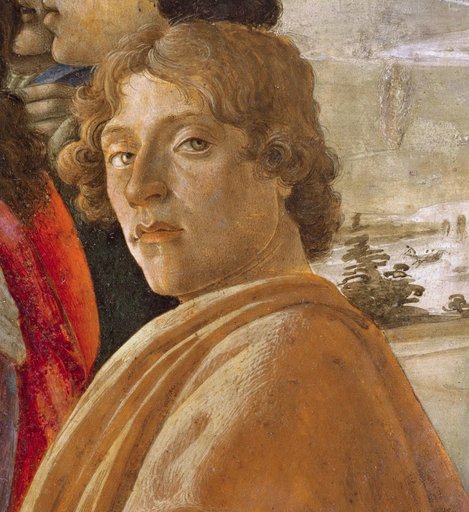
Alessandro di Mariano di Vanni Filipepi, better known as Sandro Botticelli or simply Botticelli, was an Italian painter of the Early Renaissance.

 Studied in the Renaissance Florence course
  Studied in the Mythology in Art course