Still life with fruit by Pieter Gallis
Pieter Gallis's 1673 oil painting, "Still life with fruit," held at the Rijksmuseum, offers a glimpse into the art market of the Dutch Golden Age, where not every artist achieved widespread fame, but still contributed to a vibrant artistic culture.
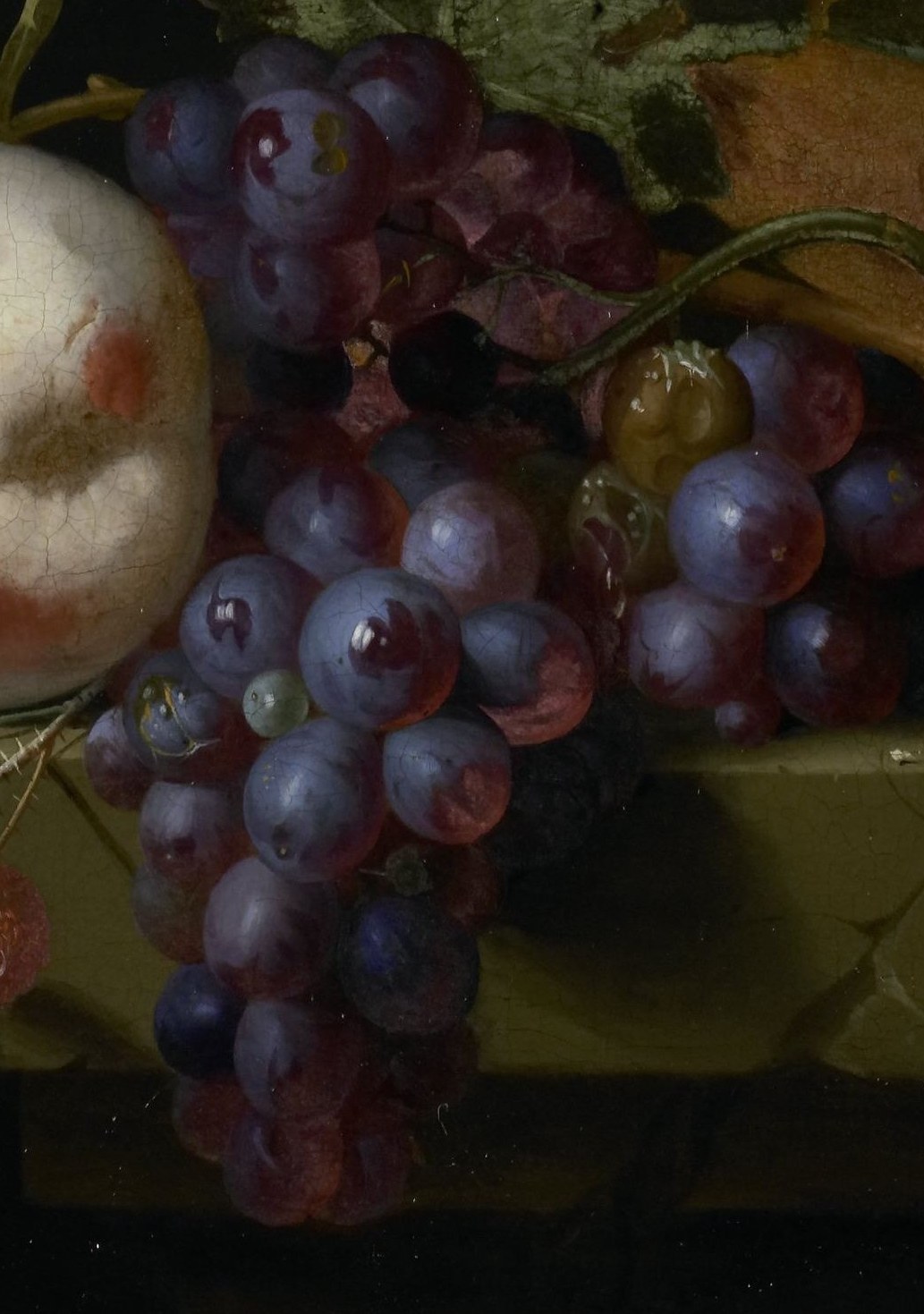
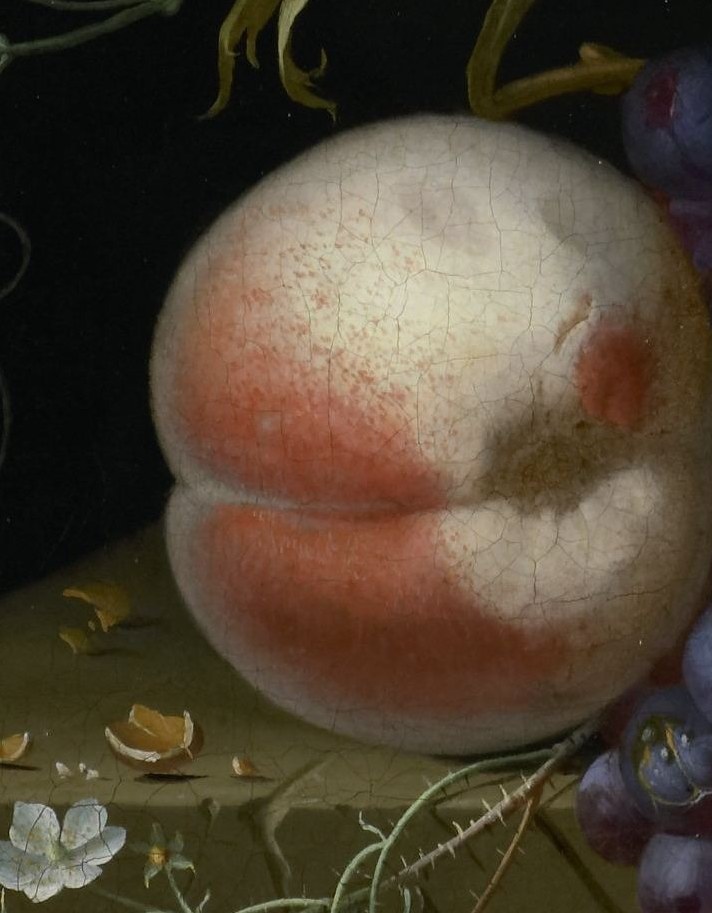
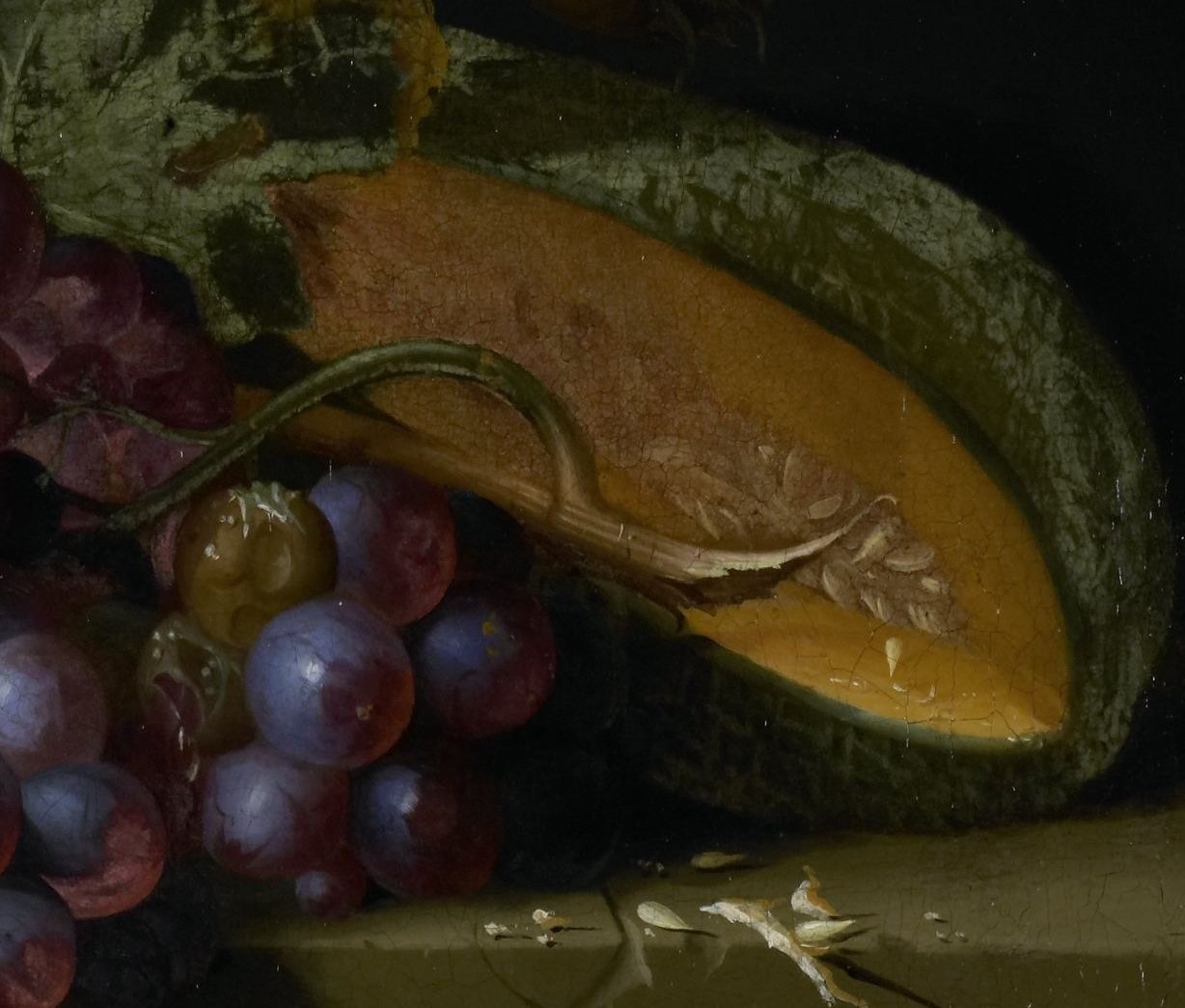
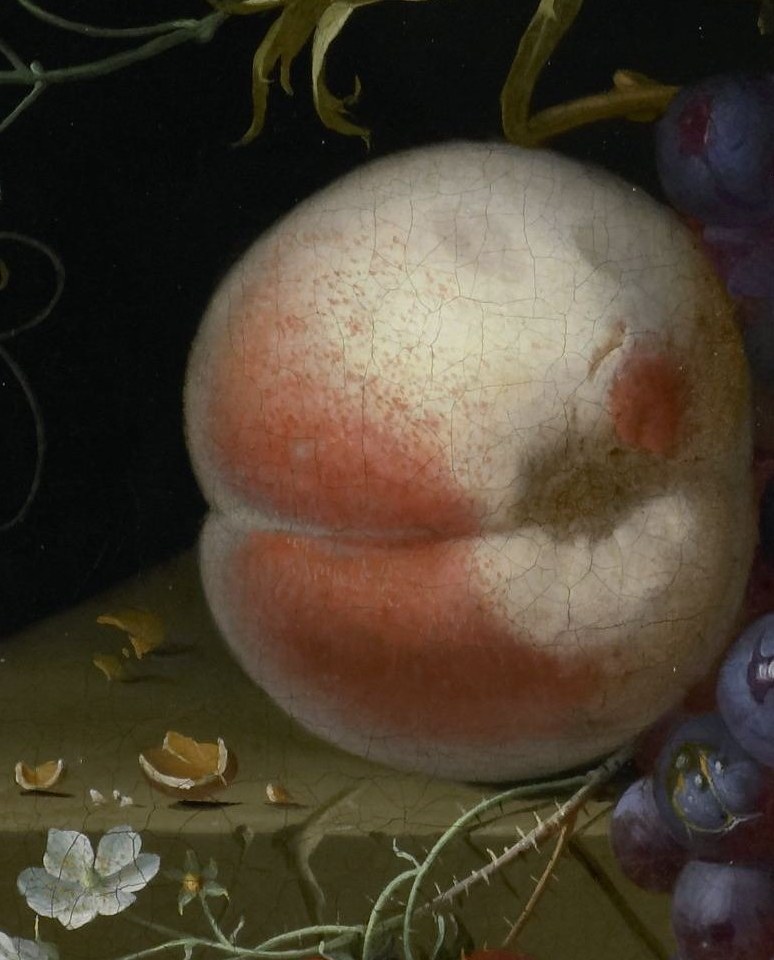
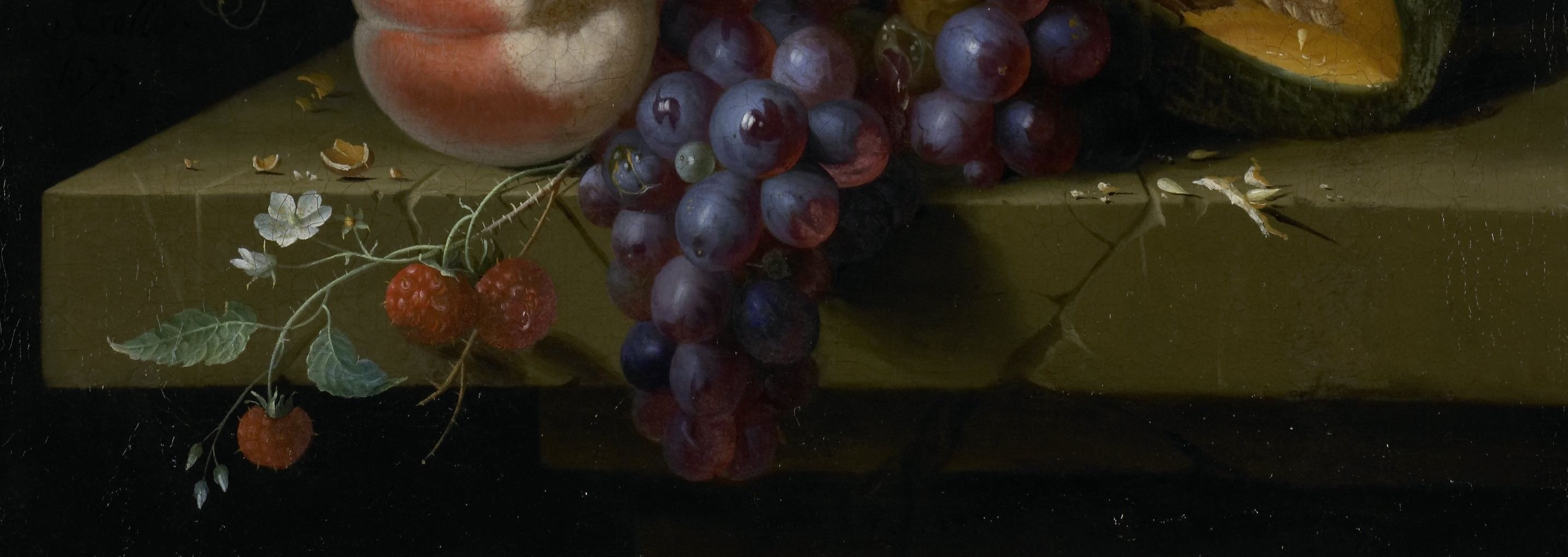
Gallis, known for his modest still-life compositions, masterfully uses chiaroscuro to make elements like the sliced melon and the ripe peach appear to glow with an inner light against the dark background. The arrangement of grapes, strawberries, and green pods creates a quiet dialogue about the transient beauty of nature's bounty.
During the 17th century, Dutch painters often focused on still-life subjects to demonstrate their skill in rendering texture and light. Gallis's work aligns with trends that favored domestic scenes, reflecting the period's market for art intended for private enjoyment rather than grand public display. His paintings are a testament to careful observation of ordinary objects.
What other everyday objects do you think would make for a compelling still life?
Details
Transcript
In the Dutch Golden Age, still life paintings were big business. But not all artists made a fortune from them. Pieter Gallis, who painted this, never became famous. He was known for modest arrangements, like these grapes. He used light and shadow, chiaroscuro, to make fruits glow. His work was for private enjoyment, not public display. His paintings still offer quiet beauty, like this sliced melon.