Young Woman Peeling Apples by Nicolaes Maes
View the artwork: Young Woman Peeling Apples →
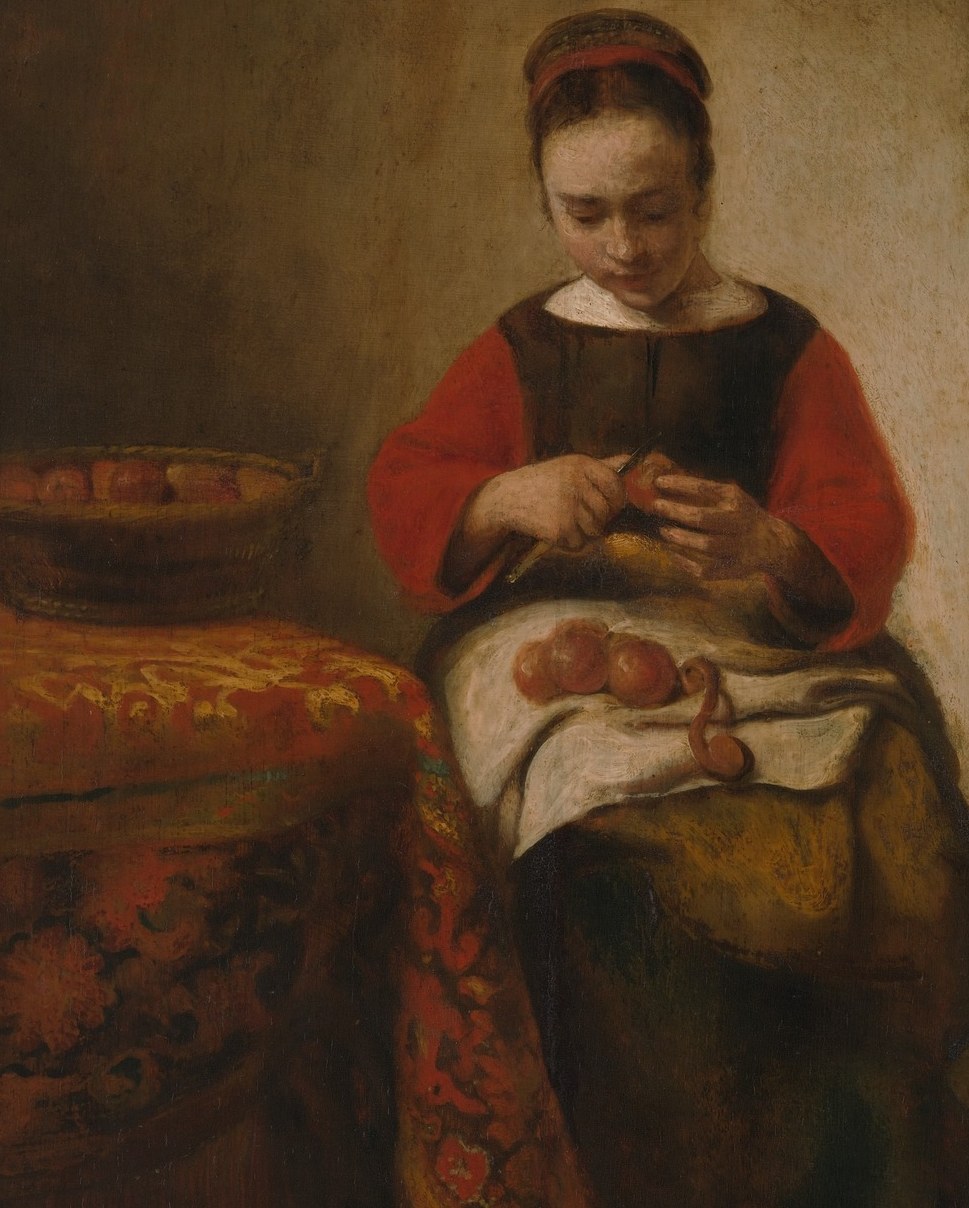
A kitchen maid peels apples, and a painter quietly overturns a genre. Nicolaes Maes painted 'Young Woman Peeling Apples' around 1655, not long after he left Rembrandt's Amsterdam studio and returned to his native Dordrecht. This small oil on wood panel (about 54.6 by 45.7 cm) now lives at The Metropolitan Museum of Art, the gift of collector Benjamin Altman in 1913.
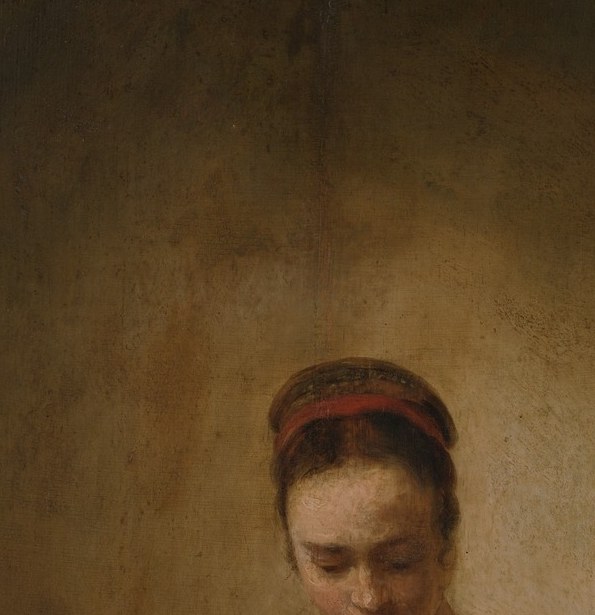
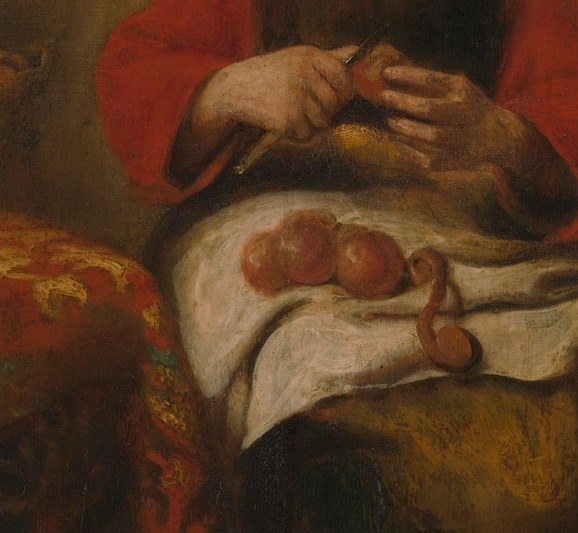
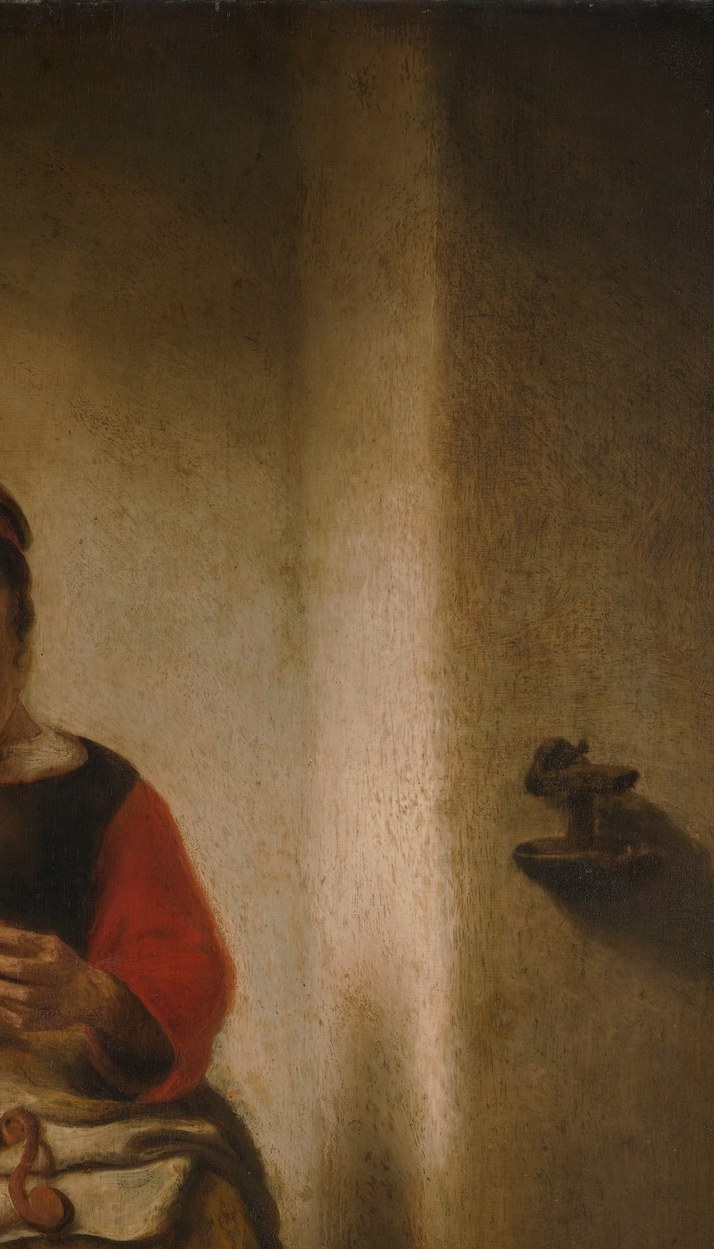
Look at how much weight Maes gives one working person. Her folded hands sit at the center, the peeled apple core catching light beside them. A Turkish carpet drapes the table, and red repeats across her headband, the apples, and the textile like a single visual chord. The soft light landing on her face and sleeve is pure Rembrandt inheritance, deep and gentle.
Earlier Dutch painters often cast housemaids as comic figures or objects of suggestion. Maes did something different here. He painted diligence itself, giving a servant the kind of absorbed, dignified attention that moralists of the day praised in housewives. The composition, with the table anchoring the solitary figure, invites comparisons with Vermeer's 'The Milkmaid' and marks a genuine turn in Dutch genre painting.
A kitchen was a stage for quiet morality, and Maes was among the first to treat it that way. What do you notice first when you stop on this painting, the hands or the light?
#arthistory #dutchgoldenage #nicolaesmaes
Details

Transcript
The sitter is a kitchen maid peeling apples. By 1655, Dutch painters mostly used servants for jokes. This painter gives her the focus of a grand portrait. He studied under Rembrandt before returning to Dordrecht. A red chord ties her headband, the apples, and the carpet. Diligence, not desire. It was a quiet break from tradition.