Artwork
Young Woman Peeling Apples
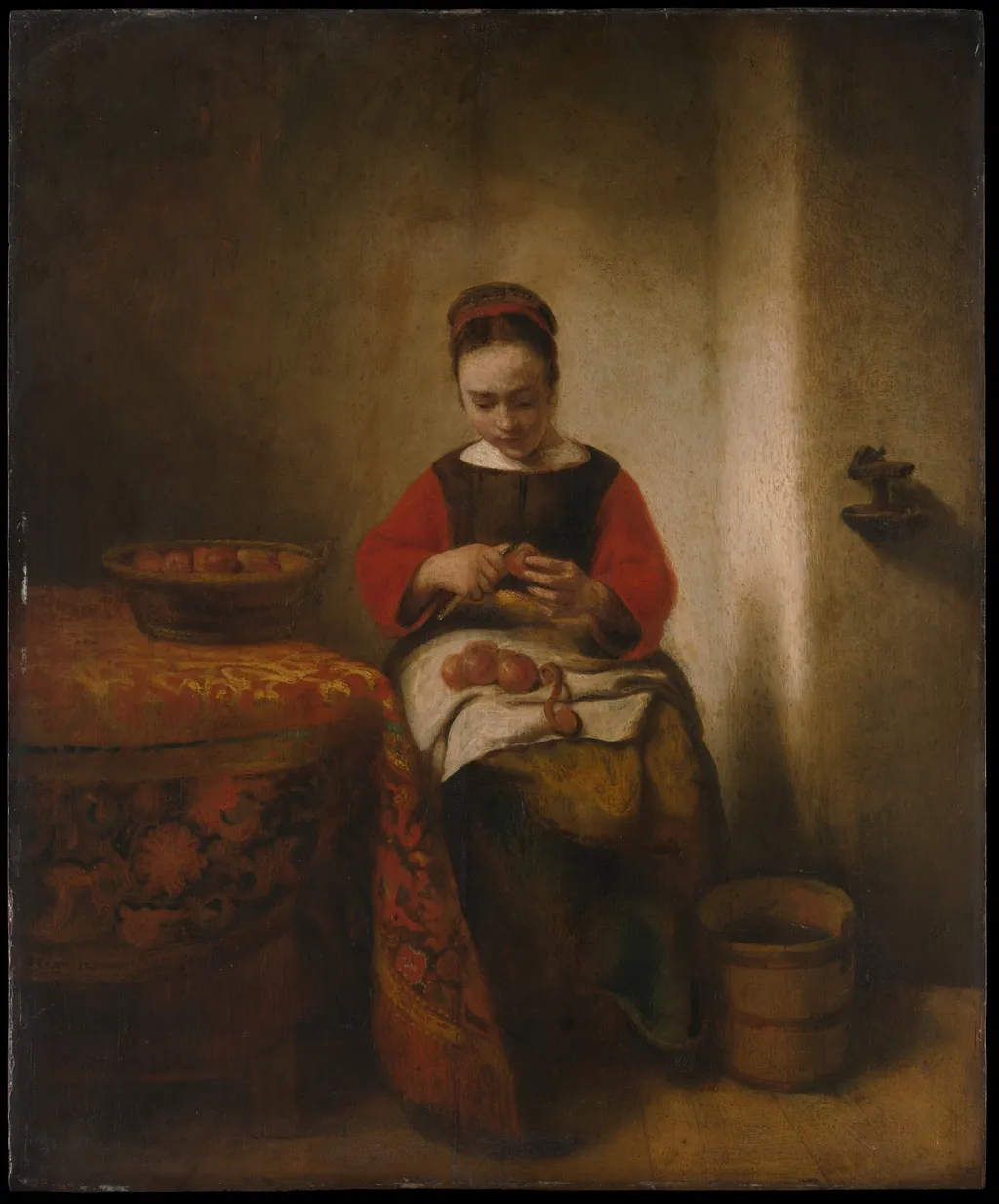
Young Woman Peeling Apples is an oil painting by the Dutch Golden Age artist Nicolaes Maes. It dates from 1655 and is held in the collection of the Metropolitan Museum of Art.
About this work
Painted around 1655 by Nicolaes Maes, a pupil of Rembrandt, the scene turns a household chore into a study of quiet concentration.
A kitchen maid bends over a basket of apples beside a table draped with a Turkish carpet, her red dress echoed in the fruit she peels and the wool beneath her hands. Painted around 1655 by Nicolaes Maes, a pupil of Rembrandt, the scene turns a household chore into a study of quiet concentration. The Metropolitan Museum of Art holds the panel, which entered the collection through the 1913 bequest of Benjamin Altman.
Subject & Meaning
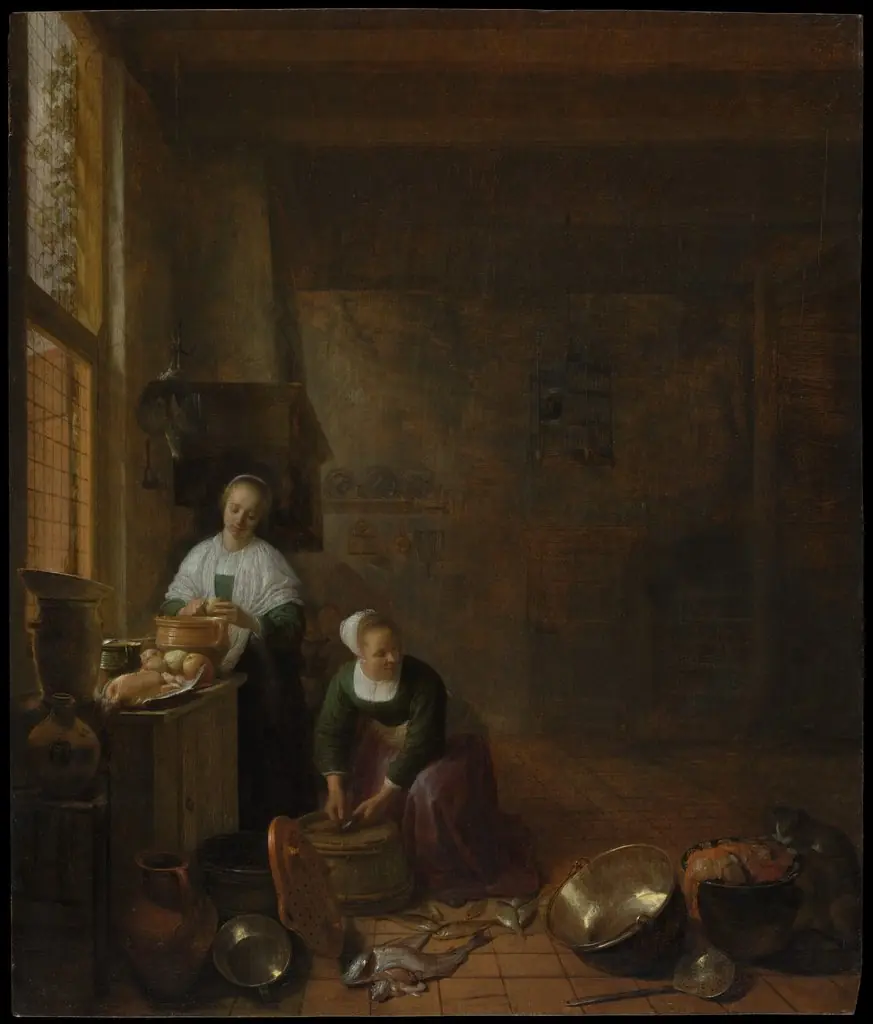
The painting depicts a young woman seated indoors, engaged in the careful task of peeling apples. Objects such as a knife, peeler, basket, apron, bucket, and tablecloth establish the iconography of a 17th-century Dutch domestic interior focused on household work. As a genre scene, the subject represents everyday labor, specifically the role of a domestic worker.
The meticulous act of peeling apples, combined with the woman's concentrated pose, likely symbolizes diligence and the virtues of domesticity, a common moral theme in Dutch Golden Age painting that valorizes industriousness and order within the home.
Technique & Style
The painting is executed in oil paint on a panel support, measuring 54.6 by 45.7 cm. Stylistically, it belongs to genre painting, depicting a domestic worker peeling apples. The composition includes a woman, tablecloth, bucket, knife, peeler, apron, and basket, emphasizing the everyday nature of the labor. The handling and condition are not documented in the available sources.
History & Provenance
Painted by Nicolaes Maes in 1655, this work entered the collection of Benjamin Altman, a noted early 20th-century art collector. Through Altman's ownership, the painting eventually made its way to the Metropolitan Museum of Art, where it is housed today. No specific commission details or earlier provenance are recorded in the available sources.
Overview
Nicolaes Maes's painting, Young Woman Peeling Apples, created around 1655, depicts a domestic scene rendered in oil on wood. The artwork portrays a kitchen maid engaged in a simple chore, elevating her with a sense of quiet dignity. This piece marks a notable development in Dutch genre painting, moving away from conventional portrayals of servants to offer a more contemplative and respectful view of everyday life.
Context
Created shortly after Maes's return to Dordrecht from his apprenticeship with Rembrandt in Amsterdam, this painting represents a significant shift within Dutch genre painting. It challenged prevailing conventions by presenting a servant not as a figure of amusement or temptation, but as an individual worthy of respectful observation. This dignified depiction resonated with the moral values prevalent in 17th-century Dutch society, which emphasized virtues like diligence and modesty in domestic life.
Own this work as a print
Artist & collection

Artist
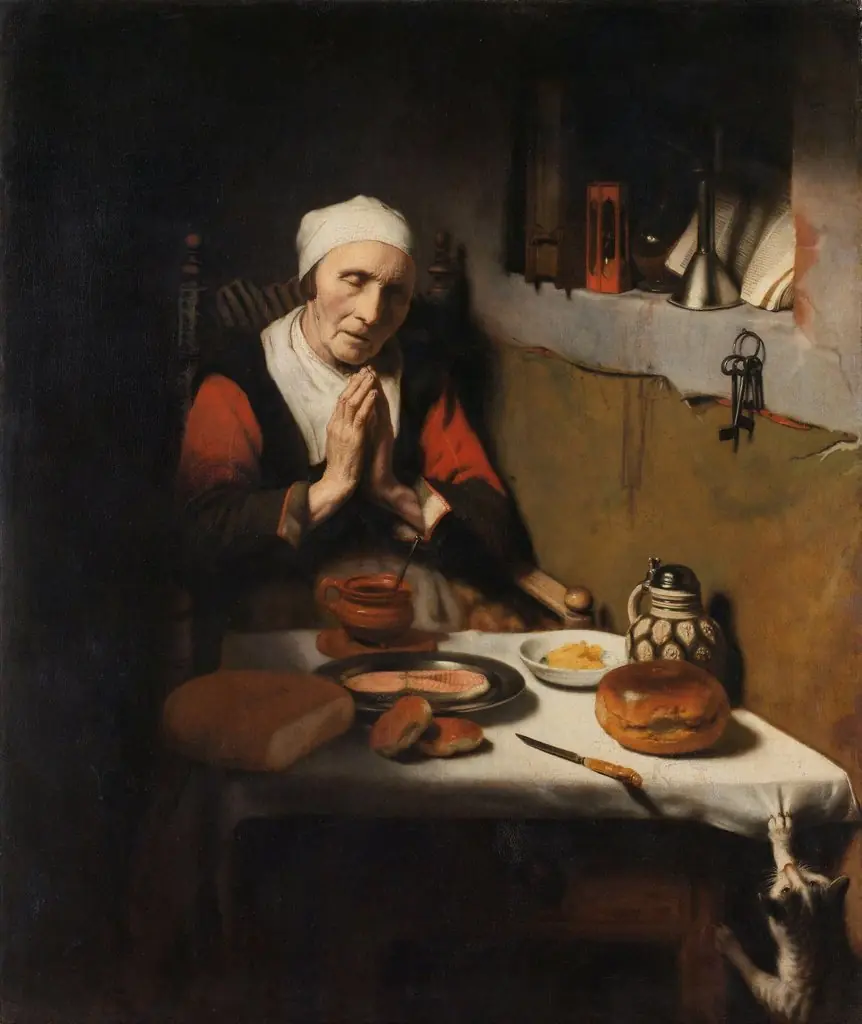
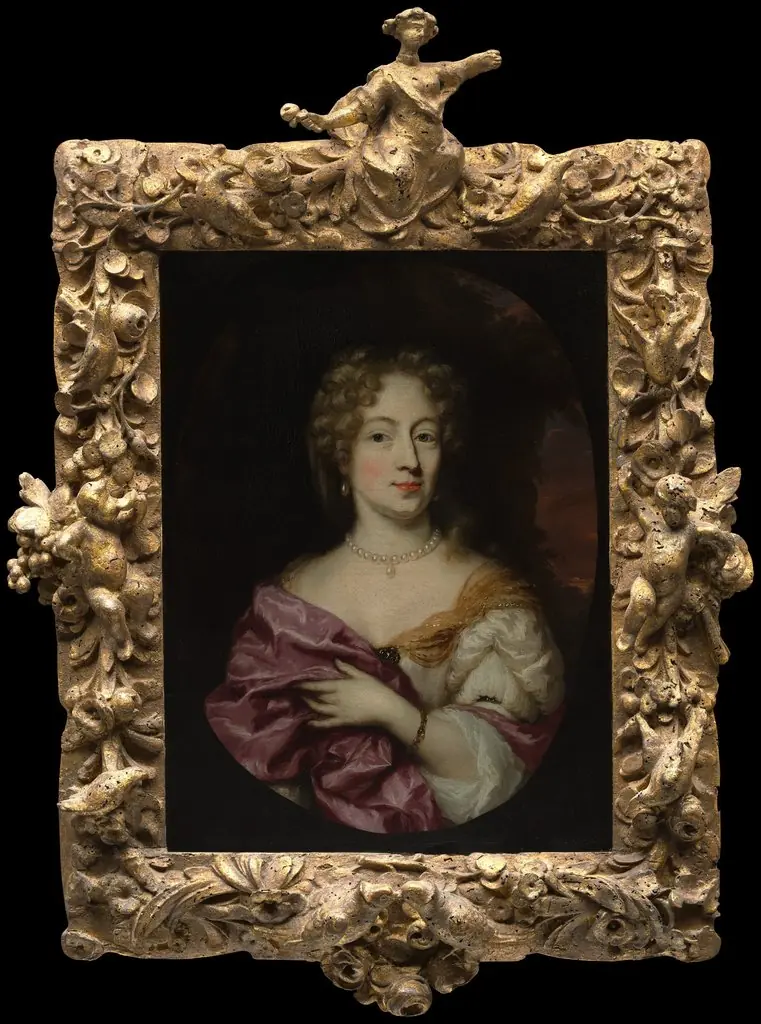
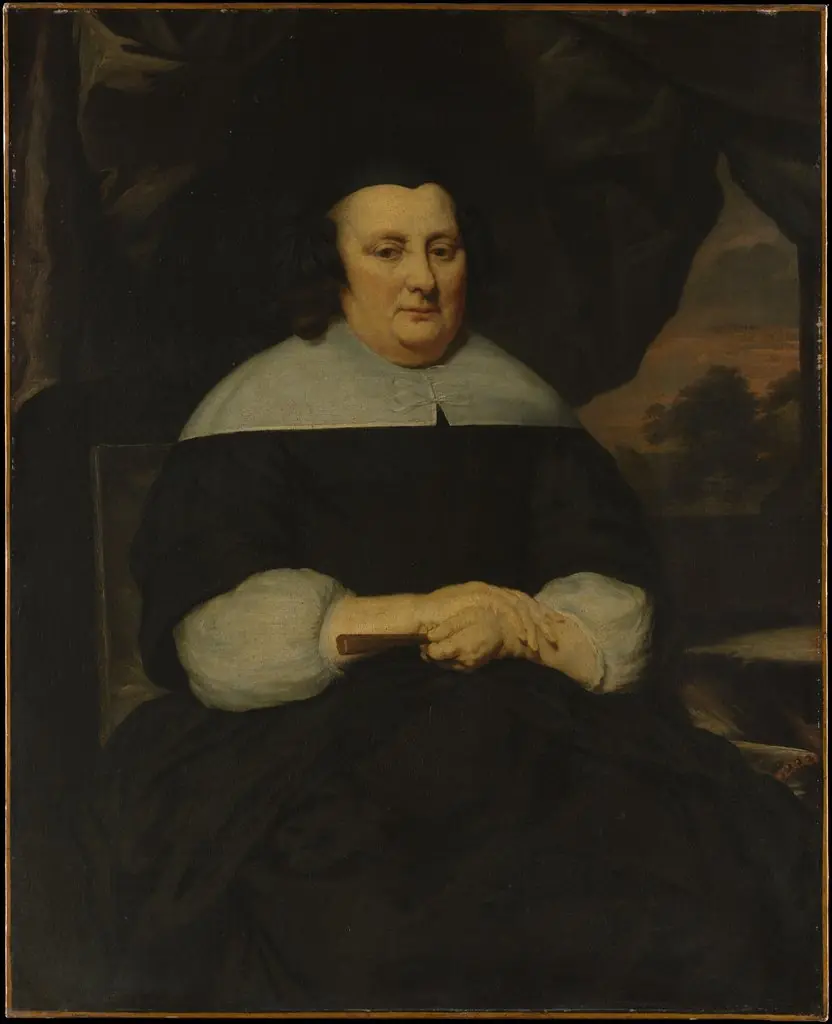
Nicolaes Maes (January 1634 – December 1693; buried 24 December 1693) was a Dutch painter known for his genre scenes, portraits, religious compositions and the occasional still life.




 Studied in the Dutch Golden Age course