The Lamentation by Luis de Morales
View the artwork: The Lamentation →
Luis de Morales painted 'The Lamentation' around 1560, an oil on walnut panel now at the Metropolitan Museum of Art. He was known as 'El Divino' for the intensity of his spiritual art, and this panel is a concentrated example: three mourners holding Christ's body in a black void that removes time and place entirely.
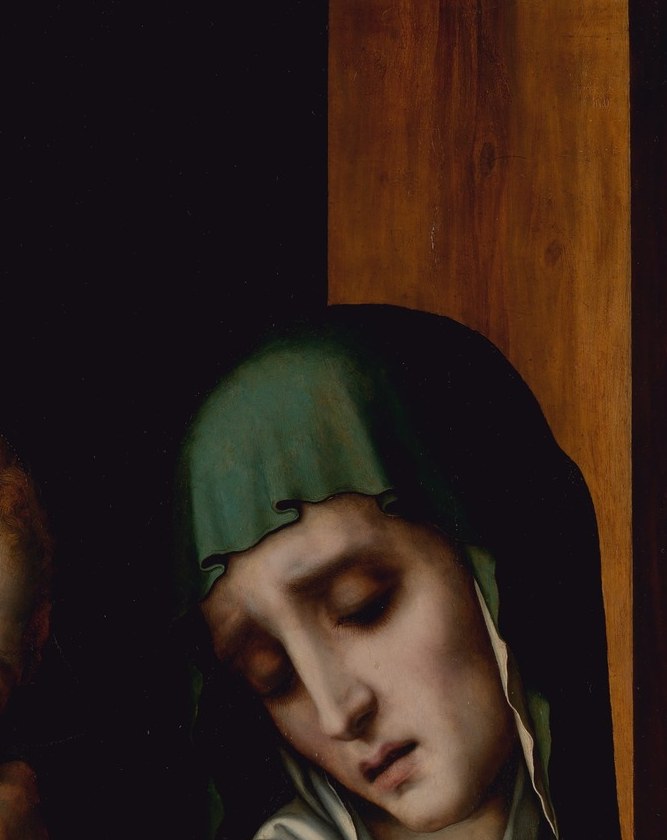
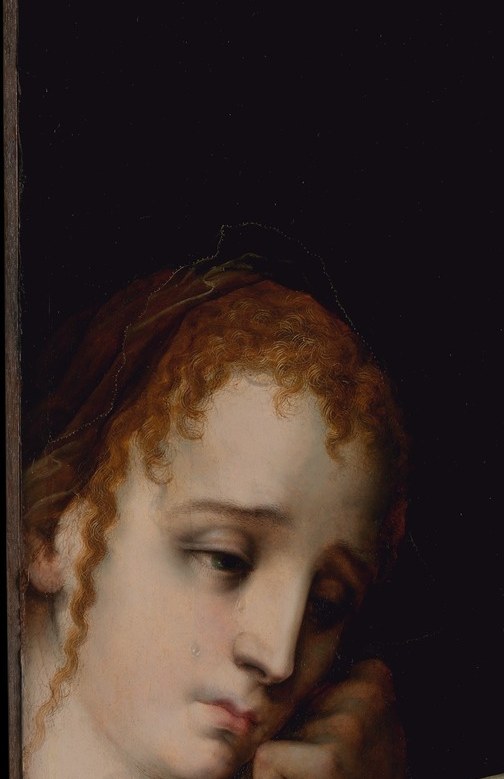
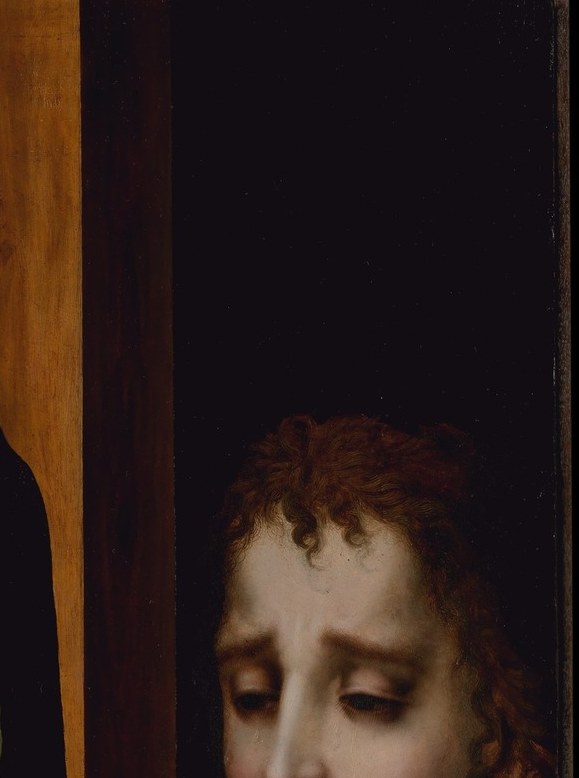
Look first at the Virgin Mary's face. Her eyes are downcast toward her son, and Morales has painted individual tears still caught on the lower lid. Then move to Mary Magdalene, on the left, whose averted gaze and parted lips suggest a grief too raw to face directly. Saint John, on the right, compresses his brow and holds his sorrow inward. Three registers of loss, all different.
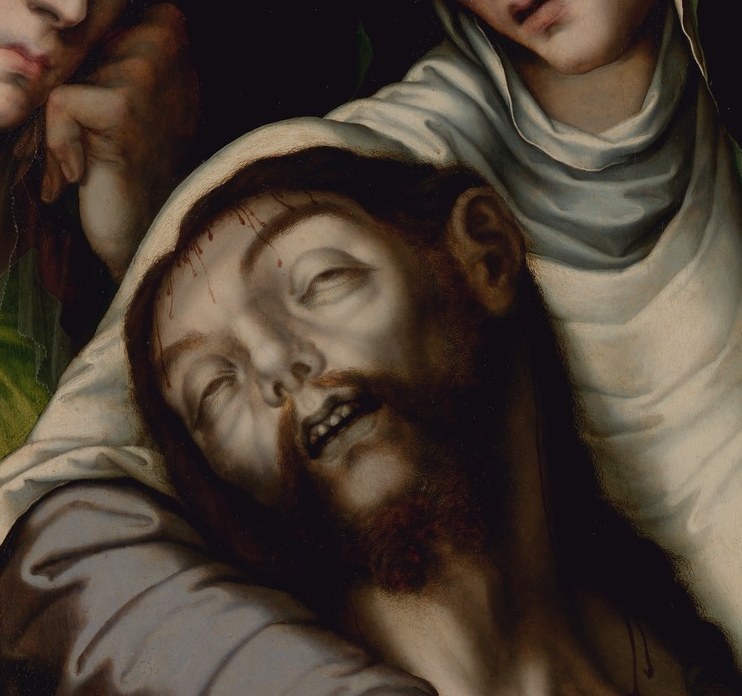
Morales was the favorite painter of the Counter-Reformation reformer Saint Juan de Ribera. His Netherlandish-trained eye rendered blood rivulets, eyelashes, and pooled tears with a forensic care meant to provoke compassionate meditation. The painting's ownership is extraordinary: it belonged to Pope Pius VII and hung in the Quirinal Palace in Rome. Upon his death in 1823, it passed to his nephew, and the Chiaramonti family kept it for nearly two centuries.
The Met acquired it in 2015. A pope's private devotional image, now in a public gallery. What do you notice first: the mother's face, or the body she is holding?
#arthistory #spanishrenaissance #luisdemorales
Details
Transcript
A mother holding her dead son. Her eyes are still wet. The painter earned his name 'El Divino' for details like this. Mary Magdalene cannot look directly at him. Saint John holds his grief tighter. Keeps his brow low. The wounds are still open. Even the blood is precise. This panel once hung in the private rooms of a pope. A mother, alone with her son.