Dunes by the Sea by Ruisdael, Jacob van
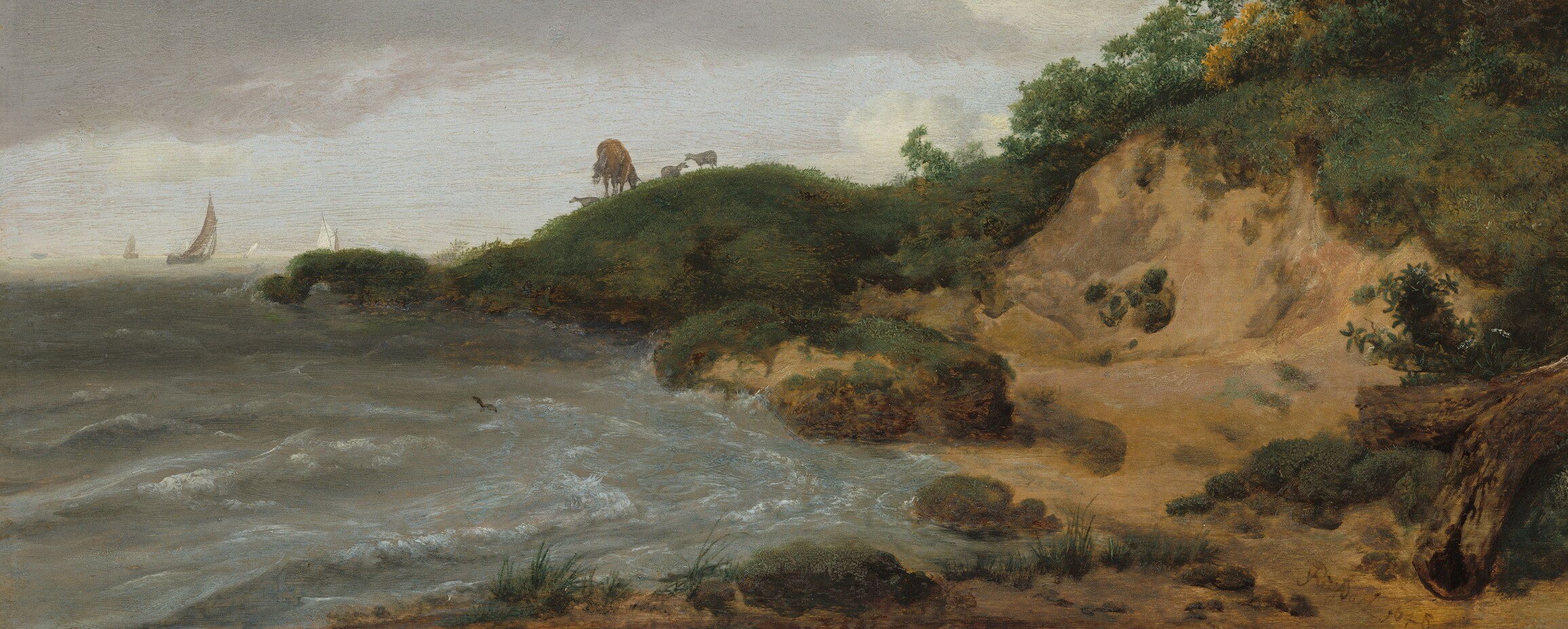
A young painter walks to the edge of the land and records what he sees. Dunes by the Sea is Jacob van Ruisdael’s 1648 panel, now in a private collection. He was barely 20 when he painted it, and it contains no human figures at all.
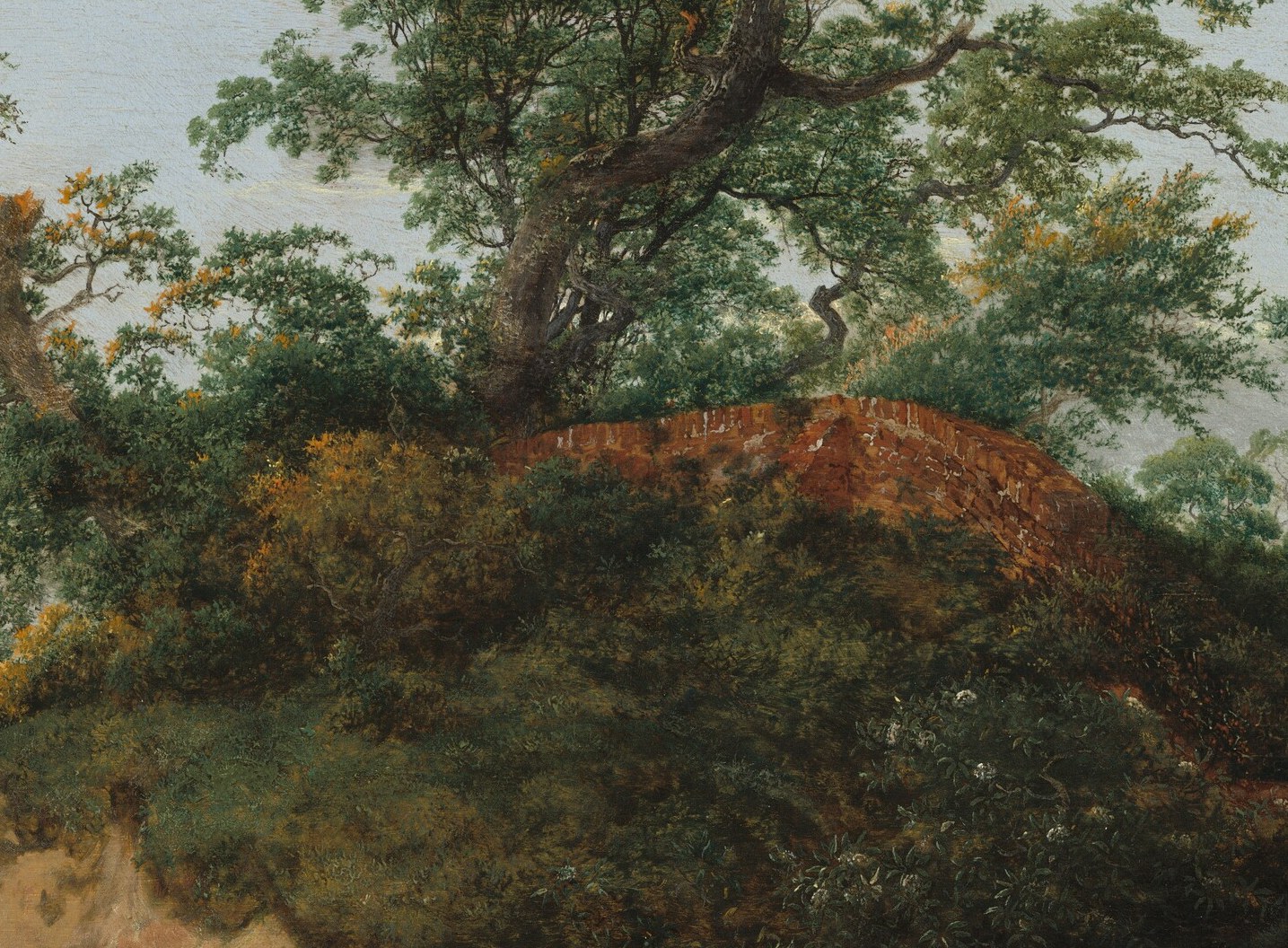
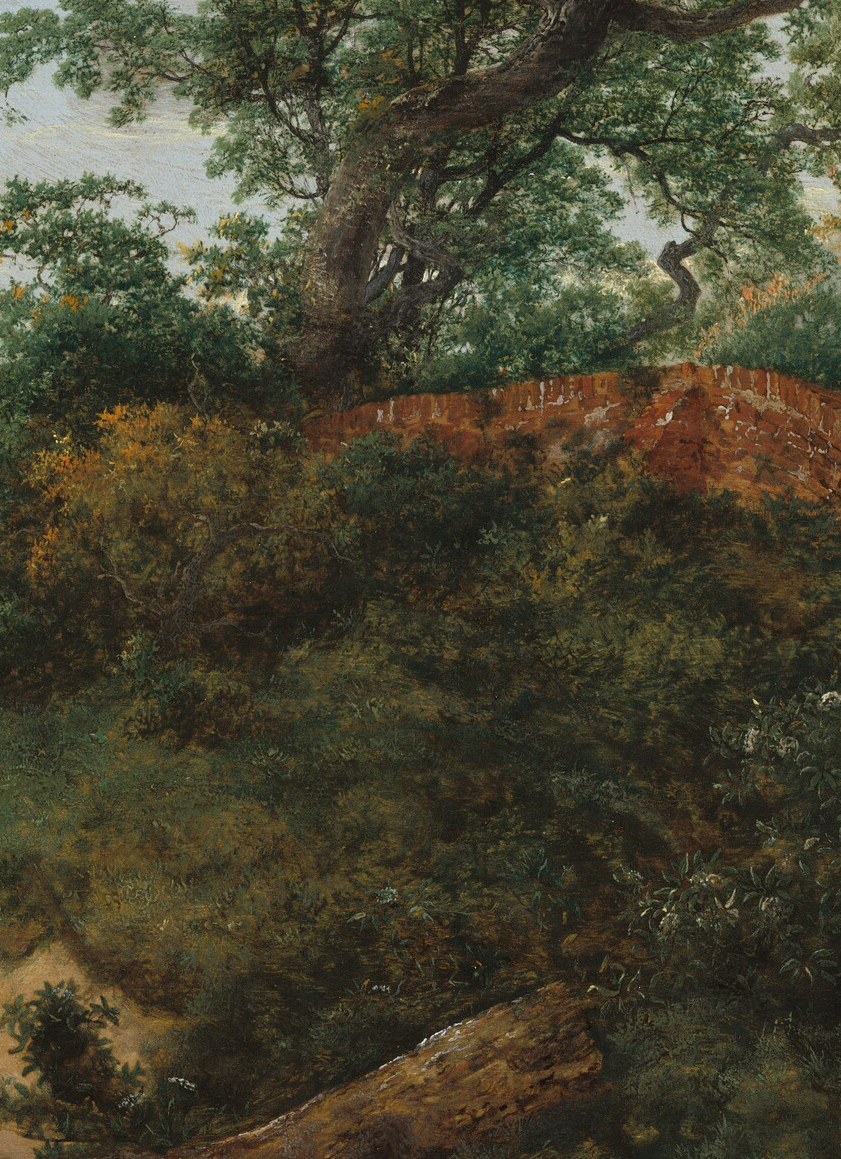
Let your eye go to the dune bank first. The exposed sand is reddish-brown, layered like geology, erosion happening in real time. Then find the tree: its trunk twists hard to the left, recording the prevailing wind over decades. Ruisdael made a living archive of weather out of a single oak.
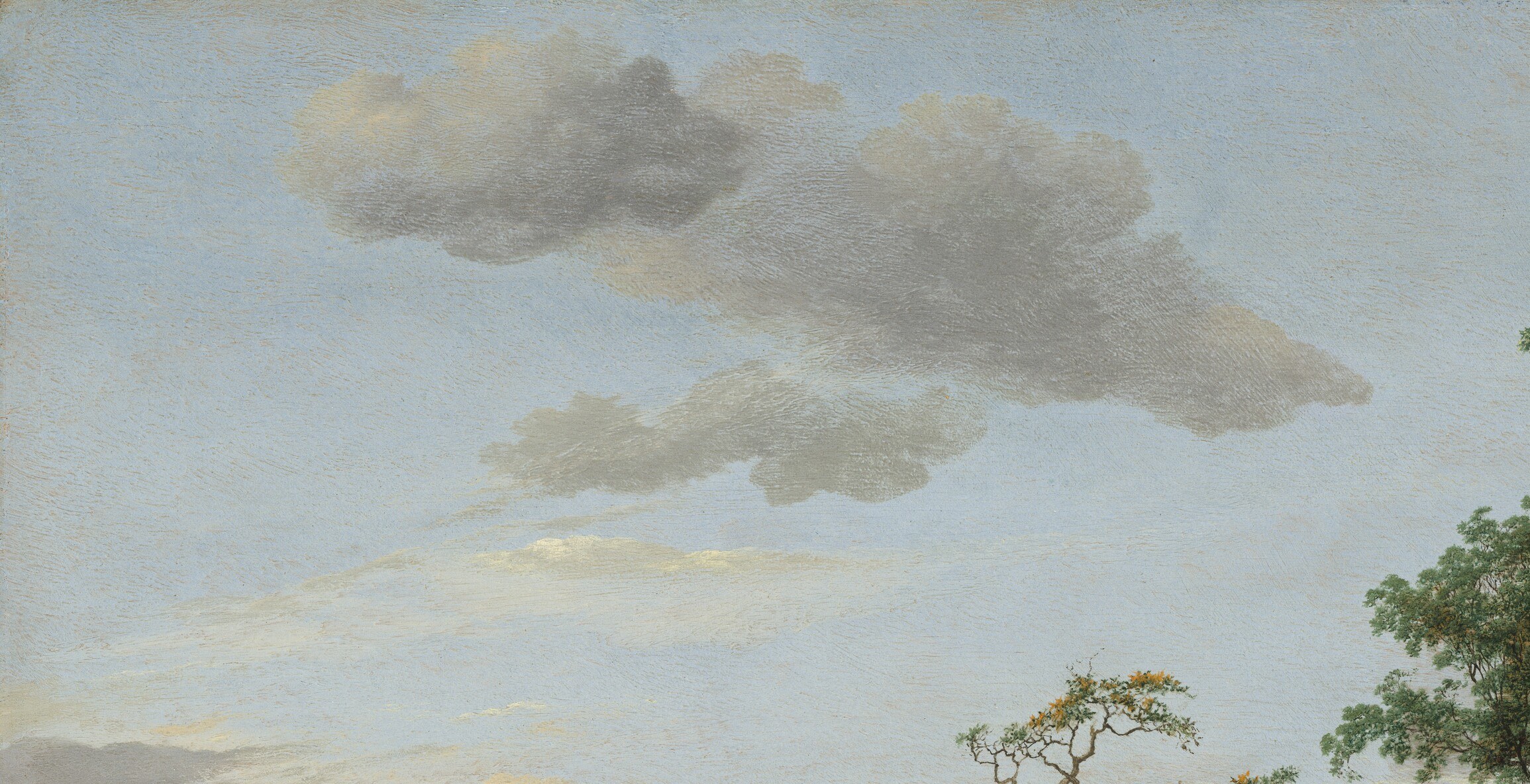
The sky is the real protagonist. The cloud mass on the upper left is built from at least three distinct layers, all internally lit, and the low horizon line gives the sky two-thirds of the panel. One tiny white sail sits on the far left; most viewers walk right past it.
In 1648 the Dutch Republic was spending enormous sums maintaining the dunes that held back the North Sea. This painting is not empty, it is a portrait of the barrier that made Dutch life possible. Ruisdael painted the exact topography people relied on, and he did it without drama, because the stakes were already high.
Details
Transcript
No people. No animals. Just the coast, watching. 1648. The Dutch Republic is fighting to keep the sea out. These dunes were the only thing between the ocean and the farmland. Look at the trunk. Decades of wind carved this tree. Tall cumulus clouds, lit from inside, a Dutch-sky signature. One small sail on the horizon. Almost nobody sees it first. The horizon is kept low. The sky gets two-thirds of the panel. Ruisdael was 20 years old. He already understood that land is fragile.