Madame Monet and Her Son by Renoir, Auguste
View the artwork: Madame Monet and Her Son →
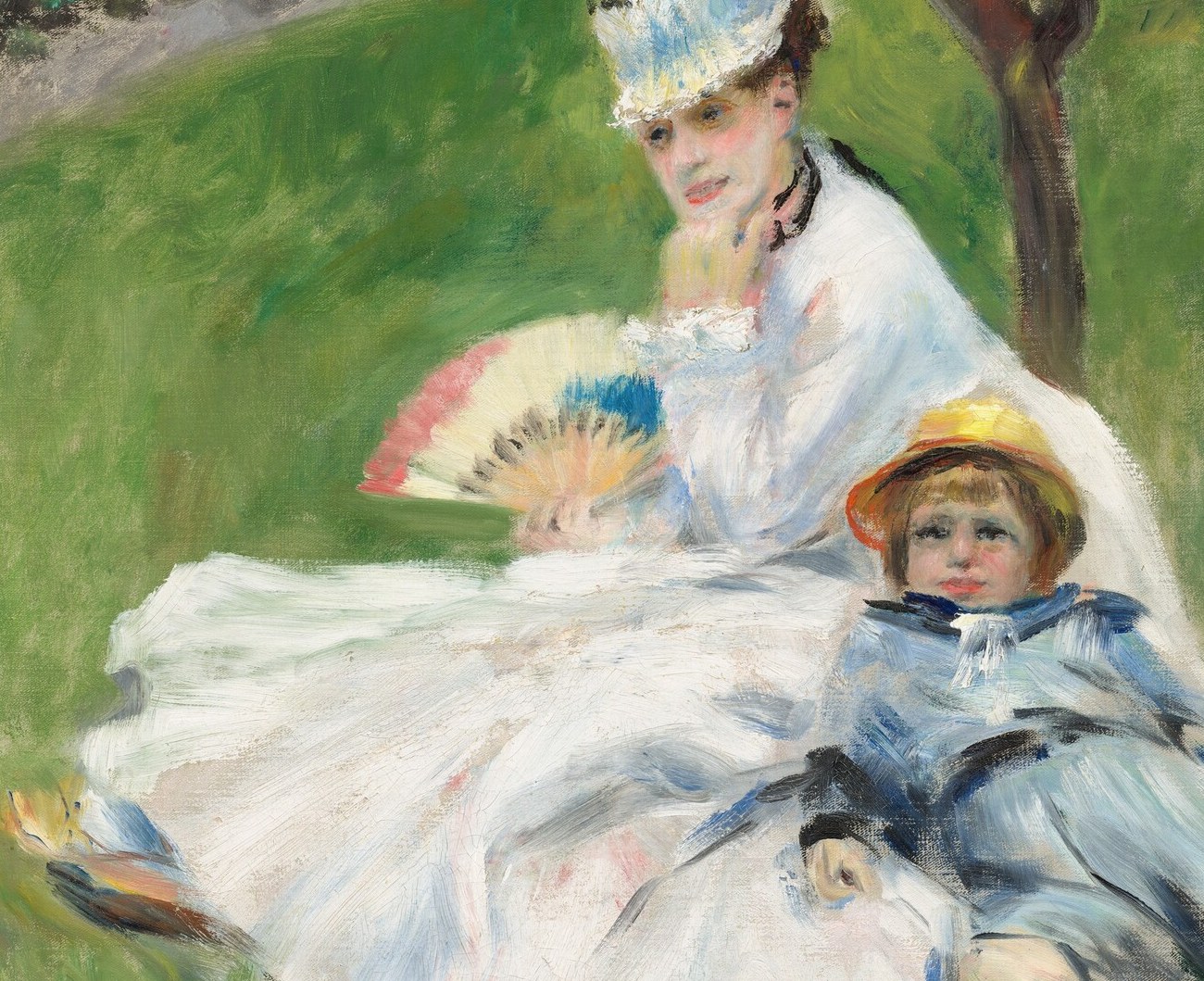
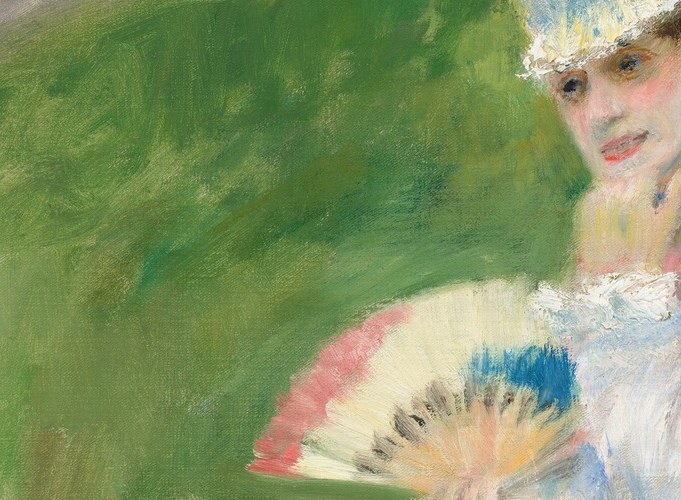
This is Auguste Renoir's "Madame Monet and Her Son," painted in 1874 and now at the National Gallery of Art in Washington. It is a document of friendship as much as a portrait, Renoir painted Claude Monet's wife Camille and their son Jean in Monet's own garden at Argenteuil, during the summer the Impressionist movement was first being named.
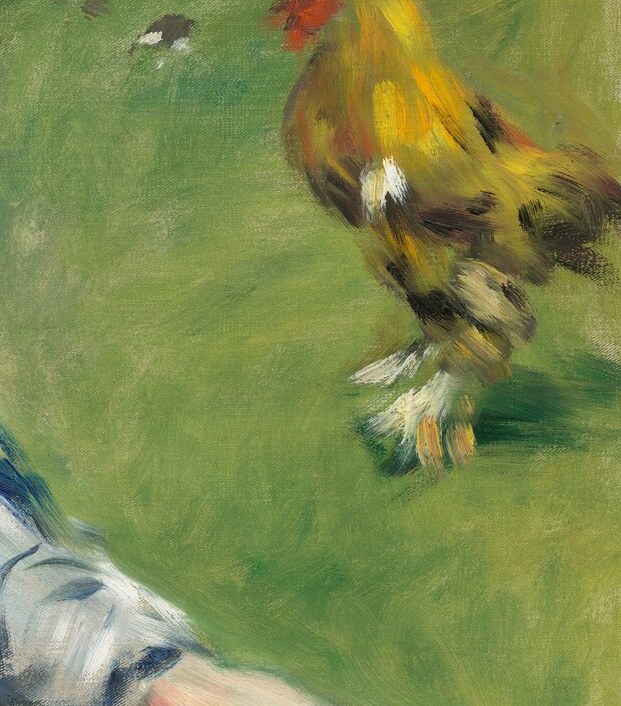
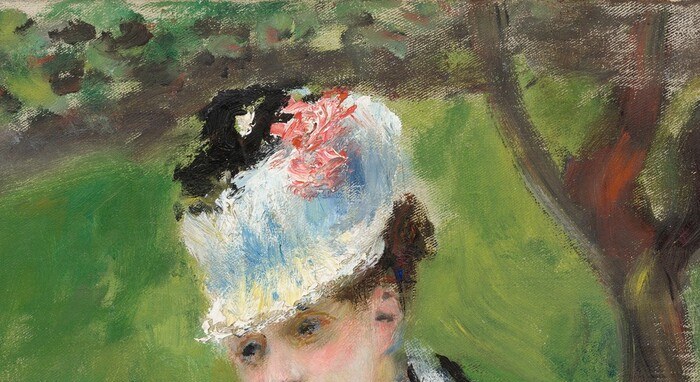
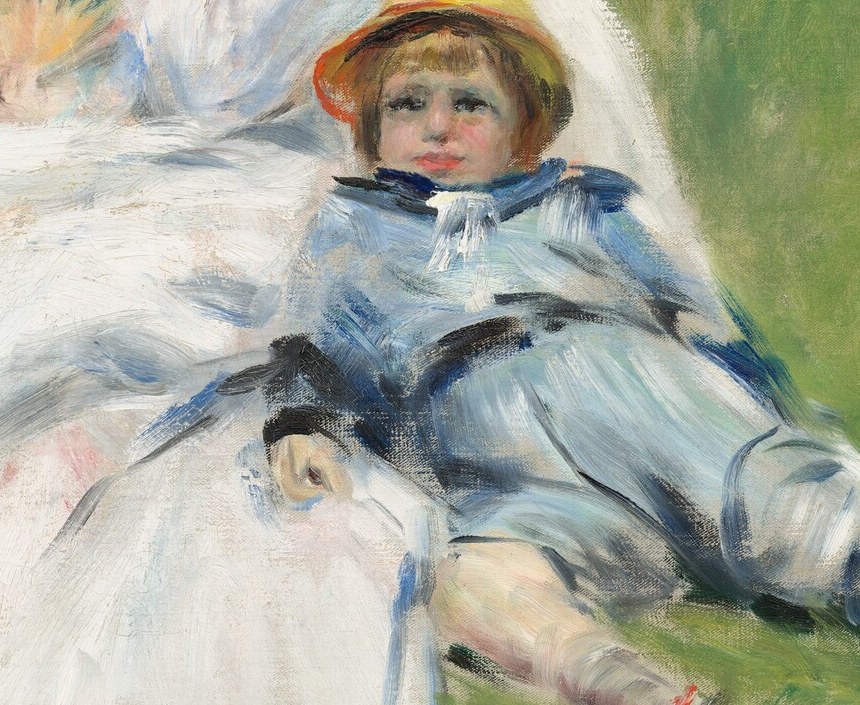
Look at the light. Renoir doesn't paint solid ground, he paints patches of sun moving across the grass and across Camille's striped dress. The rooster on the right is a wonderful surprise, a reminder that this was a real garden with real animals scratching around in it. The child's sailor suit and the mother's folding fan are precise period details that fix the painting in the leisure culture of the 1870s middle class.
Renoir and Monet were close friends who had painted side-by-side five years earlier at La Grenouillère, inventing the broken-brushwork style that would define Impressionism. But in 1874 Renoir was deeply poor, Monet, slightly less so, and the story goes that Monet's household would sometimes send Renoir home with food. There is no trace of that hardship in this canvas. What he chose to record was warmth, sunlight, and the quiet physical closeness of mother and son.
A painting can be a witness to a single afternoon. This one remembers a friend's garden, a child too young to hold still, and a painter who set his own difficulties aside to catch the light while it lasted.
#arthistory #impressionism #renoir
Details
Transcript
The year is 1874. The place: Argenteuil, a suburb of Paris. This is Camille Monet. She was Claude Monet's wife and his most important early model. Her striped dress is the height of bourgeois fashion. Loose, light, made for an afternoon outdoors. The little boy is Jean, their son. He wears a sailor suit, the uniform of French childhood. The painter is not Claude Monet. It is his friend, Auguste Renoir. Renoir was poor that summer. Monet sometimes sent him bread so he wouldn't starve. He paints their garden as a patchwork of sunlight, warm and generous, with nothing of his own hardship in it.