Artwork
Madame Monet and Her Son
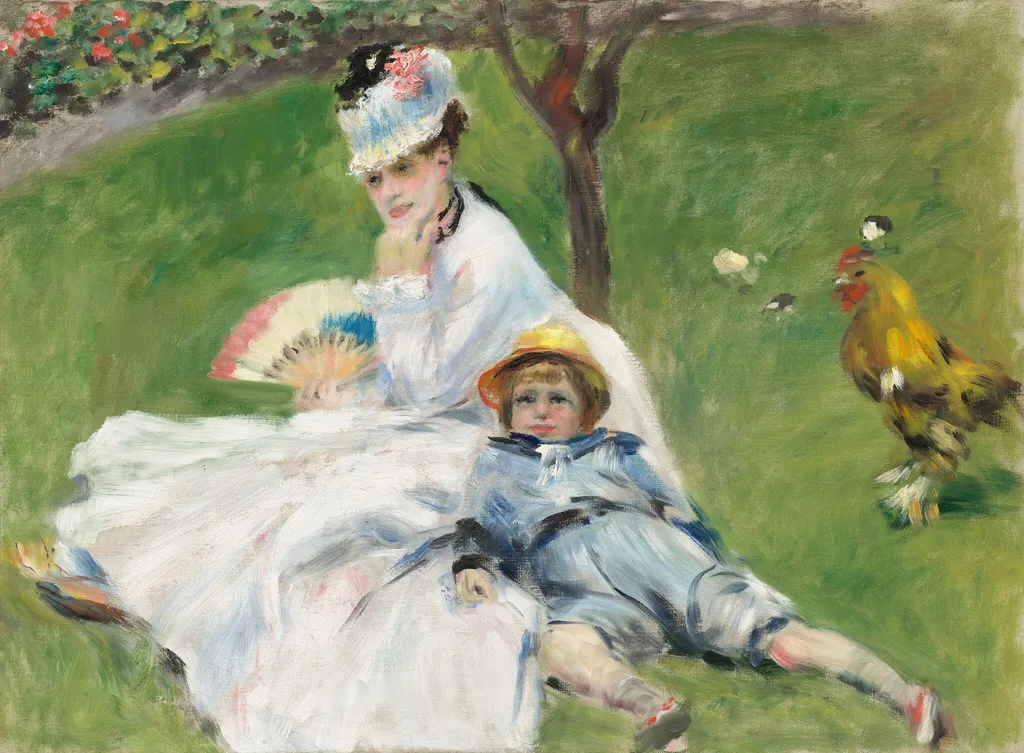
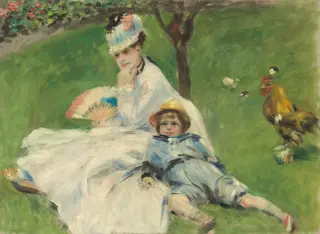
Madame Monet and Her Son is an oil painting by the Impressionist artist Pierre-Auguste Renoir. It dates from 1874 and is held in the collection of the National Gallery of Art.
About this work
Subject & Meaning
The painting depicts Camille Doncieux, the wife of Claude Monet, seated with her son Jean. Created in 1874 by Auguste Renoir, the work functions as a portrait capturing an intimate domestic moment between mother and child. The composition serves to document the presence of the Monet family, with Camille Doncieux and Jean Monet as the sole figures portrayed in the scene.
Technique & Style
The work depicts Camille Doncieux and her son Jean Monet, rendered in a style characteristic of the artist's impressionistic approach during this period.
Executed in 1874, this portrait is an oil painting on canvas measuring 50.4 by 68 cm. The work depicts Camille Doncieux and her son Jean Monet, rendered in a style characteristic of the artist's impressionistic approach during this period. The application of oil paint on a woven canvas support allows for the fluid handling of light and texture typical of Renoir's technique in the mid-1870s. The work currently resides in the National Gallery of Art, Washington, D.C.
History & Provenance
Painted in 1874, the work remained with the artist until it passed to the sitter's husband, Claude Monet, in Giverny. By inheritance it descended to their son, Michel Monet. In 1952 the painting was sold to Capt. Edward H. Molyneux in Paris, and on 15 August 1955 it was acquired by Ailsa Mellon Bruce in New York.
Bruce later bequeathed the painting to the National Gallery of Art, Washington, D.C., in 1970, where it carries accession no. 1970.1.1.
Overview
Madame Monet and Her Son, executed by Pierre-Auguste Renoir in 1874, depicts Camille Doncieux, the wife of Claude Monet, seated outdoors with their young son, Jean. The composition captures the figures in a sun-dappled garden setting, where Renoir employs loose, visible brushstrokes to render the interplay of light and shadow on the grass and foliage. Camille wears a blue and white striped dress, her posture relaxed as she holds Jean's hand, while the boy, clad in a straw hat, gazes slightly away from the viewer.
Painted during a pivotal year for the Impressionist movement, this work exemplifies Renoir's dedication to capturing modern life and the fleeting effects of natural light. The painting reflects the close personal and professional ties between Renoir and the Monet family, who frequently served as his models. Created shortly before the first Impressionist exhibition, the piece demonstrates the artist's shift away from academic conventions toward a more spontaneous technique that prioritizes atmospheric sensation over precise detail.
It remains a significant example of Renoir's portraiture from his early Impressionist period, highlighting his ability to infuse domestic scenes with warmth and vitality.
Context
Created around the nascent period of the Impressionist movement, this painting aligns with the group's pioneering efforts to exhibit their innovative art. It embodies their commitment to depicting contemporary subjects and exploring new ways to render light and atmosphere. The work offers insight into the artistic environment when Impressionists were beginning to challenge traditional academic styles.

Own this work as a print
Artist & collection
Artist
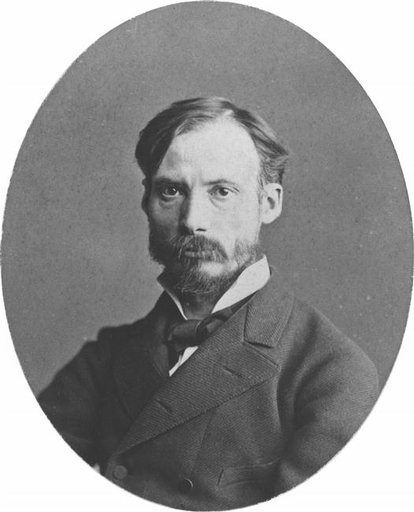
Pierre-Auguste Renoir was a French artist who was a leading painter in the development of the Impressionist style.

 Camille Monet und ihr Sohn Jean in Argenteuil
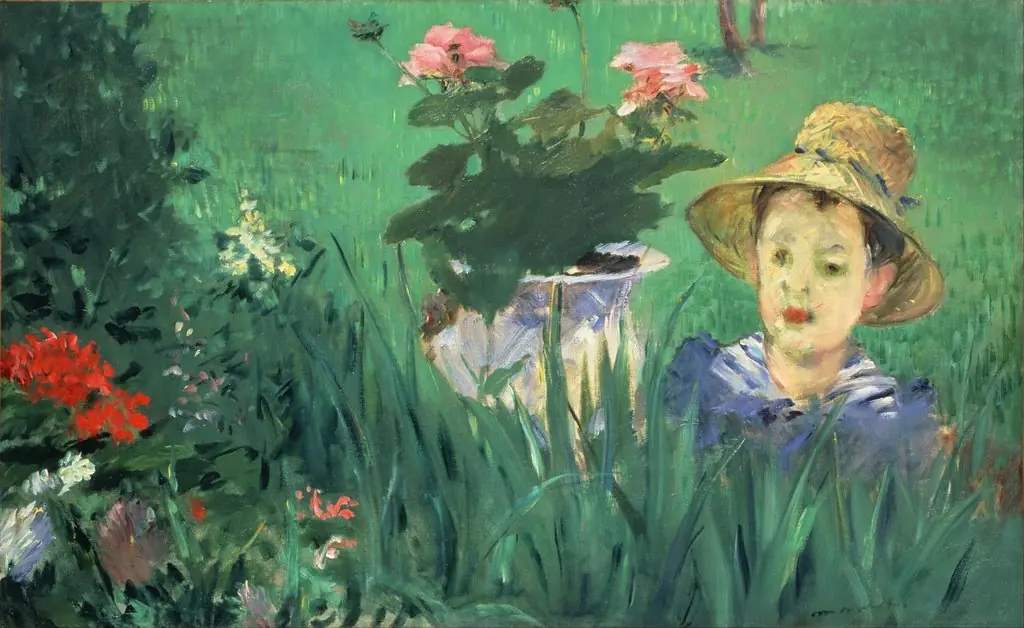 Boy in Flowers (Jacques Hoschedé)
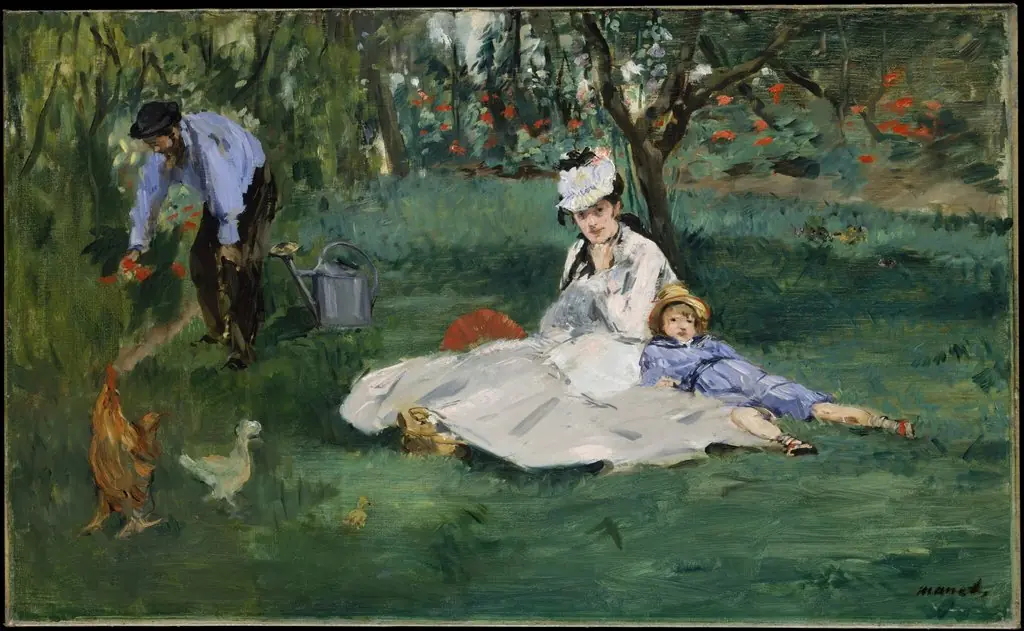 The Monet Family in Their Garden at Argenteuil
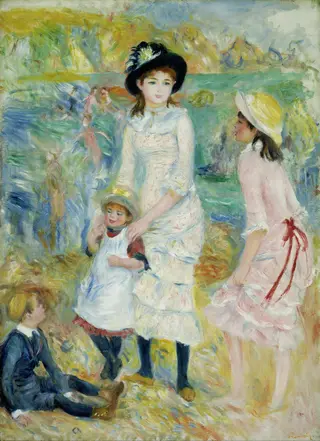 Children on the Seashore, Guernsey
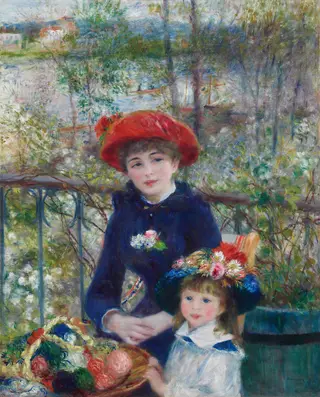 Two Sisters
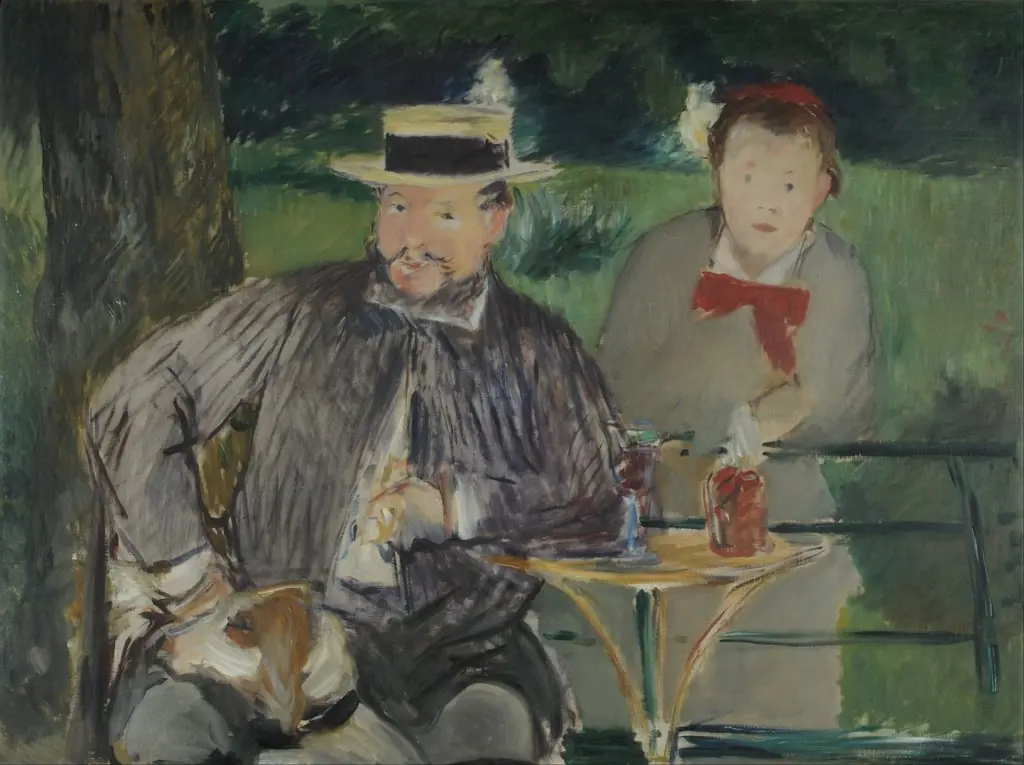 Portrait d'Ernest Hoschedé et sa fille Marthe
 Two Sisters (On the Terrace)
 In the Garden
 The Railway
 Party in the Country at Berneval
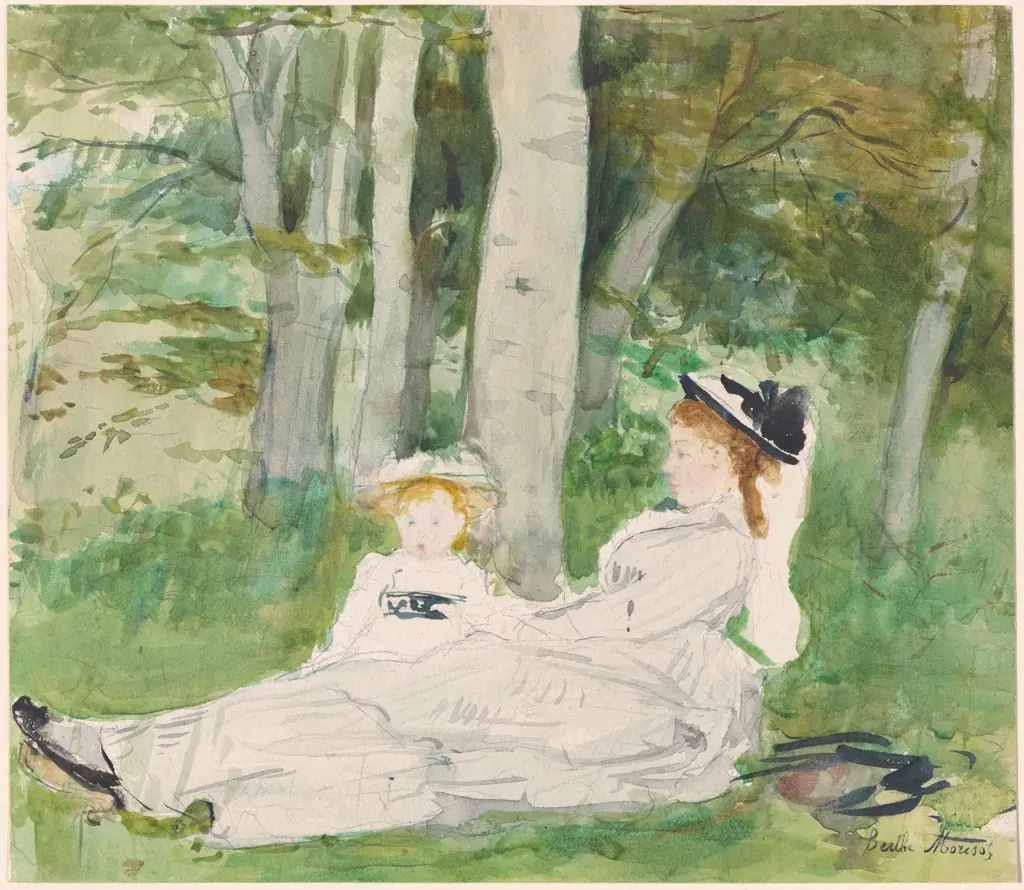 At the Edge of the Forest (Edma and Jeanne)
- Woman with a Parasol - Madame Monet and Her Son