Monte Pellegrino at Palermo, Italy by George Loring Brown
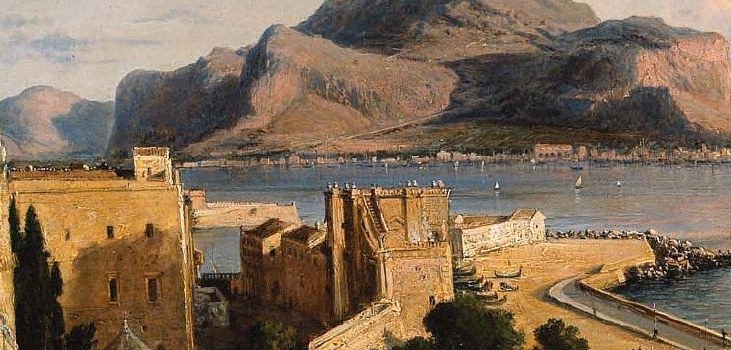
Monte Pellegrino at Palermo, Italy by George Loring Brown (1856) is a luminous landscape with a very strange origin story. It was painted not for a patron's living room, but as evidence in a New York courtroom.
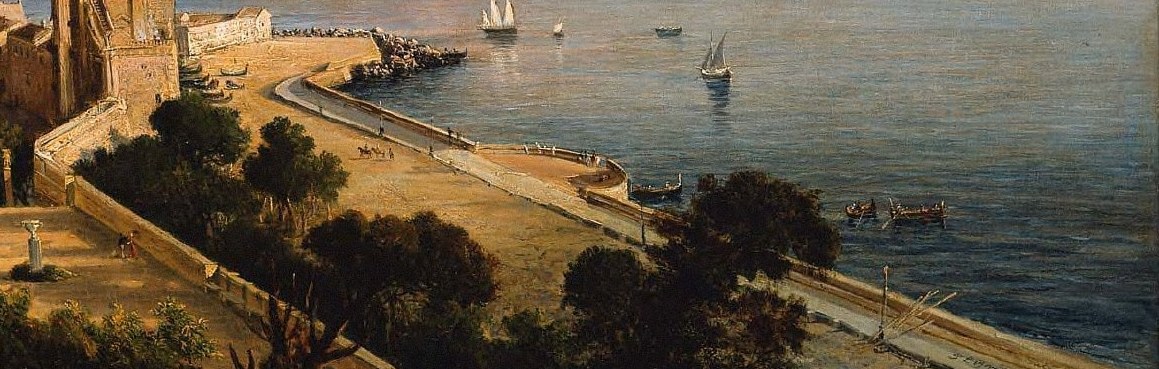
The painting captures the warm, radiant light of Palermo Bay. The great limestone headland of Monte Pellegrino glows pink and gold against a soft sky, while small sailing vessels dot the calm Mediterranean water. In the foreground, barely visible figures on a coastal path give the cliffs their true scale. The painting is a masterclass in luminism, the American landscape tradition of rendering atmosphere so tangible it feels sacred.
Brown was born in Boston in 1814 and spent roughly twenty years in Italy selling landscapes to wealthy tourists. A pivotal patron, George Tiffany, underwrote his studies. But when Brown delivered this commissioned view of Palermo, Tiffany refused to pay. Brown did something almost unheard of: he sued. He brought the canvas into court as physical proof of his labor and skill. The judge ruled in his favor.
The serene beauty of this painting hides a hard-won victory. Next time you see a luminous landscape, ask yourself what battles the artist may have fought just to get it seen.
Details



Transcript
This landscape glows with the soft light of Palermo Bay. The mountain, Monte Pellegrino, radiates pink and gold. George Loring Brown painted it in 1856, mid-career in Italy. He made it not for a gallery, but for a courtroom. This painting was evidence in a lawsuit against his patron. George Tiffany had commissioned the work, then refused to pay. Brown took him to court and placed this canvas before the judge. He won. The painting itself proved his skill.