William Forsyth (1749–1814) by Henry Raeburn
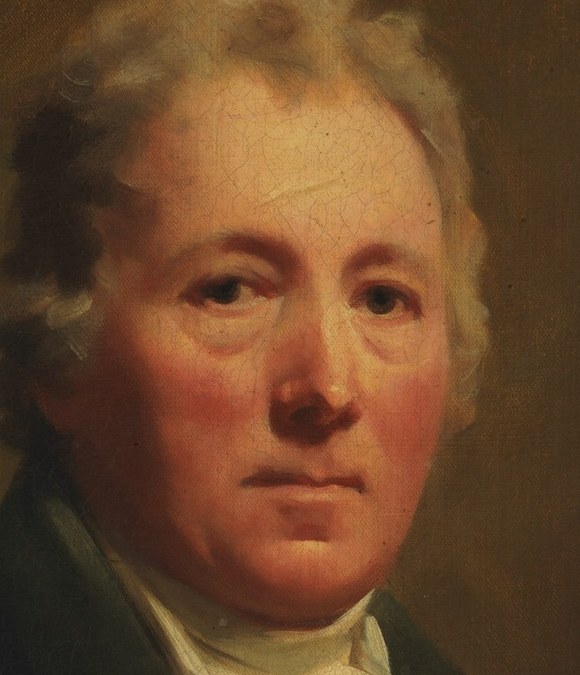
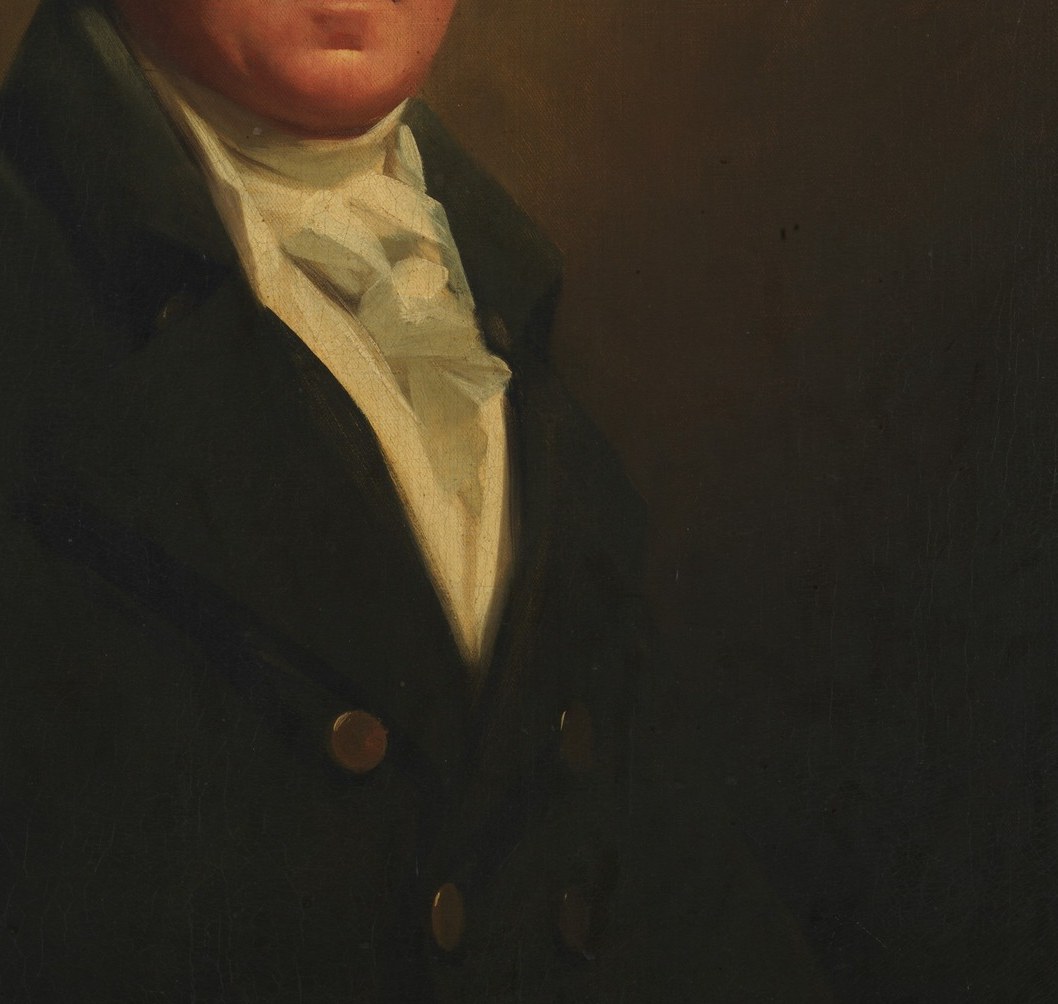
This is the oil portrait of William Forsyth, painted by Henry Raeburn around 1800 and held by The Metropolitan Museum of Art. The painting captures Forsyth with a dignified gaze, emerging from a muted background, a hallmark of Raeburn's focused portraiture.
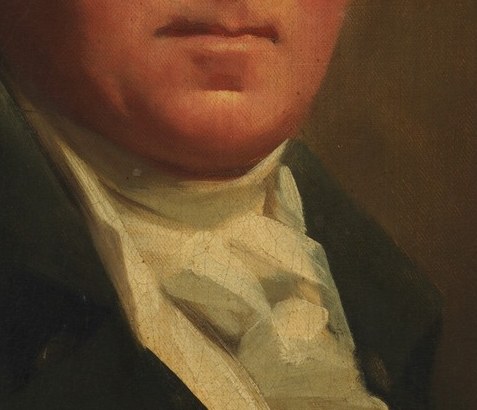
Note the directness of his stare, the subtle flush of his cheeks, and the crispness of his cravat against the dark, textured fabric of his coat. The artist's careful brushwork on the cheek reveals the technique used to define form and skin tone.
Henry Raeburn was a leading Scottish portrait painter who would later be appointed Portrait Painter to King George IV in Scotland. This work exemplifies the portraiture of the era, capturing the sitter's presence and status. Forsyth himself was a man of means, living from 1749 to 1814.
The painting offers a direct and observant representation, inviting contemplation of the sitter's inner life.
Details
Transcript
He looks directly at us, the viewer. His flushed cheeks suggest good health and fortune. This painting was made in 1800. His crisp cravat hints at fine tailoring. The dark coat suggests his status. The artist was Portrait Painter to the King. Subtle brushstrokes capture skin tone. The man was William Forsyth. He died in 1814.