Saint Lucy by Zurbarán, Francisco de
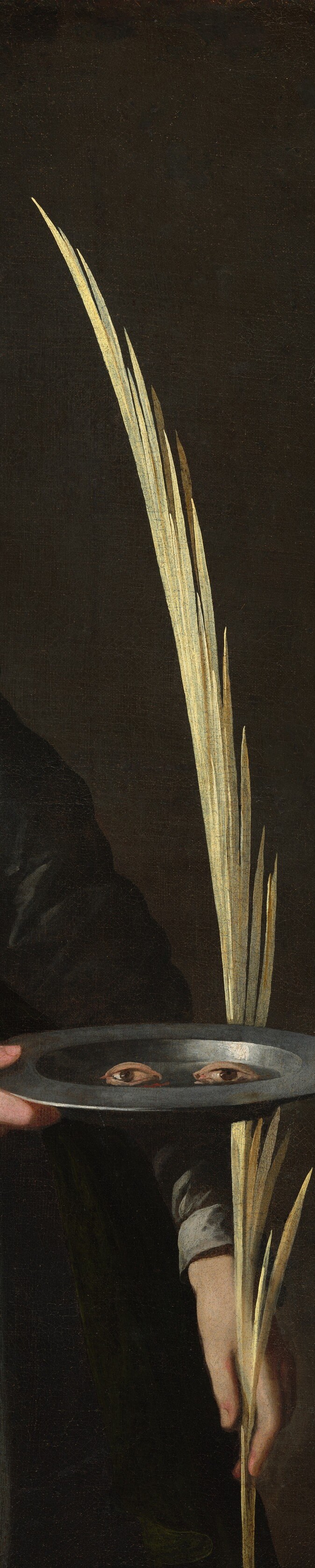
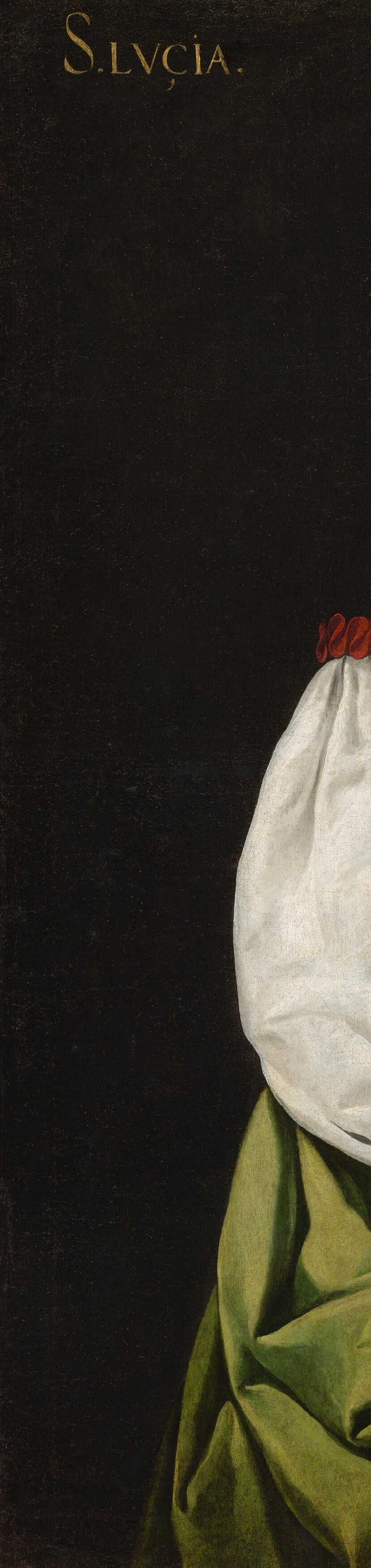
Saint Lucy, painted by Francisco de Zurbarán around 1628, now hangs in the National Gallery of Art in Washington, D.C. She was a young Christian woman killed in Syracuse in 304 AD, and the legend that grew around her tells that her eyes were torn out before she died. Zurbarán took that brutal story and painted the stillest picture imaginable.
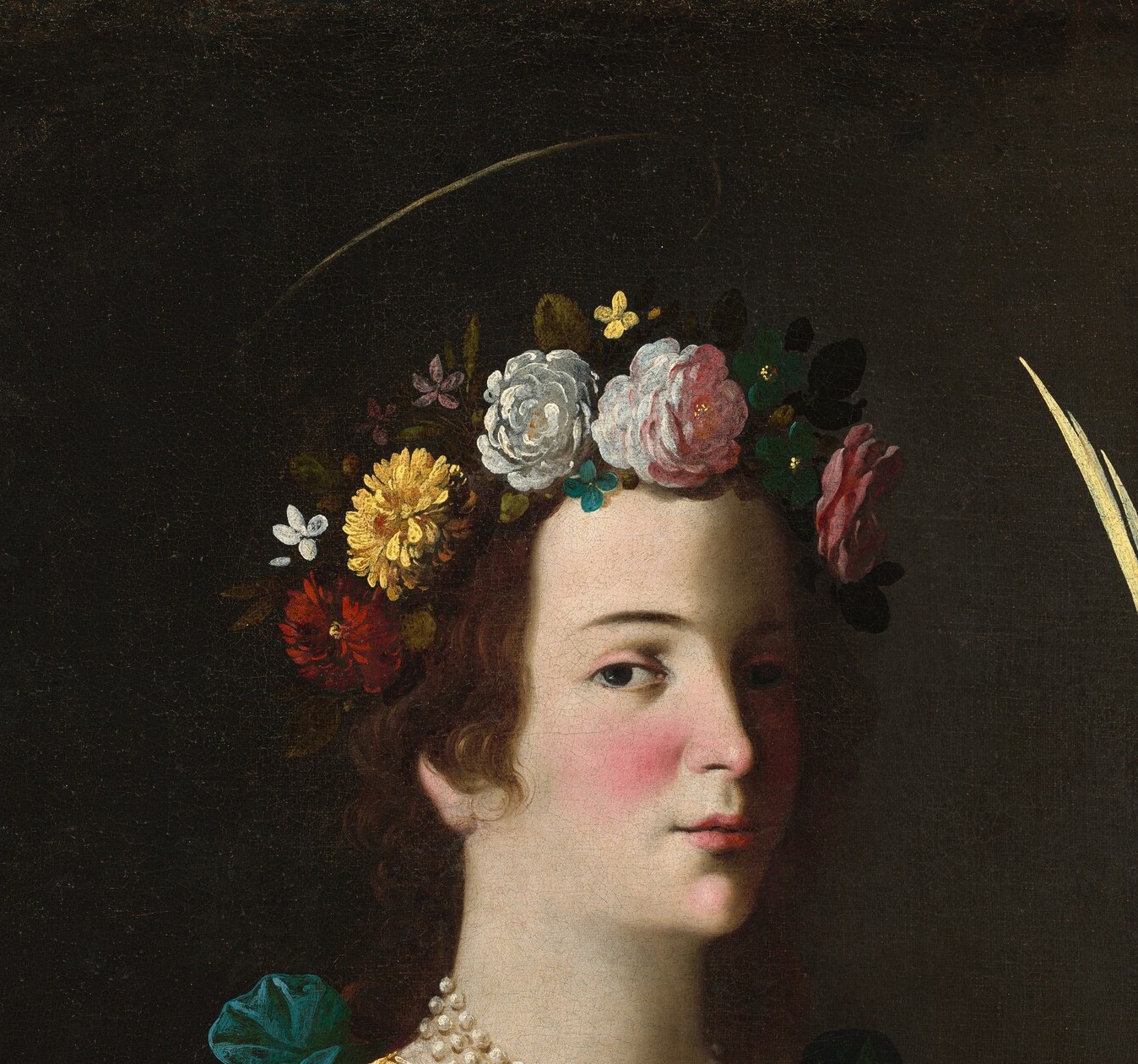
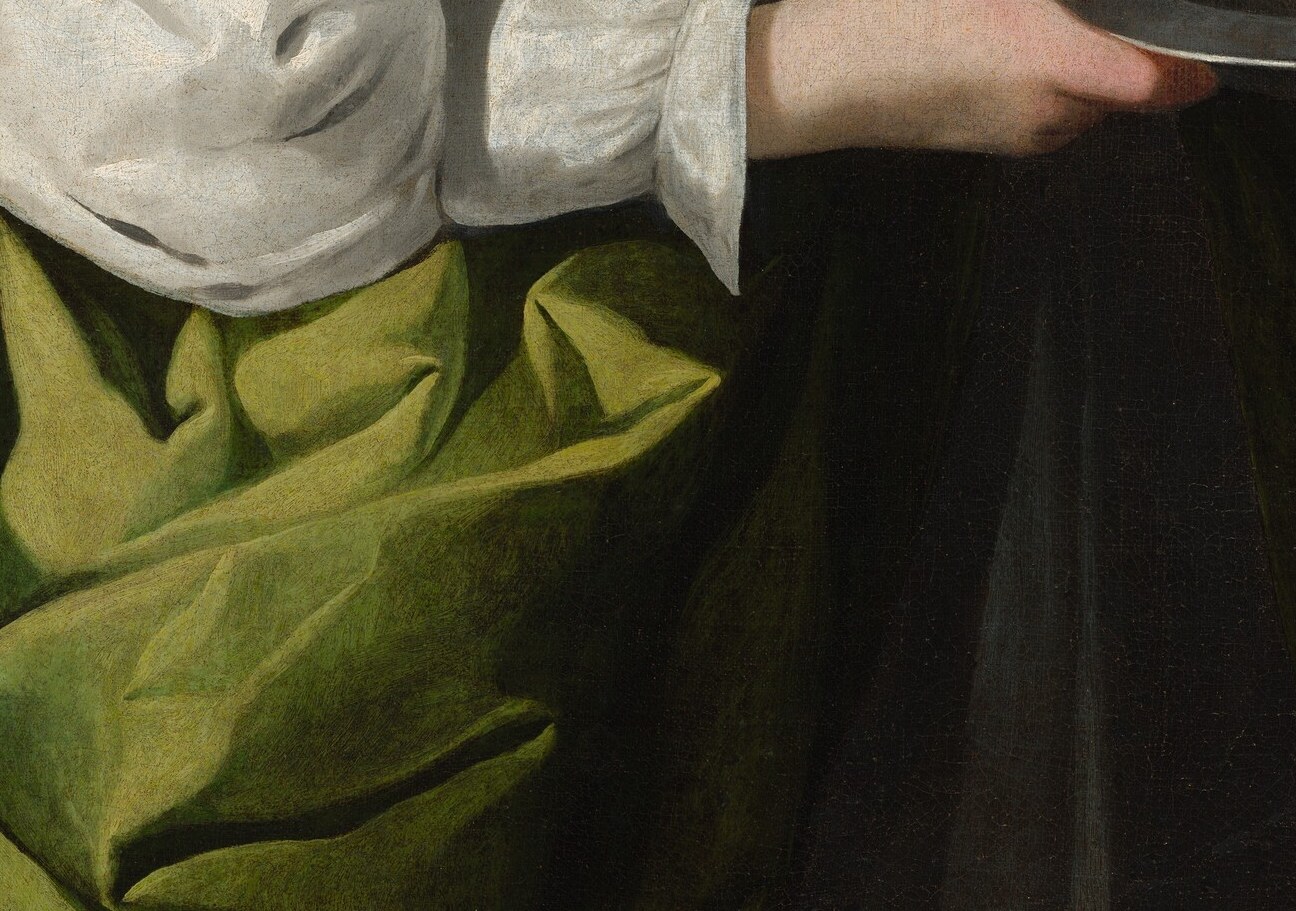
Look at her face first. It is not the face of agony, it is the face of someone who has already left the room. The downward gaze and the slight set of the mouth are human and specific, not theatrical. Then look at her right hand, holding the plate with her eyes on it. The grip is relaxed. No tension. The horror is stated plainly, like a fact, and that understatement is what makes it so moving.
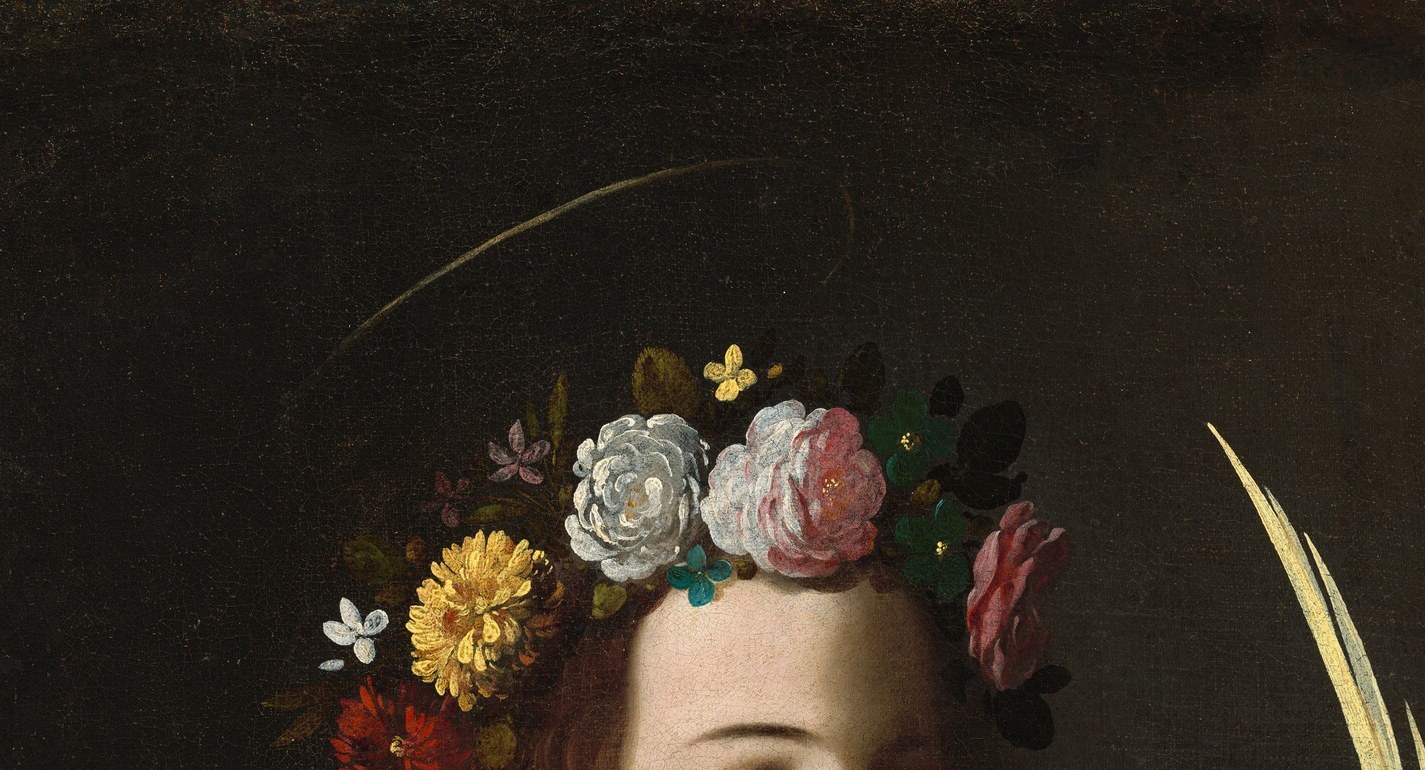
Zurbarán spent his entire career in Seville, working almost exclusively for churches and monasteries during the Counter-Reformation, when the church wanted saints who felt close and real. He gave Lucy a face drawn from a living model, a red bodice that catches the light like real velvet, and a dark void around her that makes her feel present in the room with you. The pearl necklace and the flower crown acknowledge her youth and her worldly station, things she gave up.
This is a painting about spiritual composure in the face of the worst thing. She carries the proof of what happened to her, but her face tells you it did not reach where she actually was.
Details
Transcript
Zurbarán painted saints like they were standing right in front of you. No background, no story. Just the person. Her name is Lucy. She was killed for her faith in the year 304. The legend says her eyes were gouged out. So she carries them on a plate, calm as you please. The red bodice says martyr. The flowers say she won anyway. Zurbarán gave her the face of a real woman from Seville. Serene. Downward. Already somewhere beyond what happened.