Richard Humphreys, the Boxer by John Hoppner
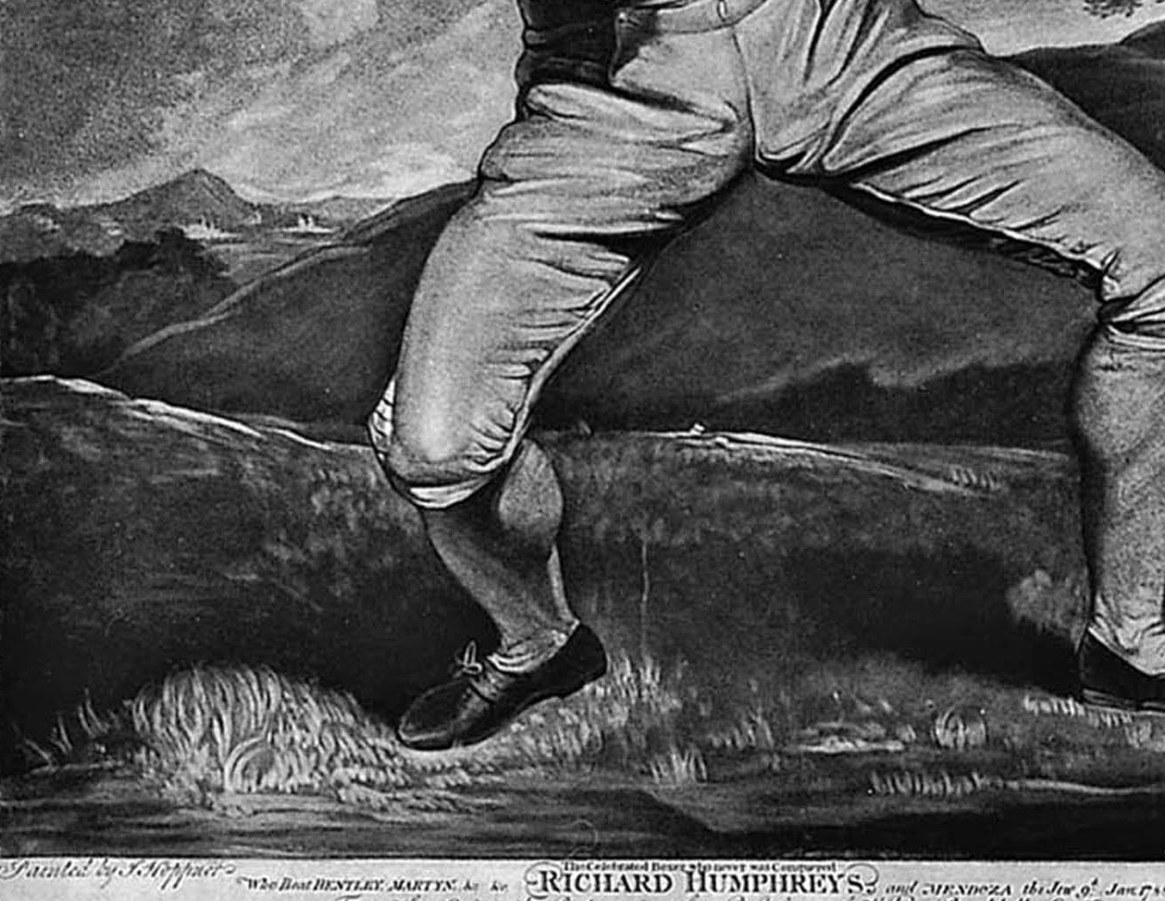
John Hoppner's "Richard Humphreys, the Boxer" (1792, The Metropolitan Museum of Art) is not a private portrait. It is a piece of commercial celebrity, engineered to sell as a mezzotint engraving across Britain. The inscription at the bottom names artist, publisher, and sitter alike. Richard Humphreys was the country's most famous bare-knuckle boxer, and his likeness was a commodity.
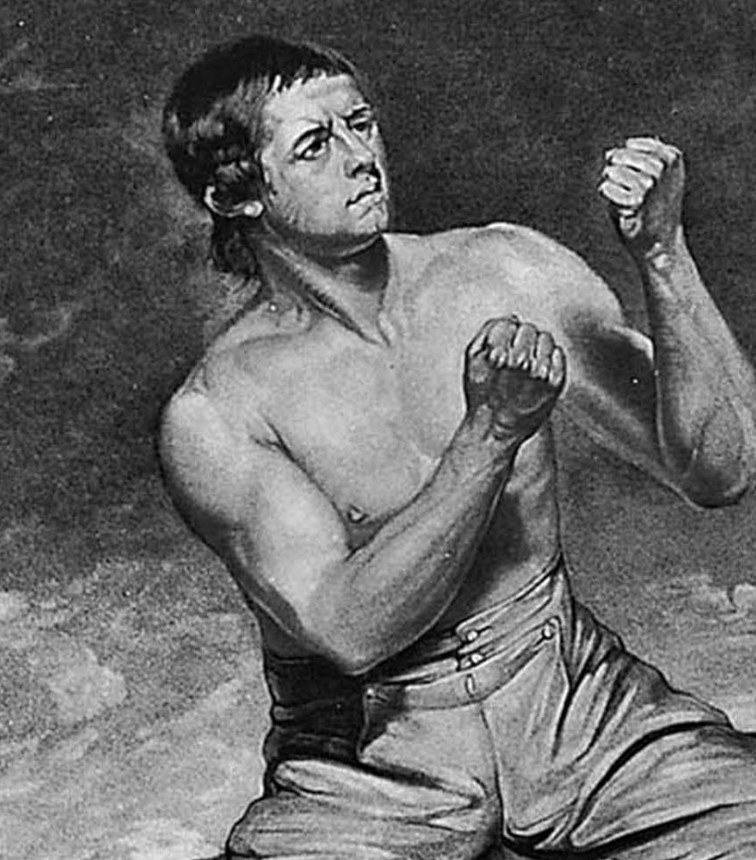
Look at the body. Hoppner strips the fighter of a gentleman's shirt and coat, lighting his torso like a classical sculpture. The extended left fist breaks the picture plane, the right draws back to strike. The stance is a historical document of bare-knuckle form before the Queensberry rules. Boots planted on grass imply an outdoor prizefight, not a ring.
At its 1788 Royal Academy debut, the painting landed as a provocation. Portraits were for aristocrats, not athletes. Hoppner, a rising rival to Joshua Reynolds, had given a sportsman the same visual treatment reserved for generals and heroes. The dramatic sky and framing trees are pure Romantic theater, and critics bristled at the collision of low subject and high style.
What looks to us like a classic sports portrait was, in its moment, an act of category demolition. It helped open the door for athletic celebrity. How much of our own celebrity culture was already being tested in a single bare-knuckle pose?
Details

Transcript
He looks like a gentleman, but he is not. This is Richard Humphreys, England's most famous bare-knuckle fighter. A formal portrait of a shirtless prize-fighter was an absurd provocation in 1792. Hoppner lit his muscles like a classical god, and the critics were not having it. But look at the bottom edge. This was never meant for a gallery wall. The inscription names an engraver and a publisher. It was a print for sale. Humphreys' face was sold across Britain. He was one of the first mass-market sports celebrities.