The Ballet from "Robert le Diable" by Edgar Degas
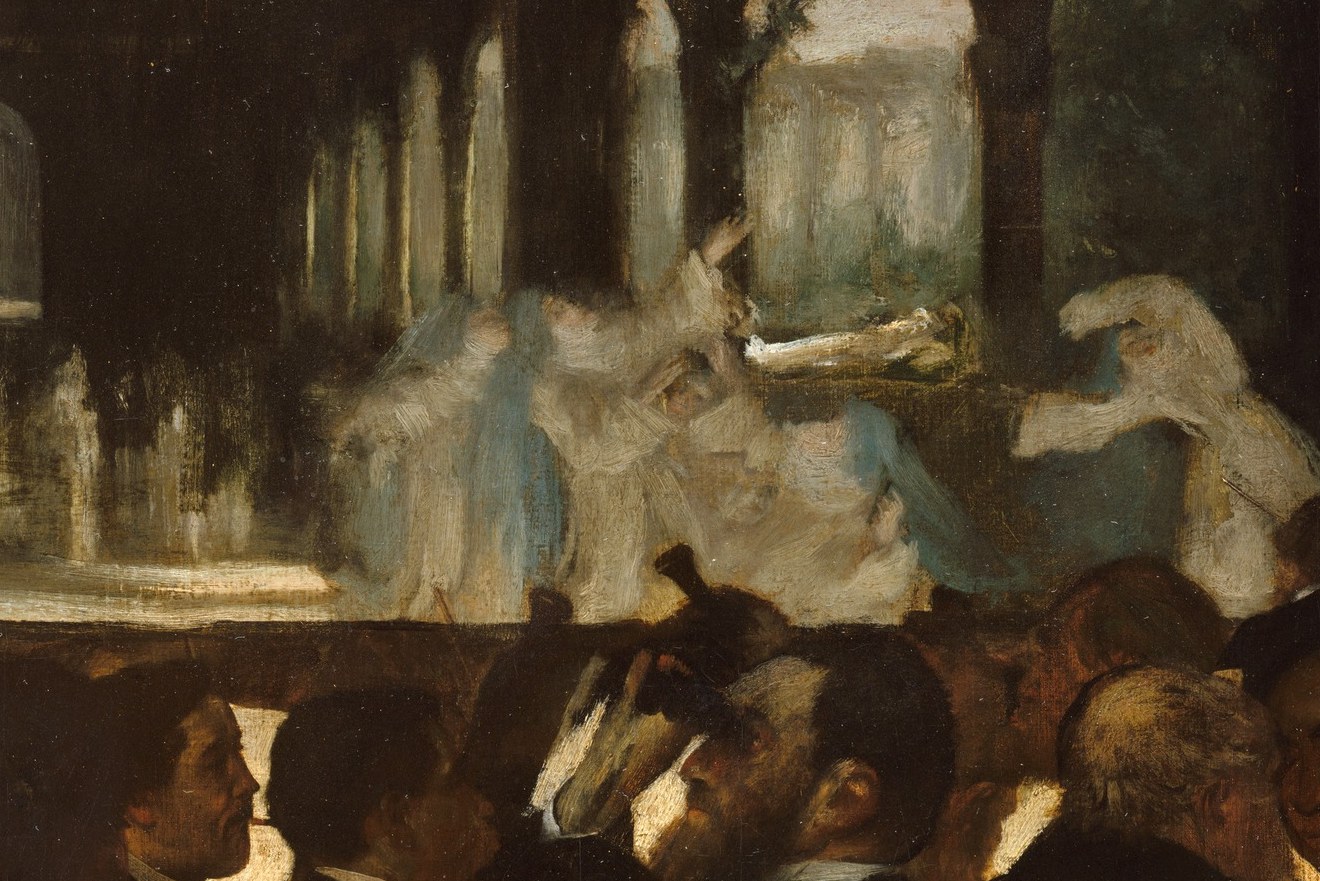
Edgar Degas painted The Ballet from 'Robert le Diable' in 1871, the year he returned to Paris after serving in the artillery during the Franco-Prussian War. It shows the third act of Meyerbeer's opera, in which the ghosts of nuns rise from their graves, a scene Degas saw at the Paris Opera. The painting is held by The Metropolitan Museum of Art.
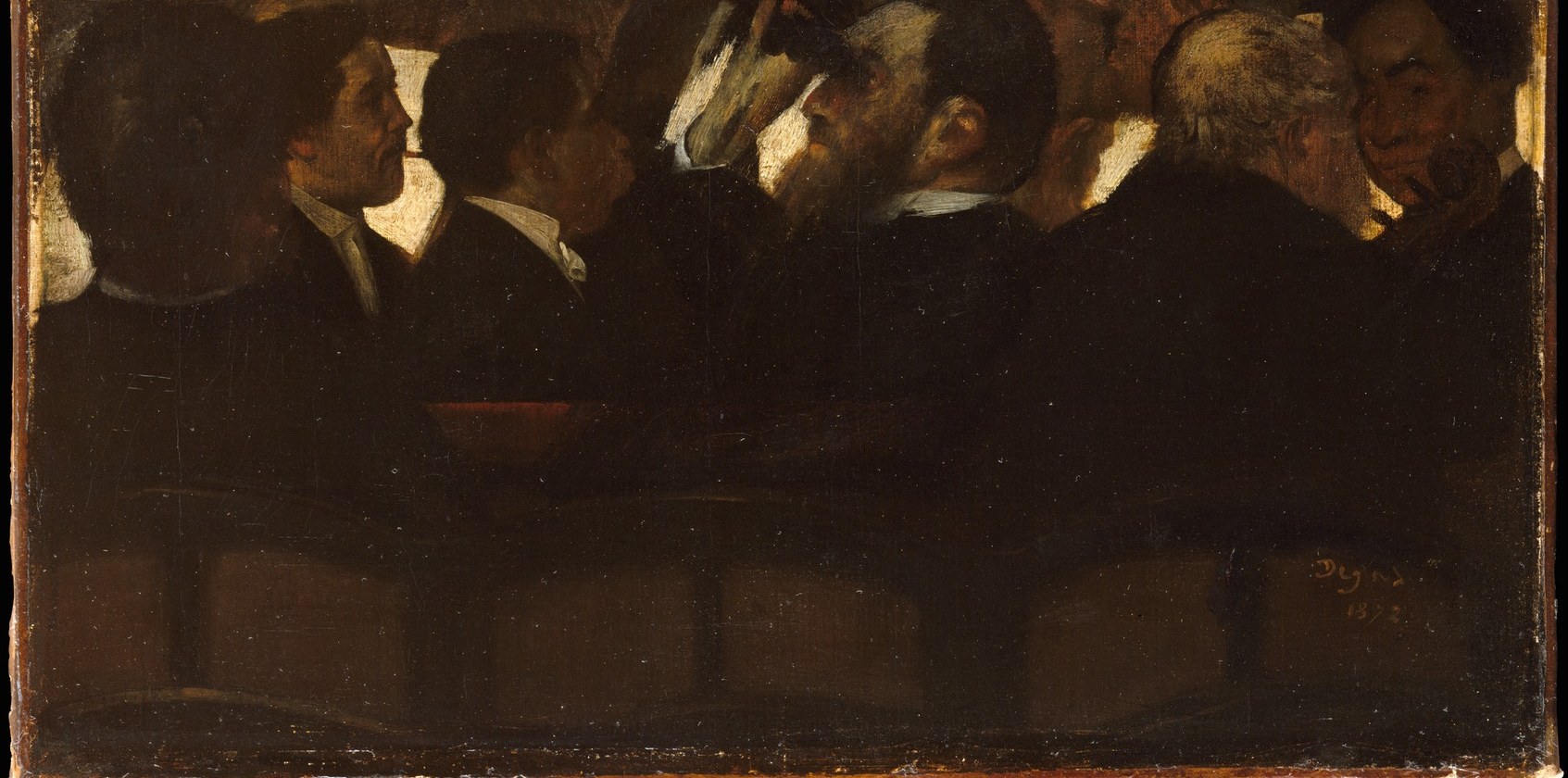
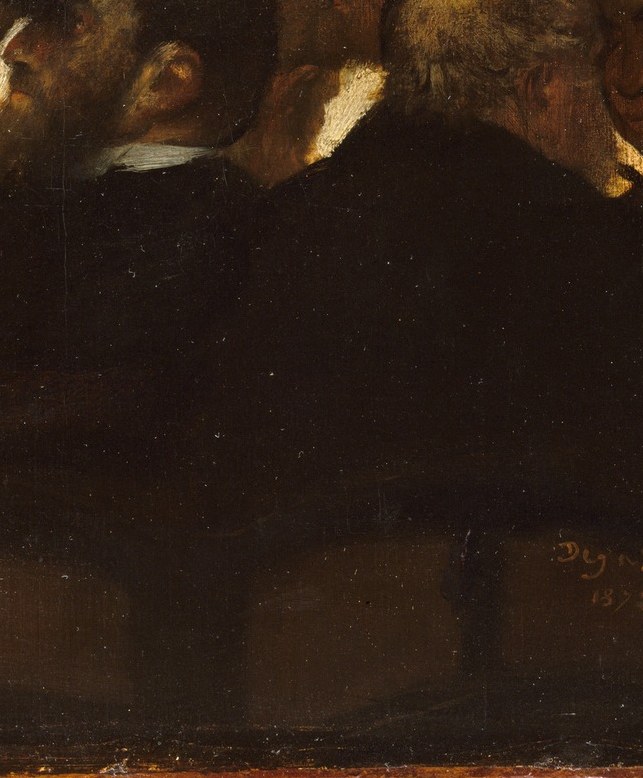
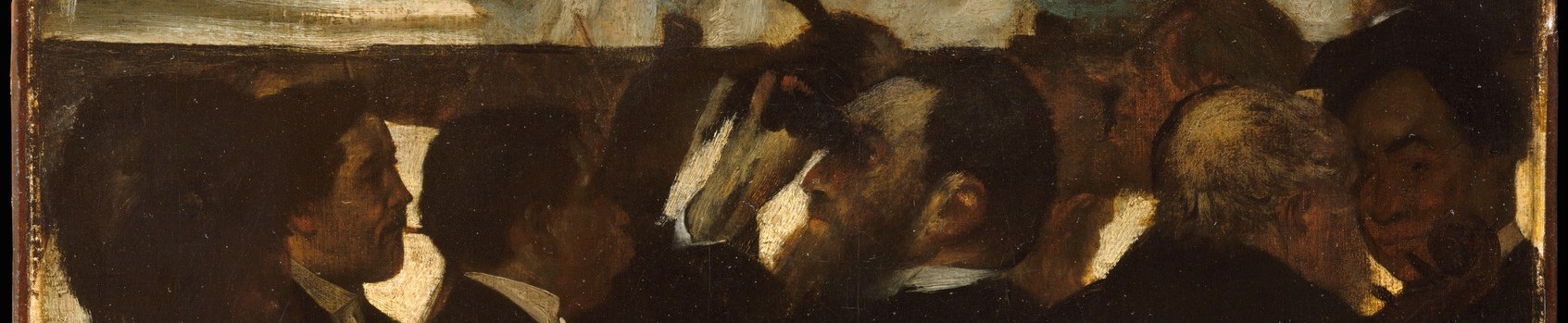
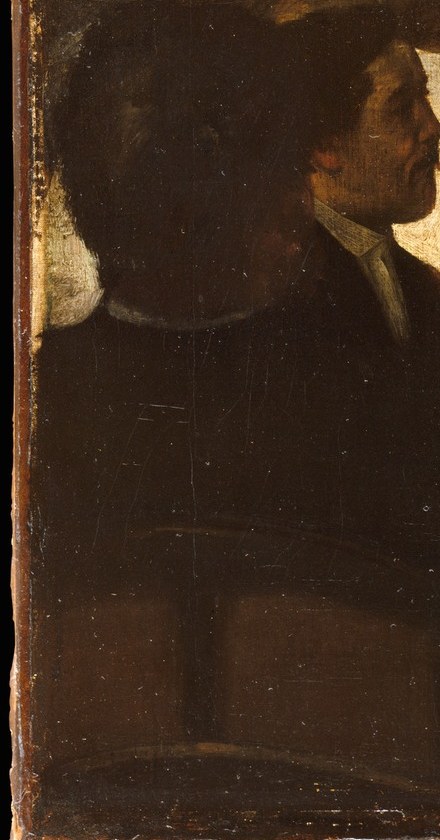
Look at the foreground first: a row of male audience heads, cropped radically, one man with opera glasses. Degas makes us one of them, a spectator watching other spectators. Then look to the stage, where a corps of white-tutued dancers, blurred and luminous, moves as a single ghostly mass. A thin strip of near-total blackness, the orchestra pit, cuts between these two worlds.
Degas was 37. He had trained as a history painter and copied the Renaissance masters in Italy. But after the war and his friendship with Manet, he abandoned the past for the modern city. This painting is his pivot: he applies the compositional gravity of history painting to the fleeting electricity of a ballet audience and a supernatural opera.
You can feel him figuring out what matters: not the story on stage, but the act of watching it. The painting is at once a study of theatrical light and a quietly piercing reflection on a city returning to spectacle after loss.
Details
Transcript
1870. The Franco-Prussian War. Degas served in the artillery. He returned to a Paris haunted by the dead. So he came to the opera to watch the living. A man peers through opera glasses, watching bodies. On stage, nuns rise from their graves. The living watch the dead. The dead dance for the living. This was the first painting that made his future certain.