View of the Garden of the Villa Medici by Diego Velázquez
View the artwork: View of the Garden of the Villa Medici →
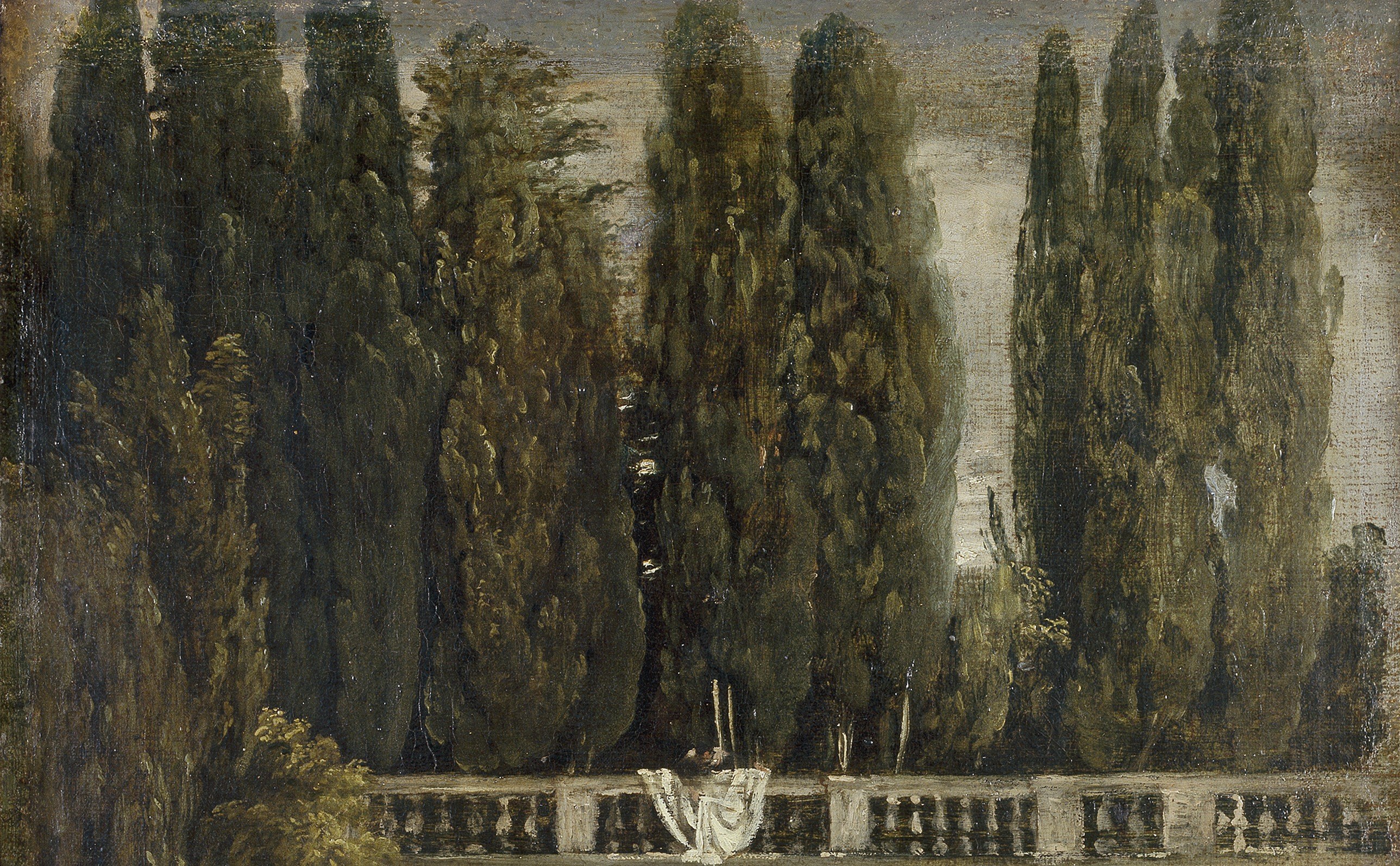
This small, intimate painting is Diego Velázquez's View of the Garden of the Villa Medici, made around 1630 in Rome. It is one of two garden scenes the artist painted on the same trip, and unlike the grand royal portraits that made him famous, these were likely made for no patron at all. They are personal, private pictures.
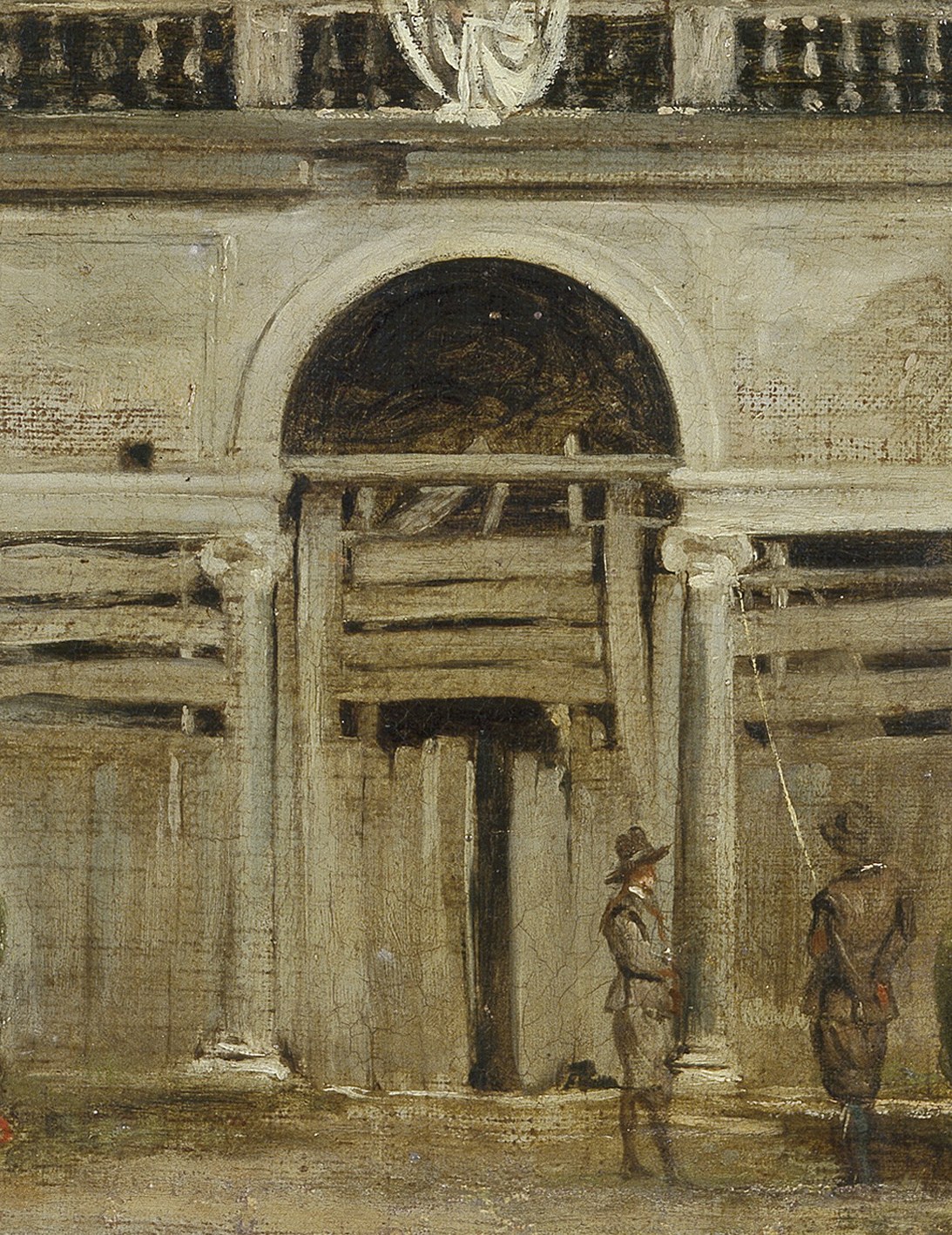
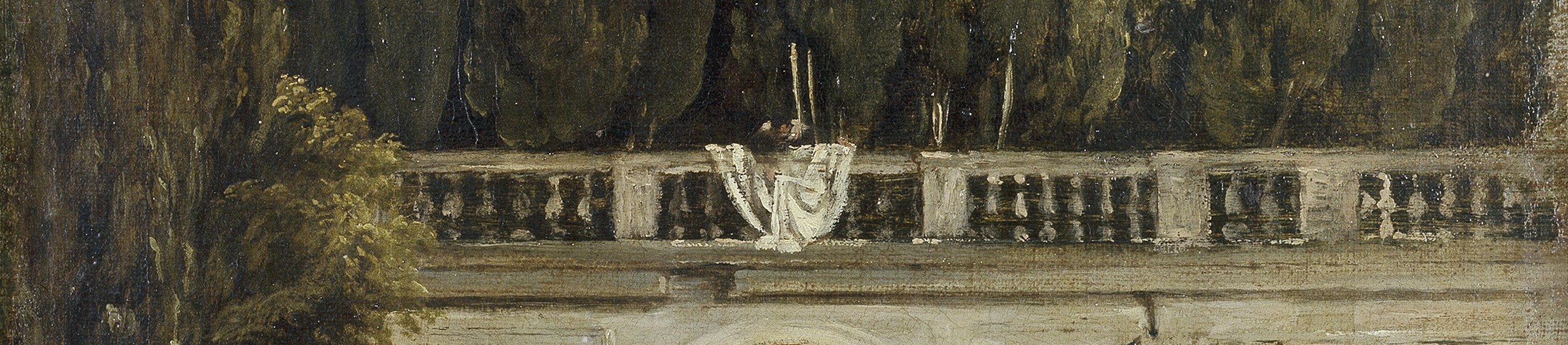
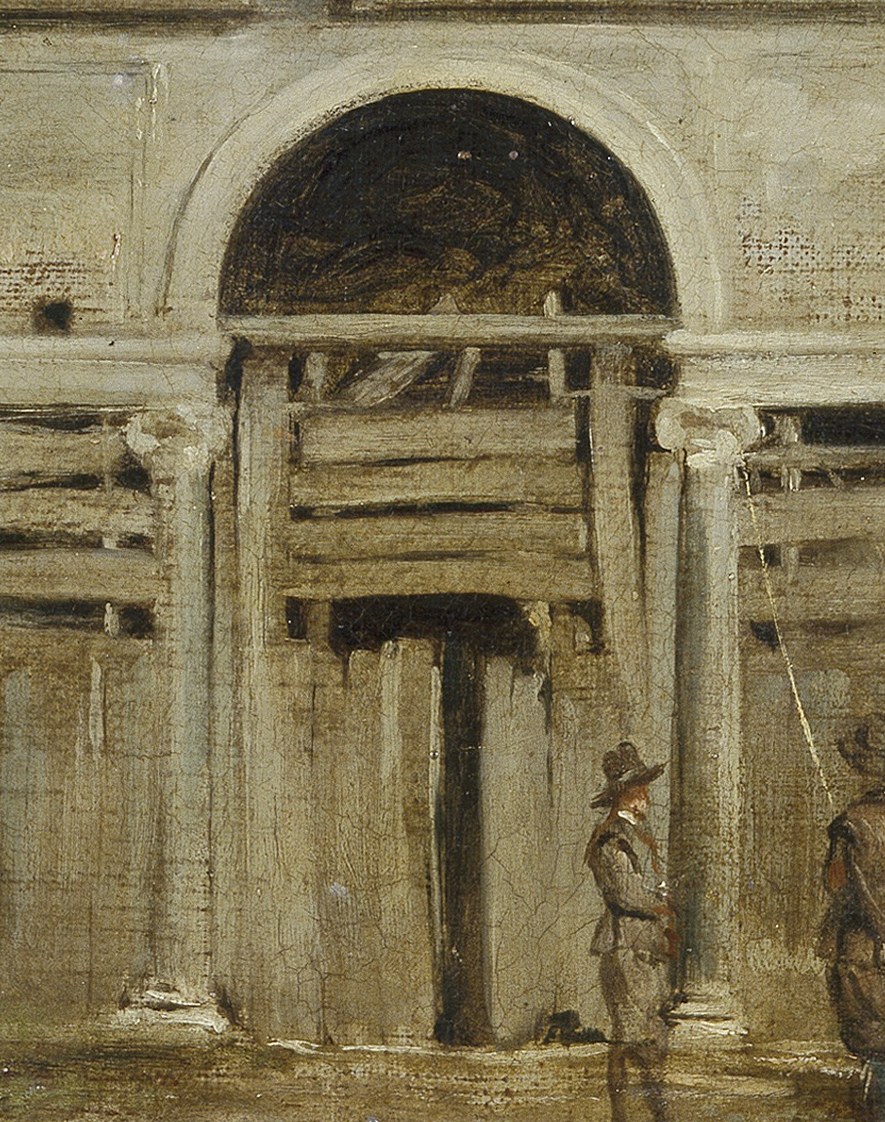
Look first at the two small figures near the base of the sealed stone archway. They are anonymous, unhurried, deep in quiet conversation. Above them, the gate is boarded up with wooden planks, a detail of maintenance and neglect that grounds the scene in real, lived Roman reality rather than an idealized antiquity. Let your eye then travel upward across the stone balustrade and into the towering cypress trees, rendered in dark, swift vertical strokes that feel strikingly modern.
Velázquez traveled to Italy twice as a mature painter, already the leading artist at the Spanish court. This work is from his first visit, around 1629 to 1630. Away from the demands of royal portraiture, he painted outdoors, studying how daylight actually falls on stone and foliage. The loose, almost sketch-like passages in the trees and the weathered stone are among the most visibly free brushwork in his entire career, anticipating plein-air painting by two centuries.
Two small figures in a vast garden, a gate that leads nowhere, and a painter thousands of miles from home, quietly watching. The moment is so ordinary it would be forgotten, except Velázquez chose to keep it.
#arthistory #velazquez #spanishbaroque
Details

Transcript
Two men, a stone archway, a silent garden. The arched gate they stand beside is boarded shut. Years of weather and neglect are painted into the planks. Velázquez made this for no patron, probably for himself. He was fifty years old, alone in Rome, watching. Those four dark strokes are cypress trees, deep against the sky. He painted this with a handful of swift, certain marks. It sat unseen in a palace for two hundred years.