Saskia van Uylenburgh, the Wife of the Artist by Rembrandt van Rijn
Rembrandt van Rijn's "Saskia van Uylenburgh, the Wife of the Artist," painted around 1634, at the Rijksmuseum, is a masterclass in using light to create form and presence. This portrait of his wife, Saskia, showcases Rembrandt's profound understanding of chiaroscuro.
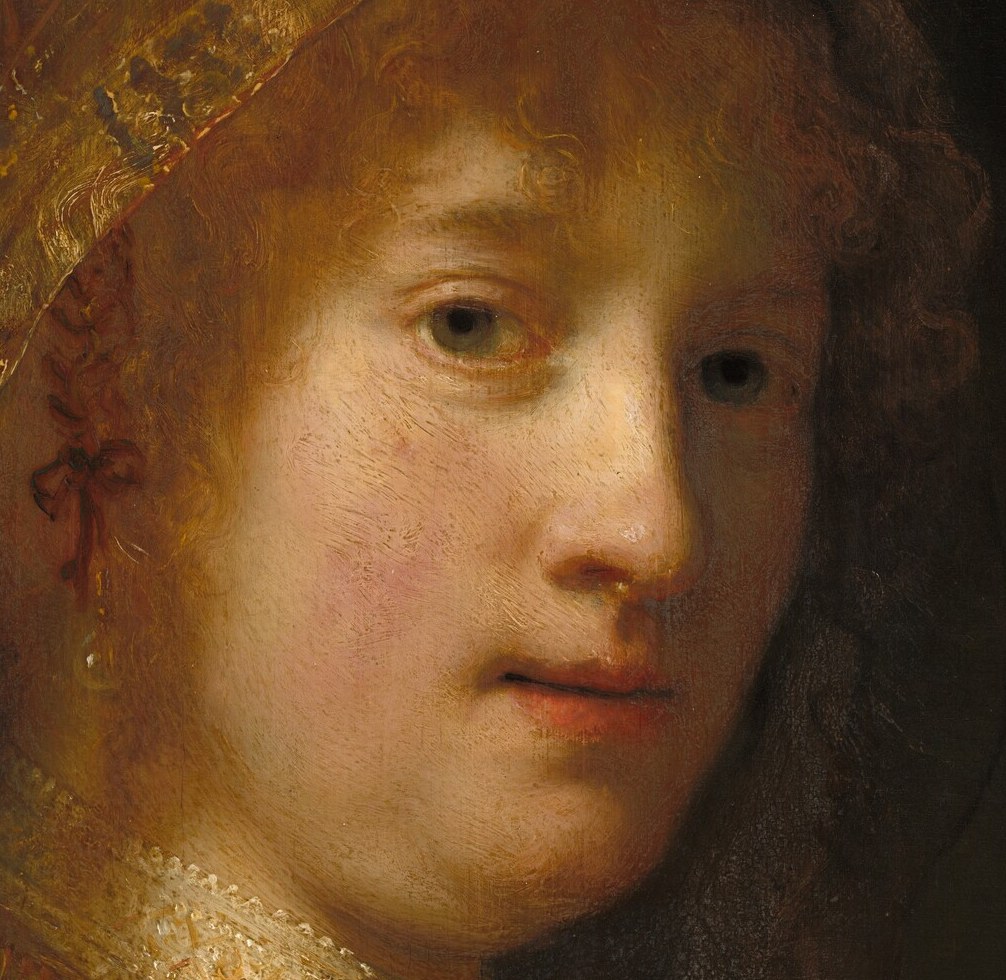
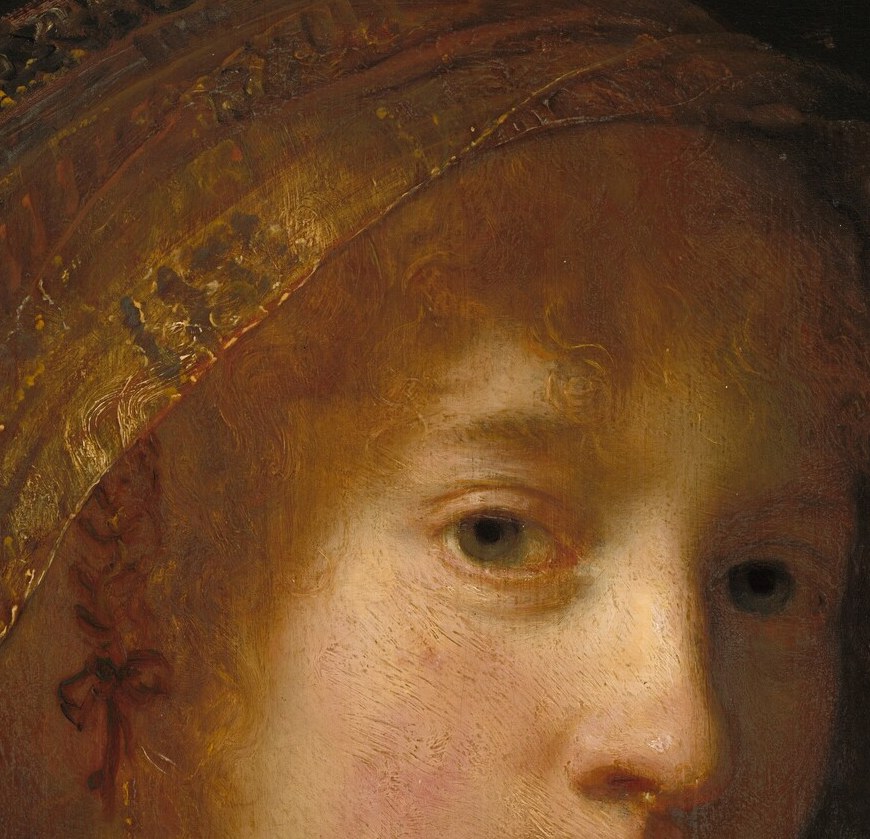
Observe how Saskia's face seems to emanate light, sculpted not by sharp lines but by a delicate interplay of illumination and shadow. Look closely at the subtle sparkle in her right eye, a tiny detail that breathes life into the painting. The texture of her red hat and crisp white collar is built up with thick paint, making them feel tangible.
Rembrandt began this oil on panel work in 1634, depicting Saskia during the early years of their marriage. It's one of several portraits he made of her, offering a personal glimpse into his prolific period. His technique of dramatically contrasting light and dark was groundbreaking, drawing the viewer's eye precisely where he intended.
What details do you notice in Rembrandt's use of light?
Details
Transcript
This portrait of Saskia, the painter's wife, was begun in 1634. Notice how her face glows from within the canvas. Rembrandt uses light, not line, to sculpt her features. See the highlight in her right eye, so subtle, so alive. He applies thick paint to build texture, especially on her hat. Her white collar also feels palpable, almost real to the touch. This masterful play of light and shadow creates her presence.