Shore of the Uruguay - Making a Sketch by Catlin, George
This is George Catlin’s “Shore of the Uruguay - Making a Sketch,” painted in 1862 and now in the collection of the Smithsonian American Art Museum. Catlin is famous for the hundreds of portraits he painted of Native American leaders and communities during five journeys to the American West in the 1830s. This small oil-on-card study comes from much later in his life, during a journey to South America.
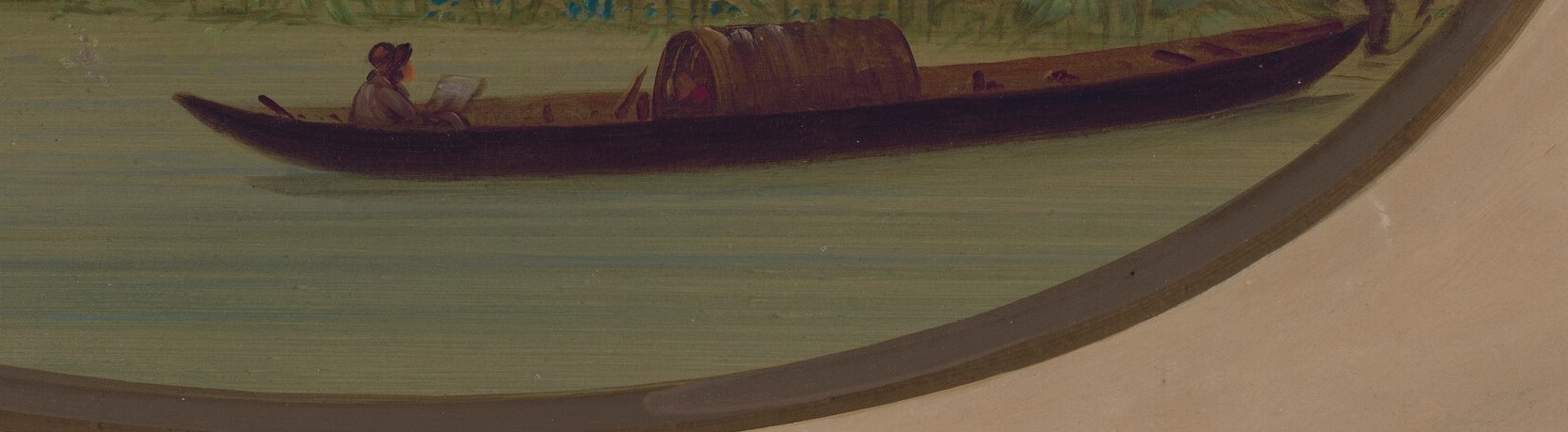
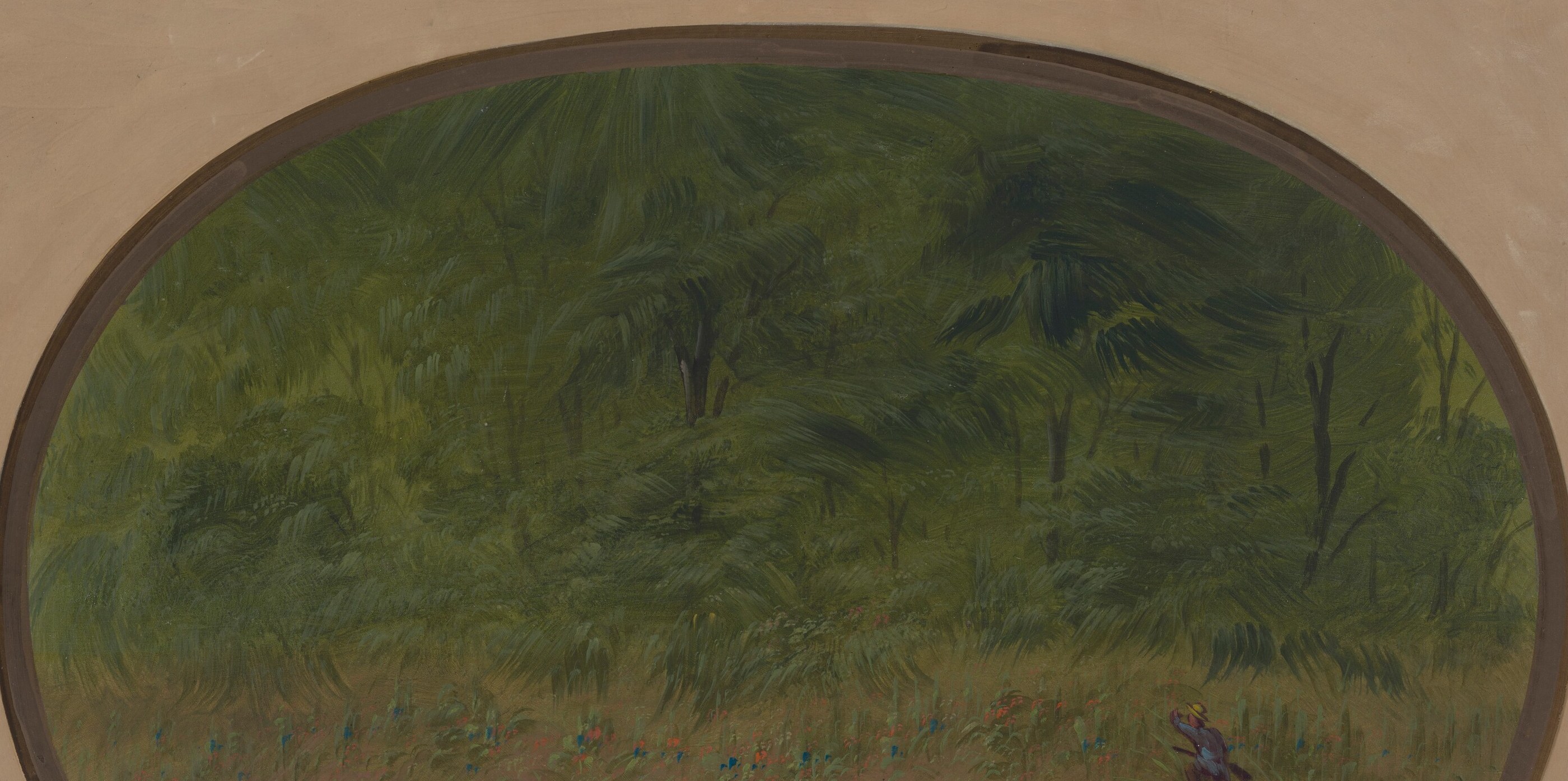
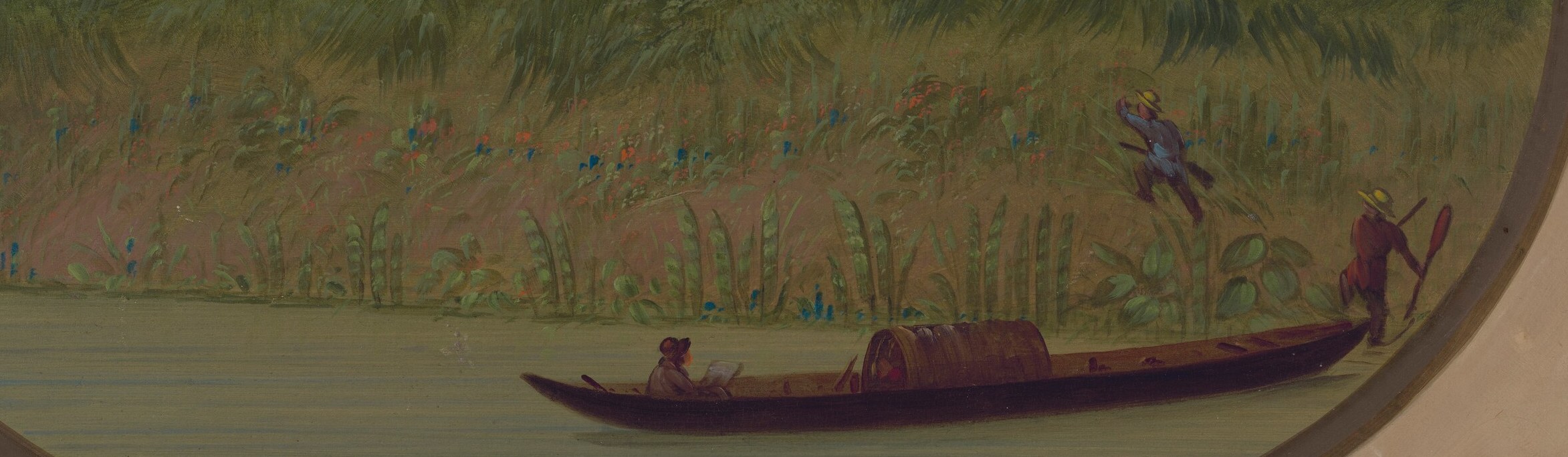
The painting’s center of gravity is a single figure seated on a fallen tree, bent over a sketchpad. To their right, a tall tree arches up and over like a protective frame. In the middle distance, a narrow boat carries two more figures along the calm water. Everything in the composition funnels your eye toward that one absorbed figure on the bank.
Catlin was a lawyer who taught himself to paint and then spent his life documenting people and places he believed were vanishing. By the time he made this quiet study, his most famous work was already decades behind him. He painted himself here not as a hero but as a figure in the landscape, still watching, still drawing. What do you think kept him going?
Details
Transcript
Most know George Catlin for his portraits of Plains Indians in the 1830s. But this painting comes much later, 1862. Look at the solitary figure on the riverbank. He is sketching the view, head down, entirely absorbed. That figure is almost certainly Catlin himself. Decades of recording a changing world, and he was still at it.