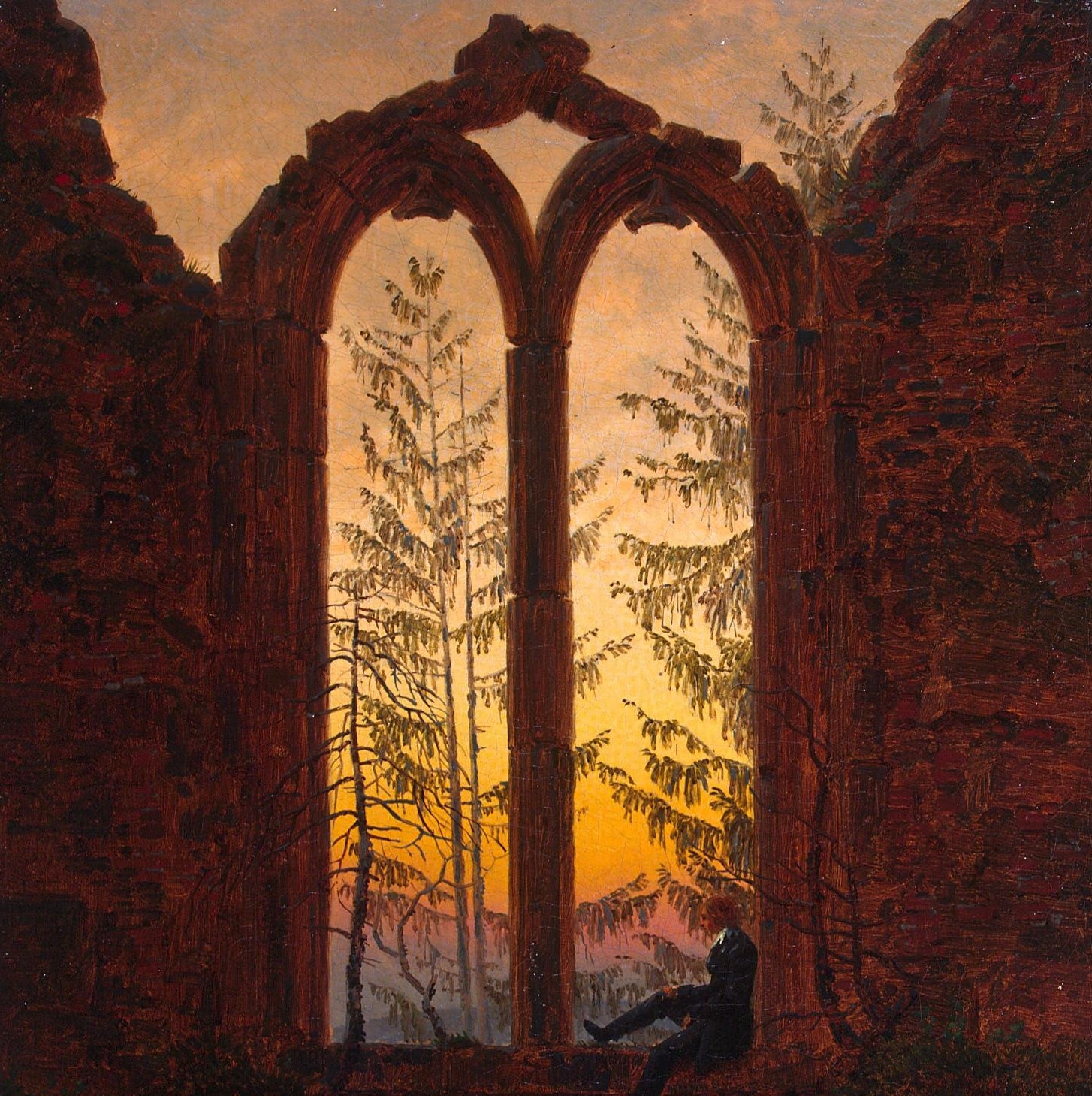
Ruins of the Oybin by Caspar David Friedrich
Caspar David Friedrich painted *Ruins of the Oybin* in 1835, near the end of a life marked by professional rejection and physical decline. It hangs now in the State Hermitage Museum. By the time he made this work, the younger generation of German painters had turned against him. Friedrich's earlier acclaim had evaporated; his symbolic, inward-looking landscapes were increasingly seen as morbid relics of a Romanticism that had fallen out of fashion. He was sixty-one, his health was failing, and he had not exhibited a major oil painting in years.
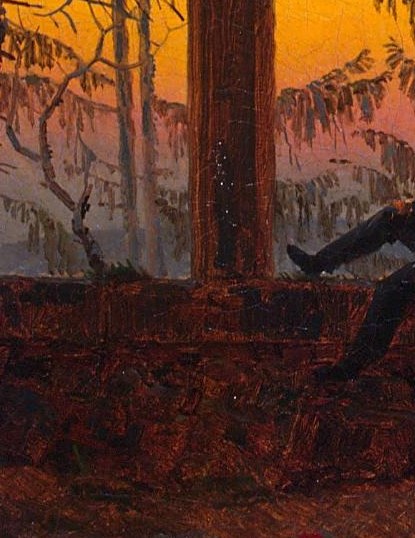
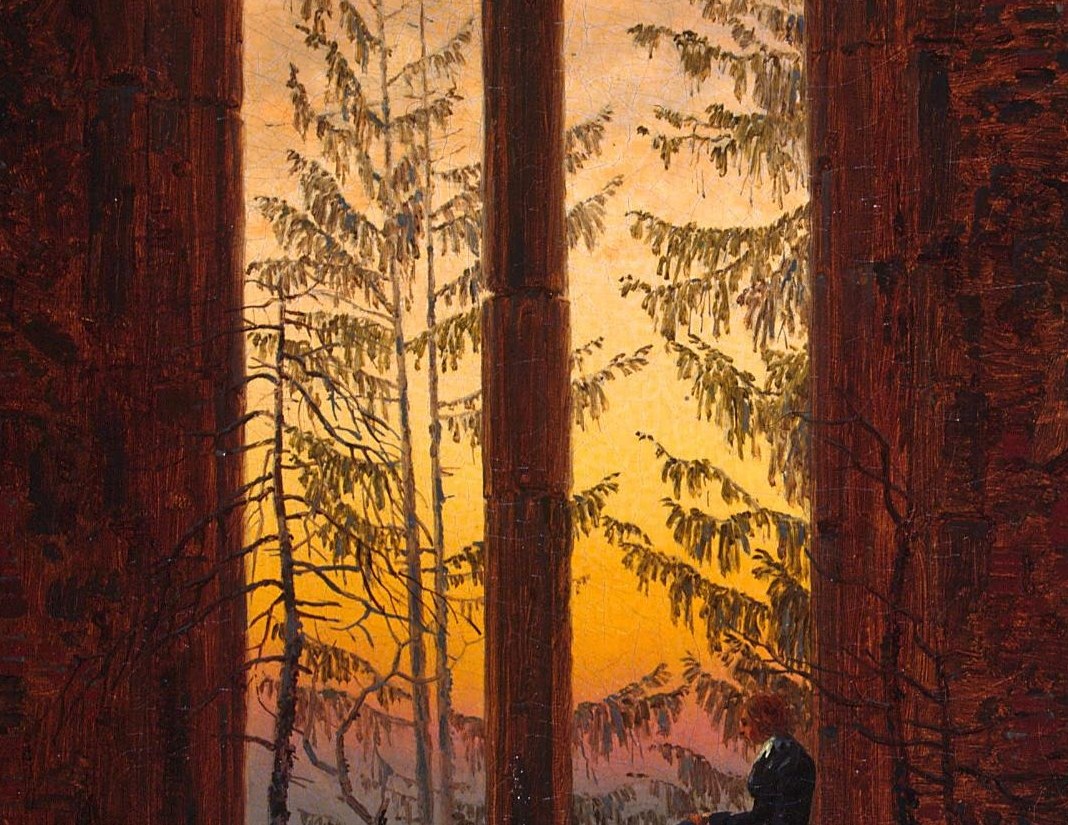
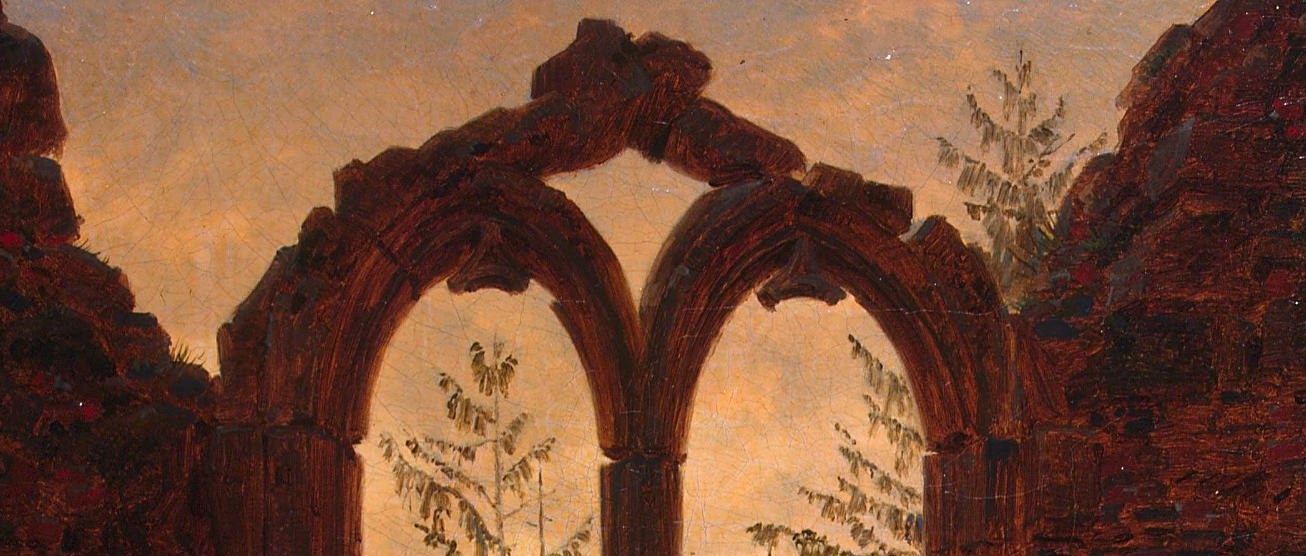
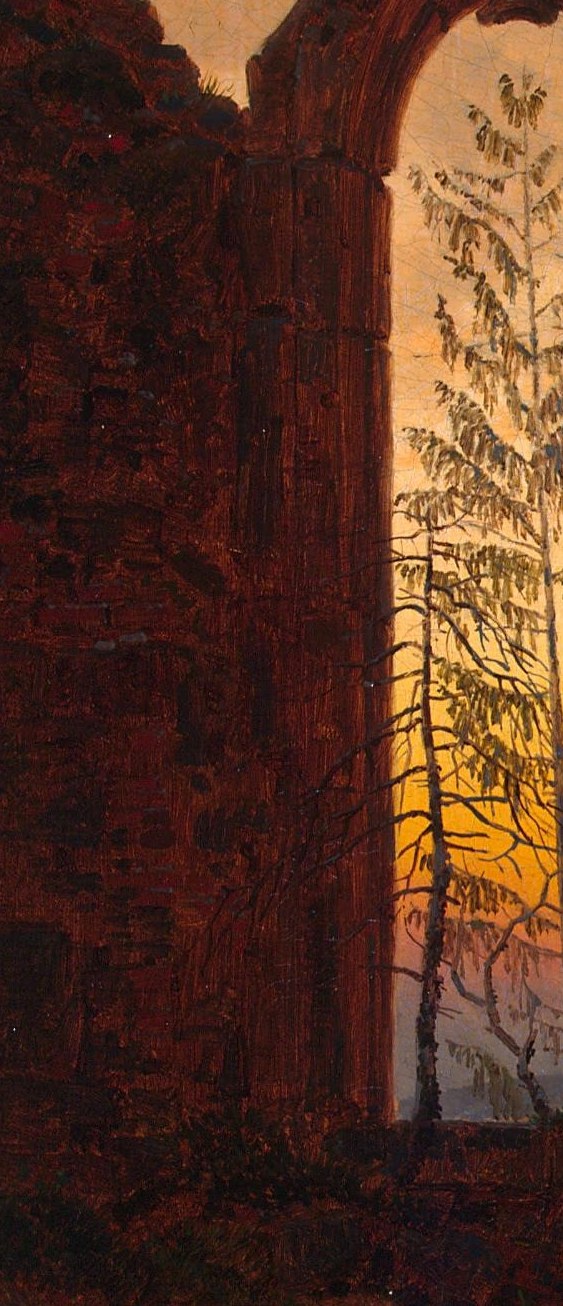
The painting shows the ruins of the Oybin monastery, a medieval structure Friedrich sketched obsessively on walking tours decades earlier. A dark-clad Rückenfigur, Friedrich's signature device of a figure seen from behind, sits within the crumbling arches, facing a luminous sunset. Our eyes come to rest where the figure's gaze should be: on the warm amber sky and the paired spruces that rise through the decay like living spires. The ruins are an emblem of transience, a memento mori in stone, but the trees endure, framing the light rather than blocking it.
Friedrich suffered a stroke in 1835 that left him with limited use of his hands. Painting became physically grueling. The elegiac mood of this late work is impossible to separate from that biographical fact. Yet the composition refuses despair. The Gothic arch still frames the horizon; the light still comes through. A decade earlier, critics had mocked his work as pathological. Here, working through pain and obscurity, he made an image of quiet persistence that asks nothing more of the viewer than to sit still and look.
The figure has no face because Friedrich needs yours. The solitude in the painting is not a punishment. It is an invitation. When you look, what do you hear in the silence, defeat, or something closer to peace?
Details
Transcript
He painted this in 1835. His career was already dying. He hides the face. You have to do the feeling yourself. Friedrich's critics had called his work melancholy madness. Look at the crumbling Gothic tracery around him. And still: two spruces rise through the ruins toward the light. He could barely use his hands. He still painted endurance.