The Philosopher by Dutch 17th Century
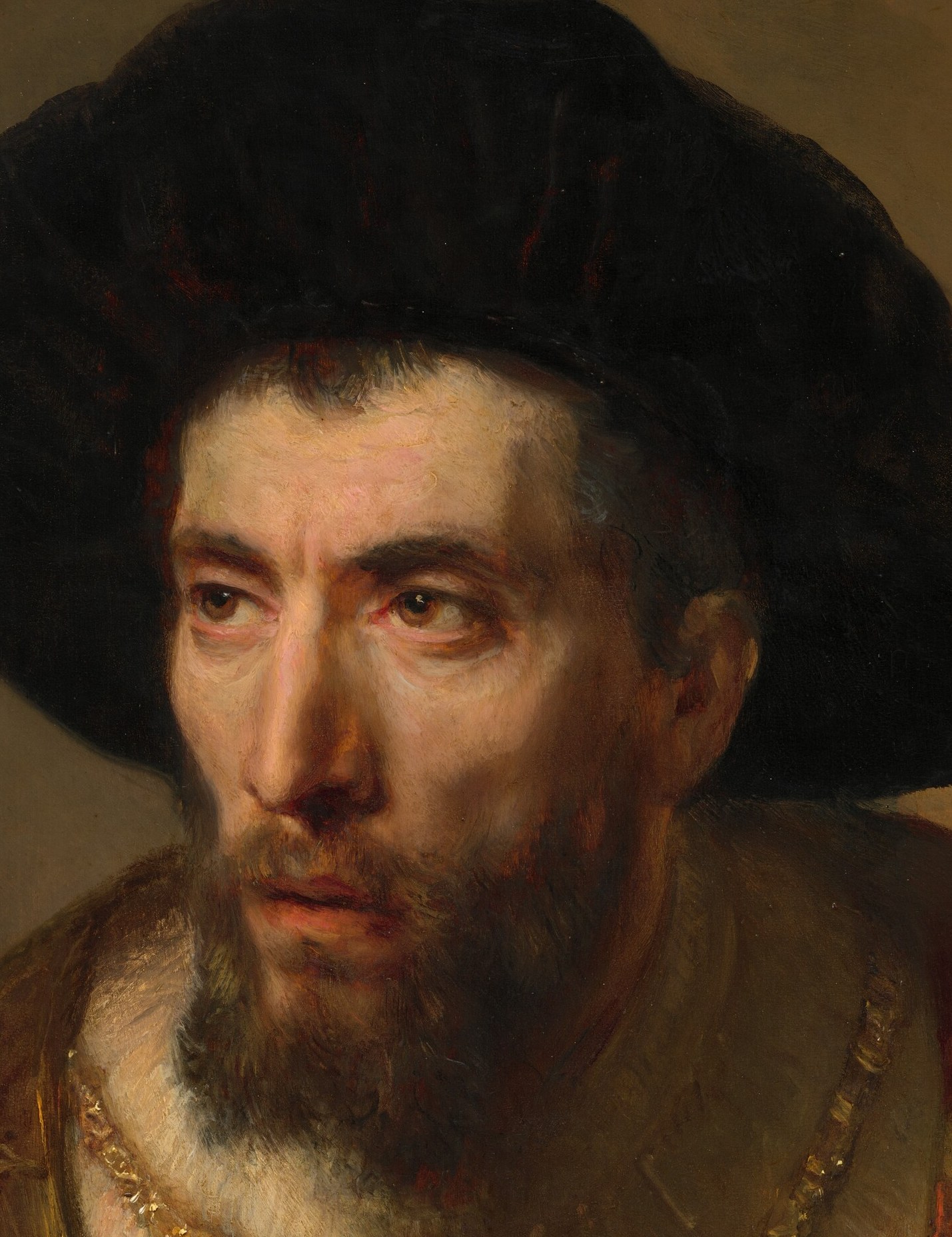
This is 'The Philosopher,' an oil-on-panel study painted in the Netherlands around 1653. It is not a portrait of a specific person. Dutch painters of the period called this genre a 'tronie', a study of a character type, a costume, or an expression, made for the open market rather than a commission. The artist remains unknown.
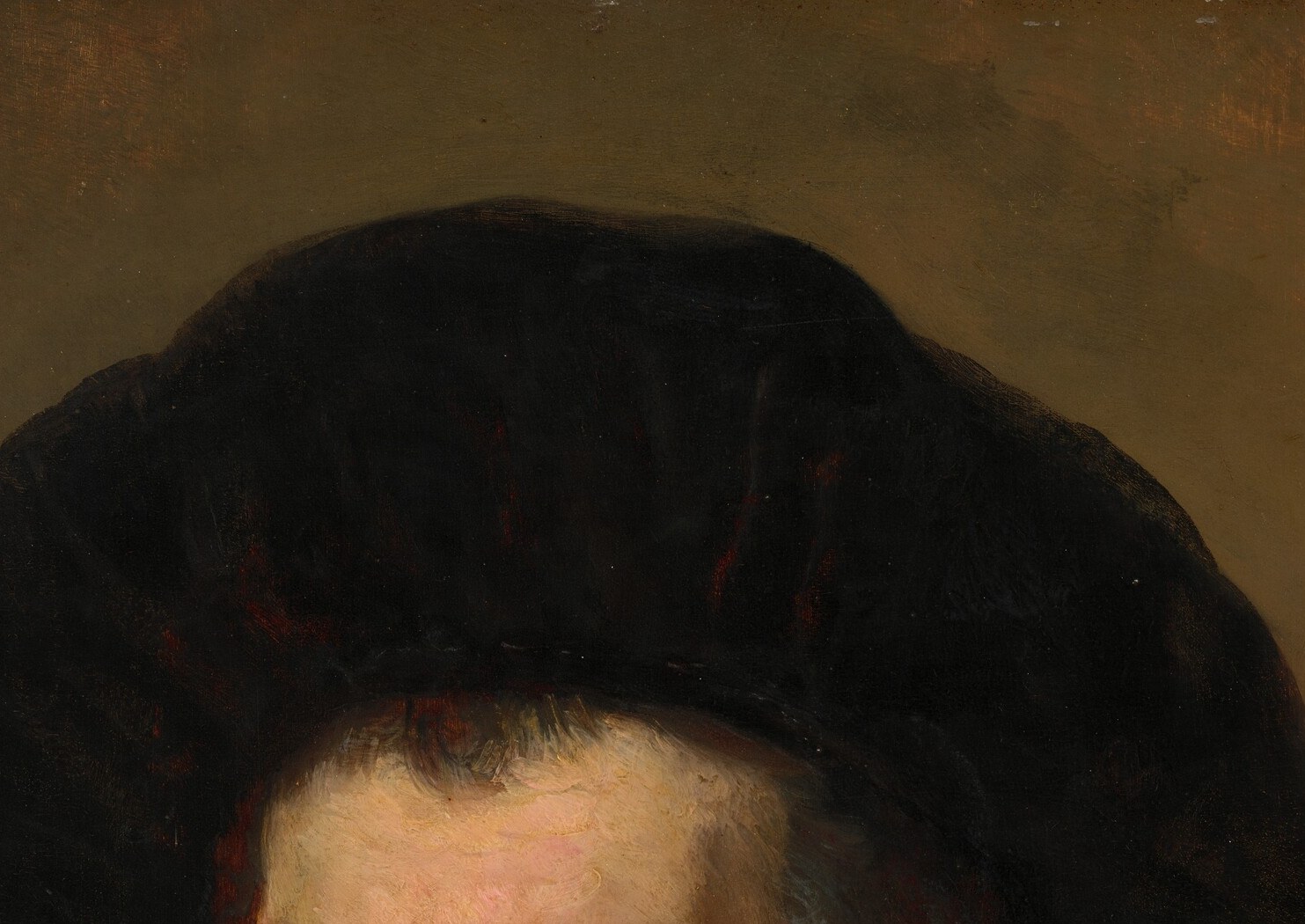
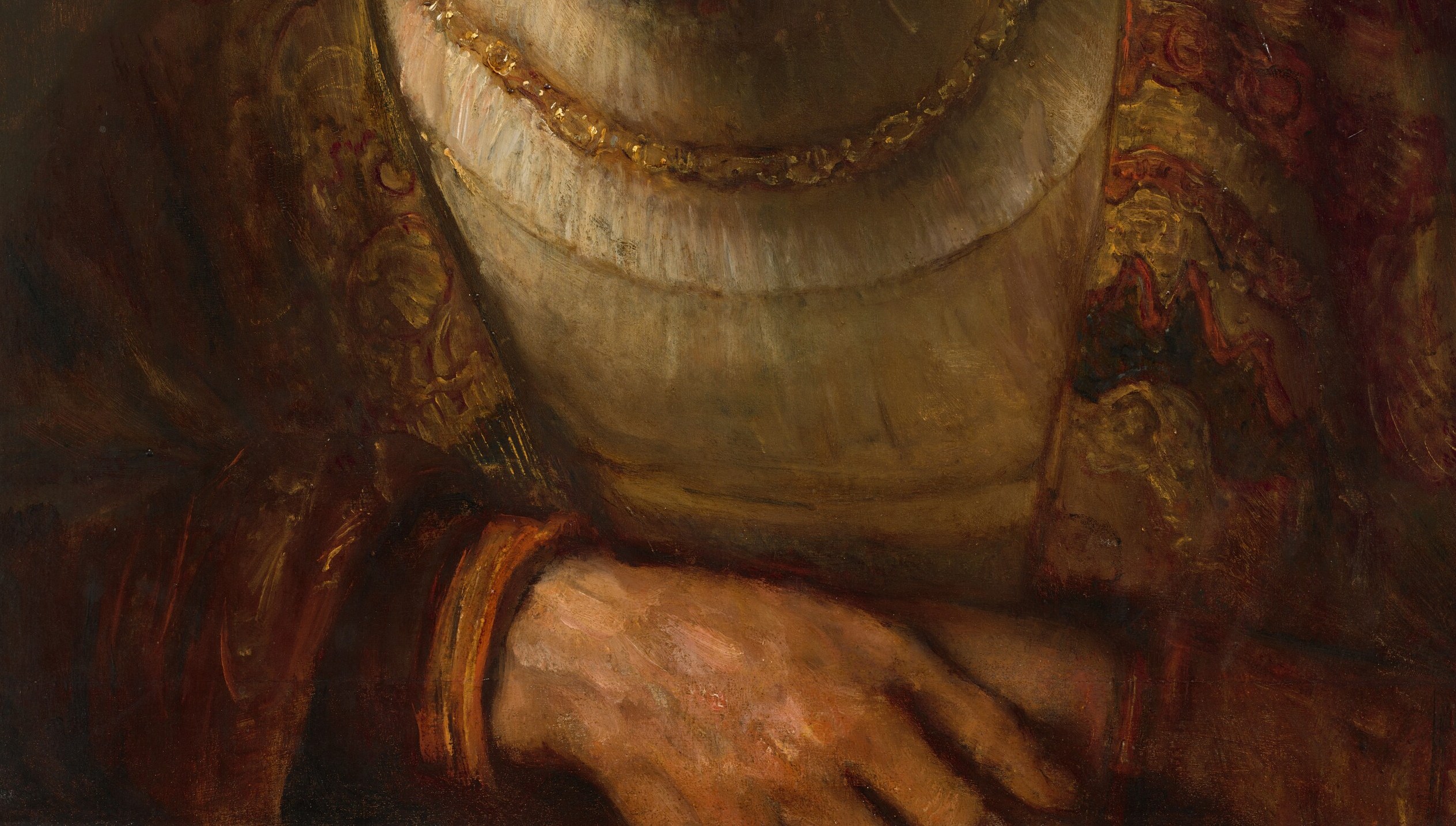
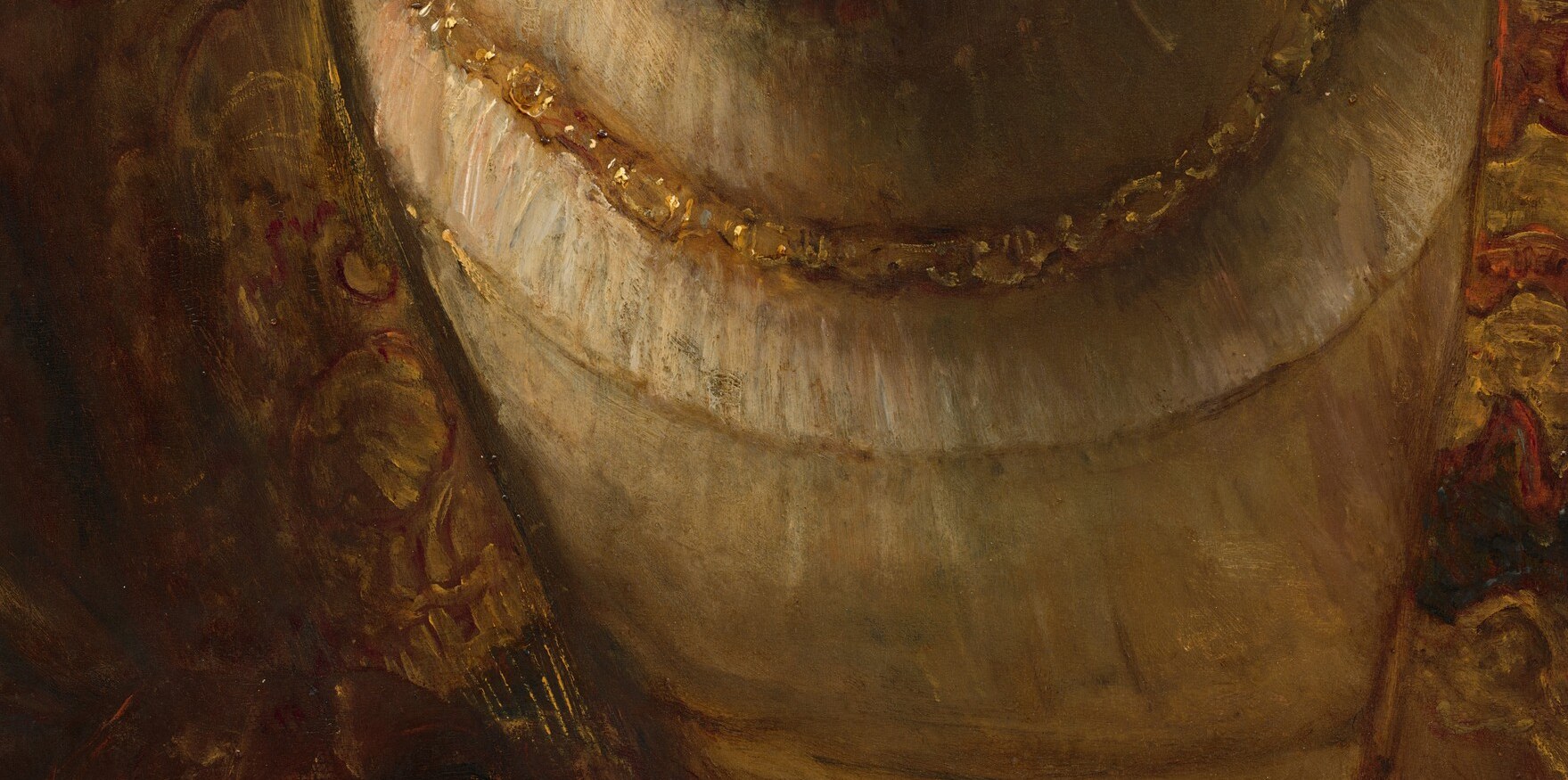
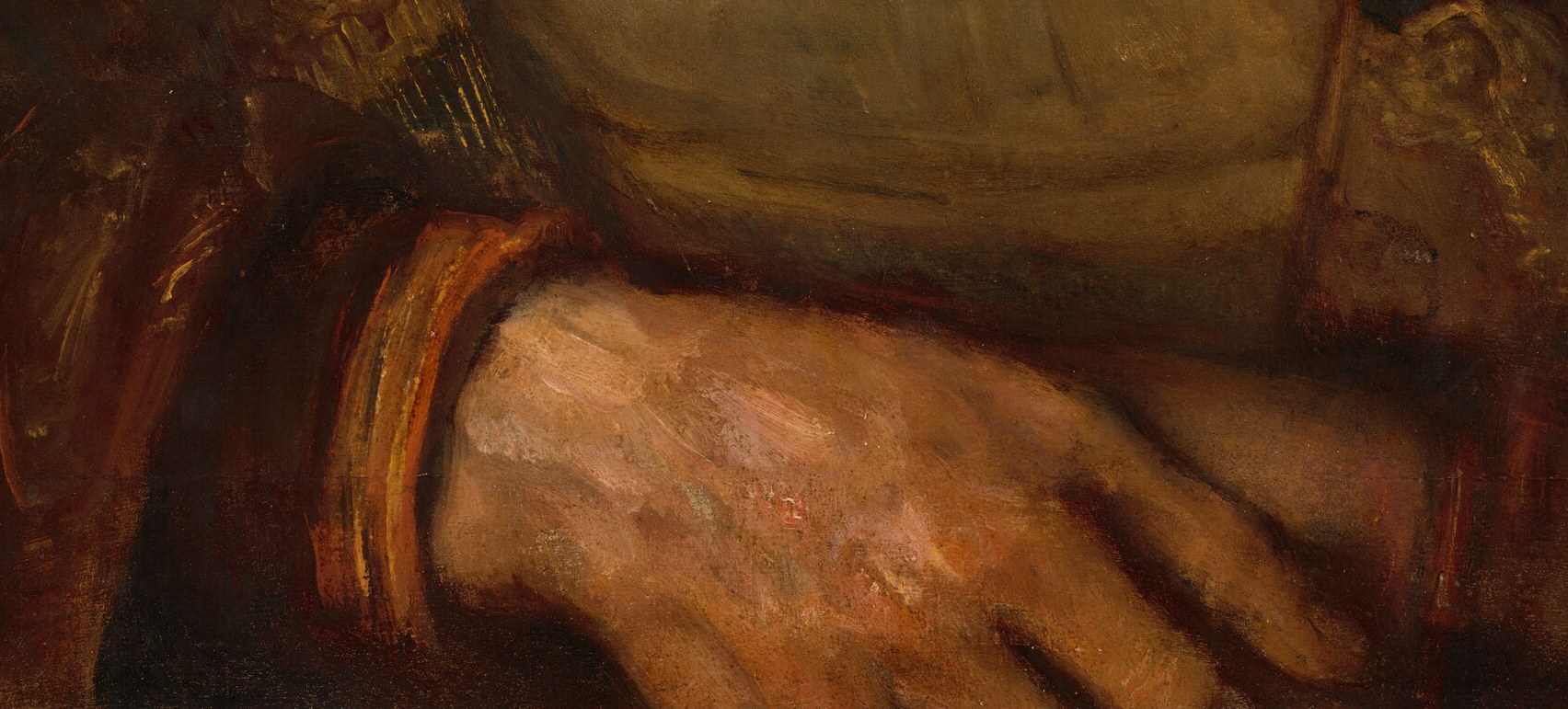
Look at the contradiction between the plain dark velvet cap and the robe beneath it. The cap signals modesty and intellectual life. But the robe is cut through with gold-toned embroidery, painted in loose, confident strokes that create the illusion of wealth without belaboring it. The painter's brushwork on that gold trim is the film's hidden detail: fast, virtuoso passages that read as ornate pattern from a distance and as pure gesture up close.
The lighting is classic Dutch chiaroscuro. Warm raking light models the left side of the face with extraordinary precision, giving the skin weight and temperature. The shadow side is not simply dark, a subtle cool reflected light preserves form along the jaw and cheek. The crossed arms and downward-cast eyes close the figure off from us, but the white linen collar acts as a luminous bridge between the lit face and the dark robe, anchoring the whole composition.
We do not know who painted this panel, or for whom. But it survives as a quiet, serious thing: a study of what it looks like to think, made at a moment when Dutch painting was discovering that interior states were as worthy of paint as battles and feasts. Why do you think an unknown artist chose to paint wealth into a study of humility?
Details
Transcript
You read him as a humble thinker. Plain cap, inward gaze. Now look at what he is actually wearing. Gold embroidery cuts across the brownish-red wool. The brushwork is fast and confident. The painter stops laboring the moment the illusion holds. A man dressed in wealth, painted as a man of thought. The 17th-century Dutch called this a 'tronie', a study of a character, not a portrait of a person.