Madonna and Child by Benvenuto di Giovanni
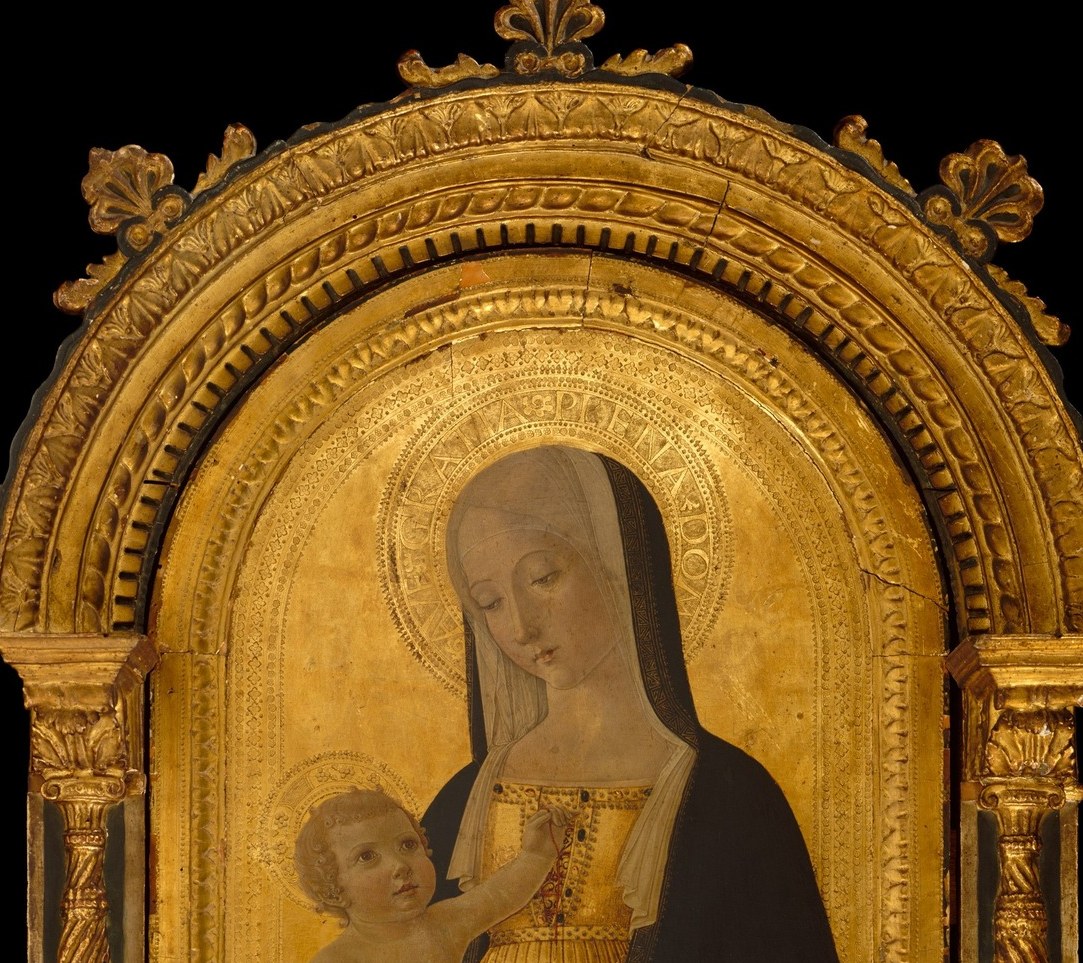
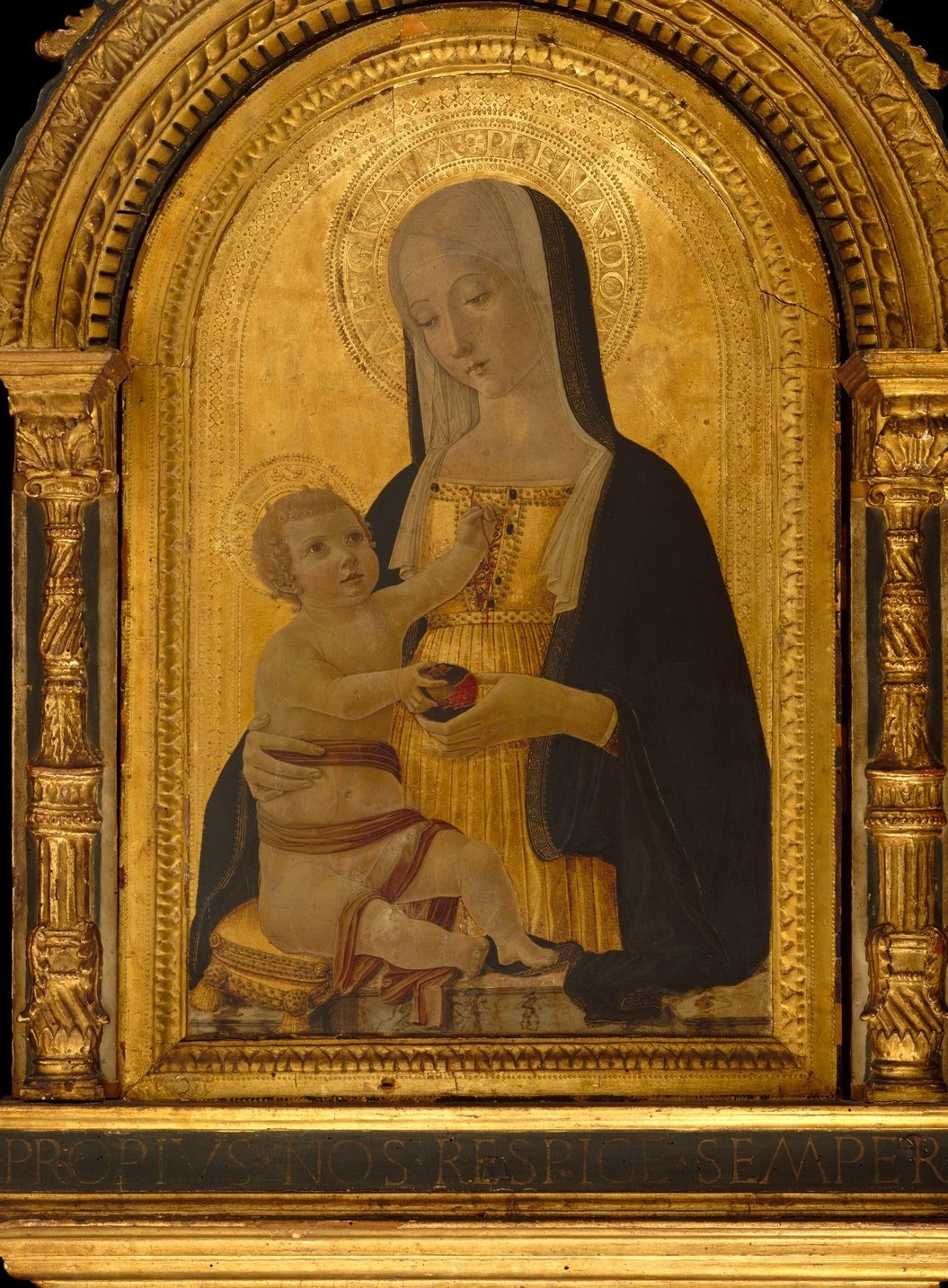
Benvenuto di Giovanni painted a whole theology of light into 'Madonna and Child' in 1470, now at The Metropolitan Museum of Art. A goldsmith's son from Siena, he understood that a gold background in tempera was not a static flatness but a machine for catching candlelight.
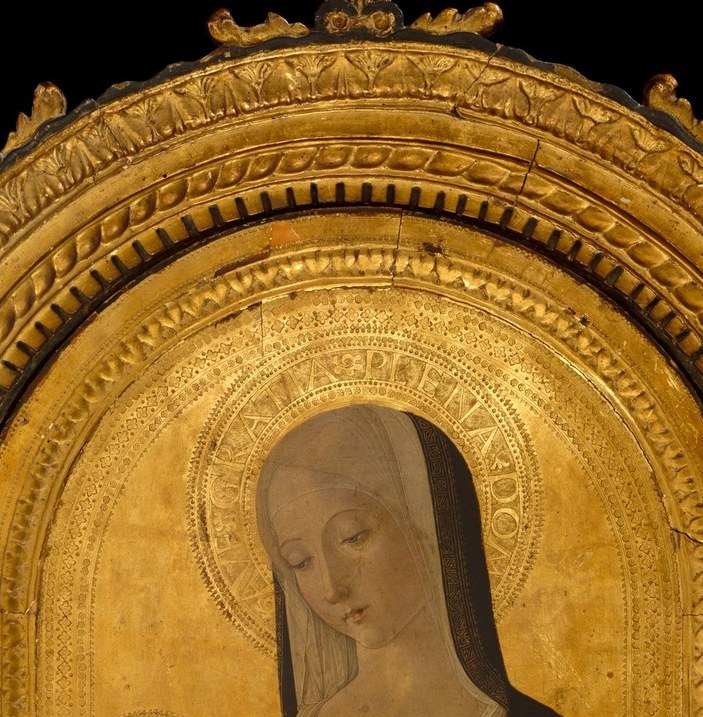
Look closely at Mary's halo. The radiating lines are not drawn with a brush. They are punched into the gold leaf with a metal tool, creating tiny valleys that throw off light as the viewer or the flame moves. The halo would seem to spin in the low, flickering light of a chapel. Her deep blue mantle is ultramarine, ground from lapis lazuli brought from Afghanistan and, ounce for ounce, more costly than the gold behind her.
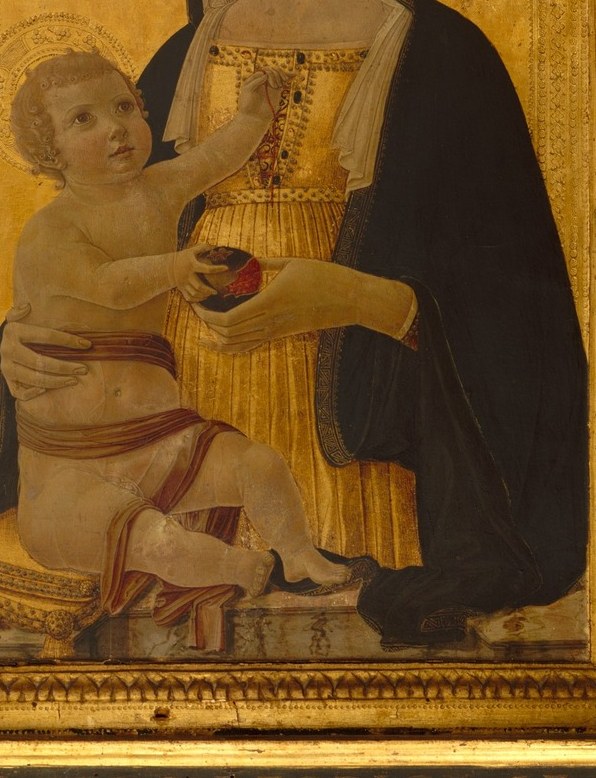
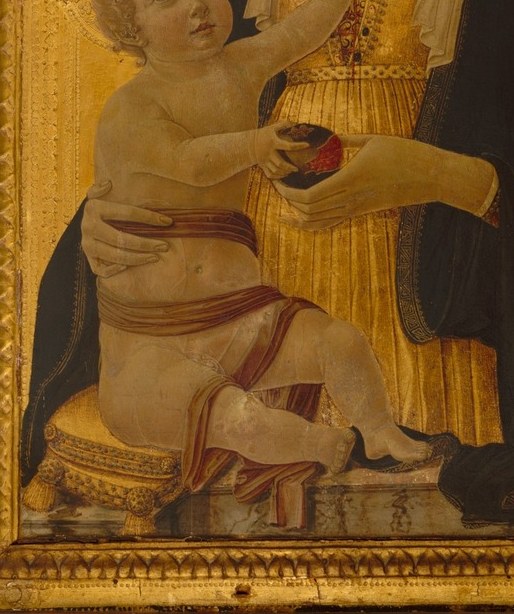
The Christ Child is wrapped in red, the liturgical color of the Passion. Benvenuto places the infant's future sacrifice directly into the scene of maternal tenderness. The painting functioned as a devotional object, where the shimmering materials themselves were understood as a glimpse of the heavenly.
Benvenuto's style would change dramatically in the 1480s, but here we see the early Sienese commitment to surface and splendor. The elaborate gilded frame, possibly original, completes the work as a sacred threshold. A small cherub carved at the base watches quietly. What do you think a painter owes to his father's craft?
Details
Transcript
1470. A goldsmith's son in Siena picks up a brush. He surrounds Mary with pure gold leaf. Now look at her halo. The rays are not painted. They are punched into the gold with a metal tool. From a single candle, the whole disc would flash and spin. Her blue robe is ultramarine. More expensive than gold. And the red cloth under the child? That is the Passion, already waiting. A silent, shimmering sermon made to flicker in church darkness.