Mount Monadnock by Thayer, Abbott Handerson
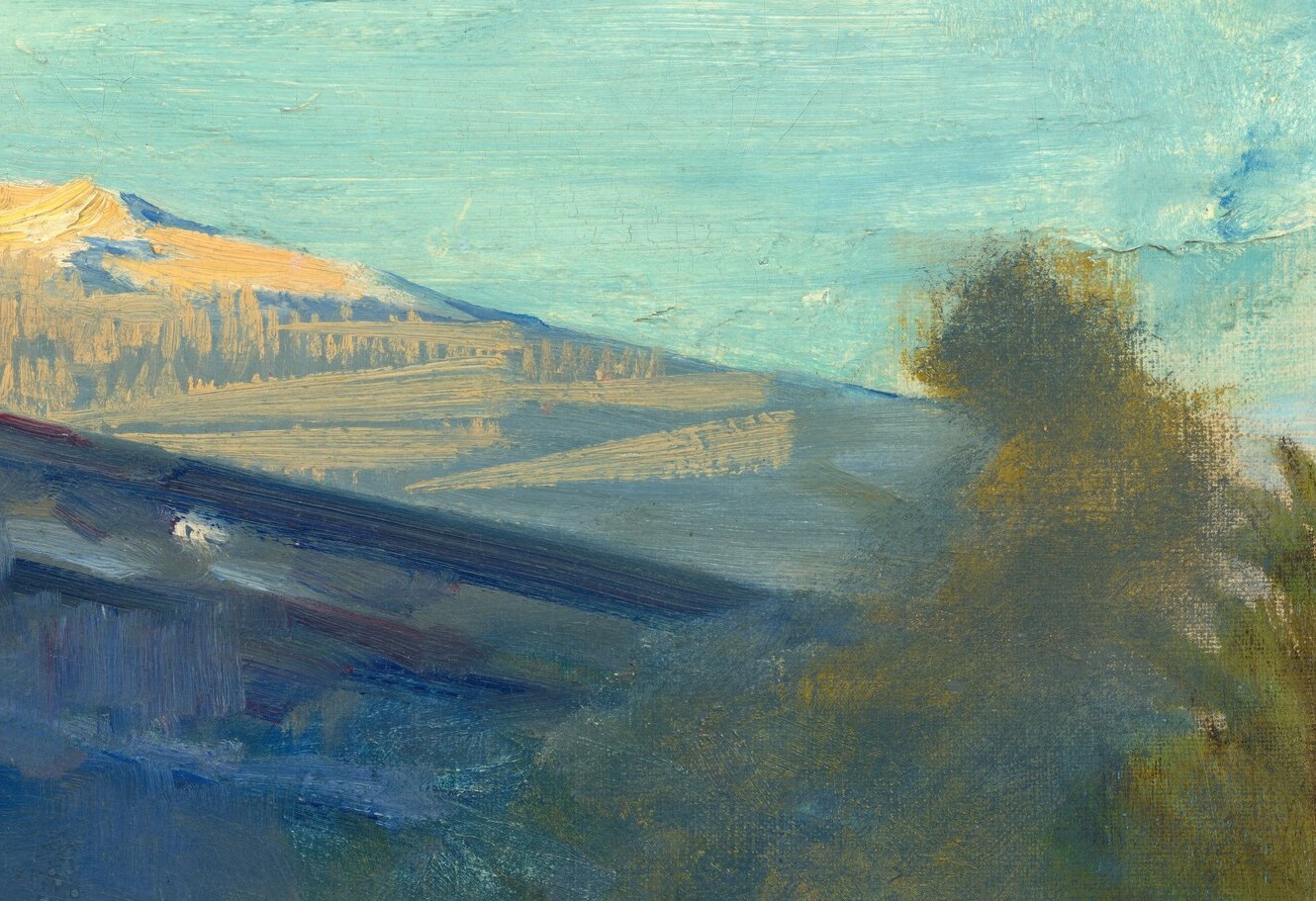
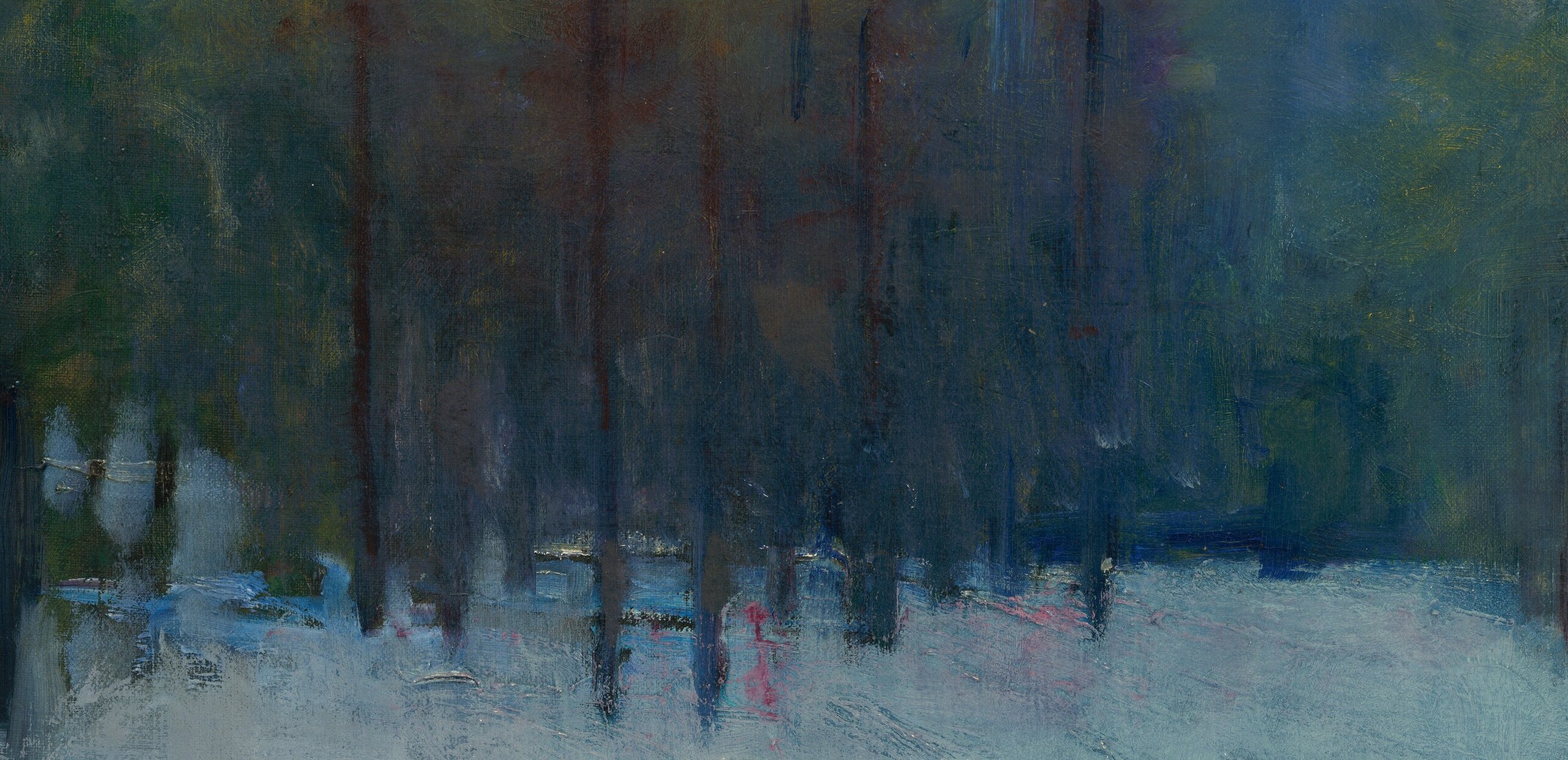
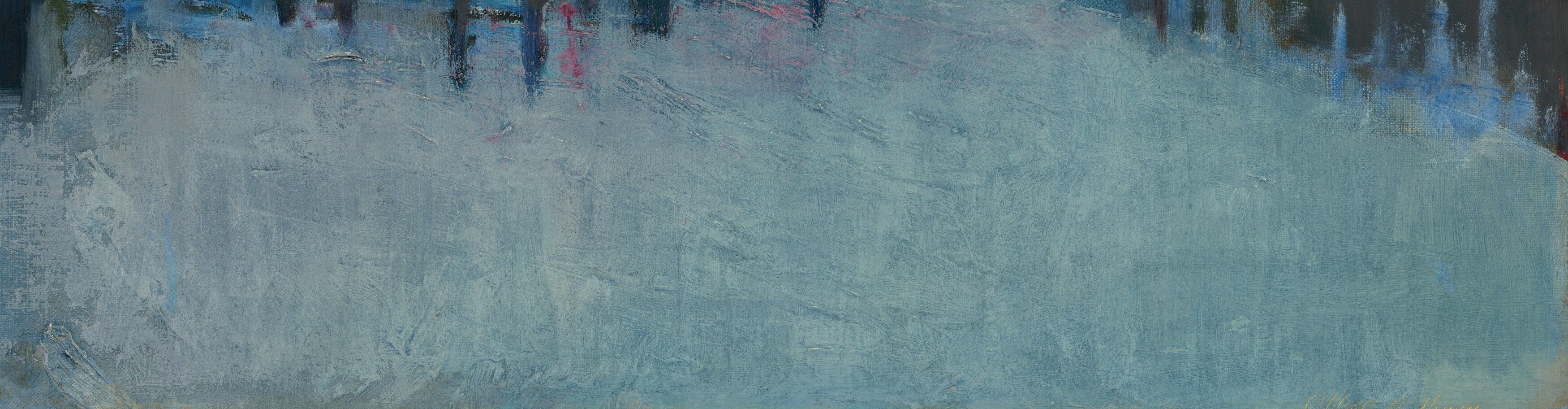
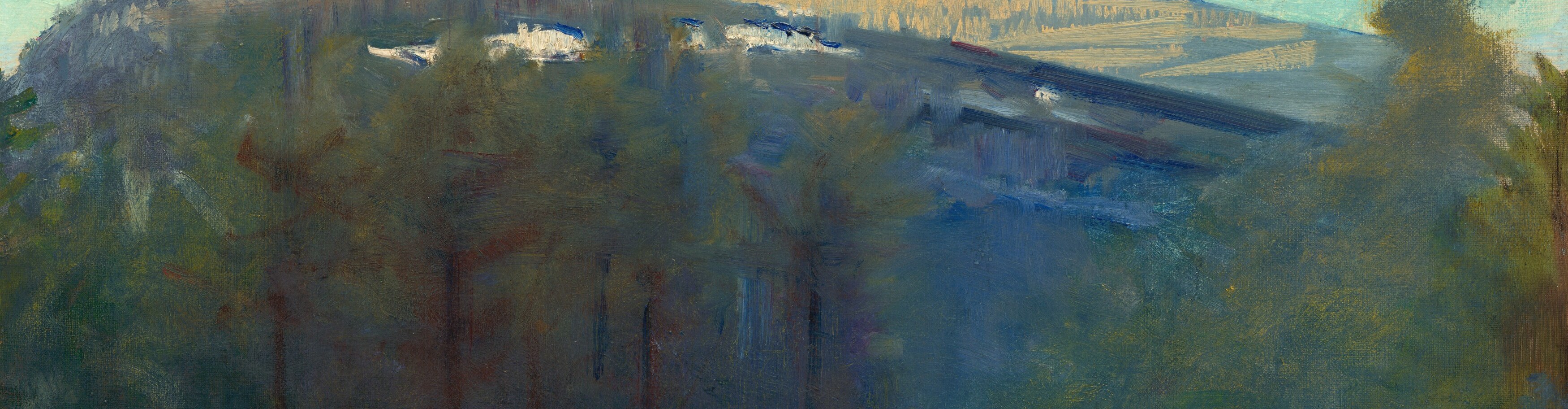
Abbott Handerson Thayer's Mount Monadnock is a landscape with a secret. Painted around 1911-1914, it depicts the famous New Hampshire peak and, if you look hard enough, a solitary hiker almost completely absorbed by the snow.
Thayer was far more than a painter of angels and portraits. He was a pioneering naturalist who co-authored a book on protective coloration in the animal kingdom. His obsession with camouflage plays out right here, on canvas. The tiny figure is rendered in the same pinkish-brown strokes as the exposed earth beneath the snow, making it barely perceptible.
The painting now sits in a major American art collection, a quiet representative of Thayer's later landscape work. It rewards the kind of looking Thayer himself practiced: patient, scientific, and attentive to the way things vanish into their surroundings.
What starts as a simple view of a mountain becomes a small act of hide-and-seek. What other details might be waiting there, just out of sight?
Details
Transcript
Mount Monadnock. A New Hampshire landmark. The painter was a naturalist obsessed with camouflage. He hides things in plain sight. Scan the snow in the foreground. Look closely. A tiny figure. Buried in the texture. A hiker, almost invisible against the white. Thayer's book on camouflage later influenced World War I design.