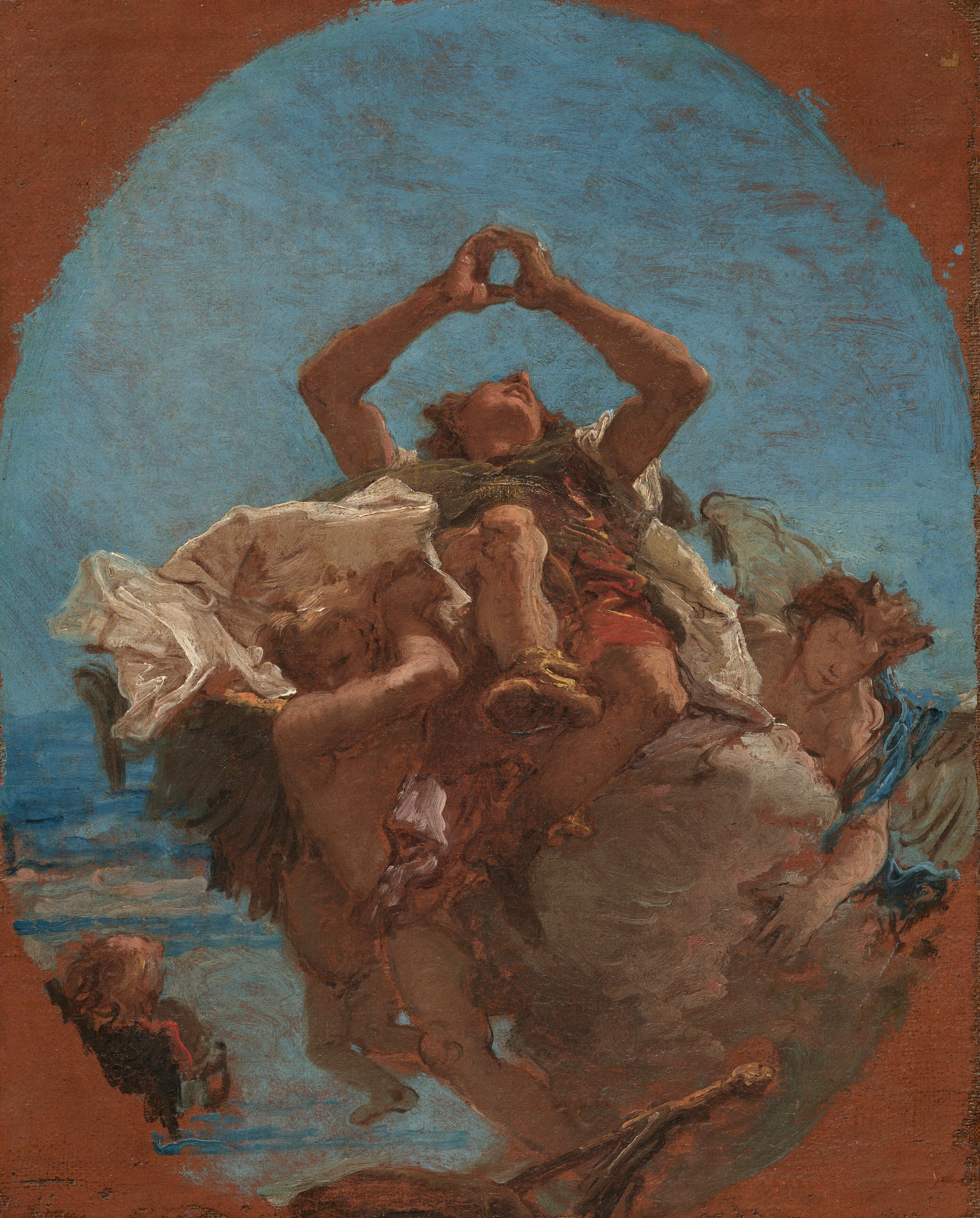
Saint Roch Carried to Heaven by Angels by Tiepolo, Giovanni Battista
Giovanni Battista Tiepolo's *Saint Roch Carried to Heaven by Angels* was painted around 1735 as an altarpiece or ceiling canvas, likely designed for a Venetian church. It is an oil-on-canvas oval now held in a private collection.
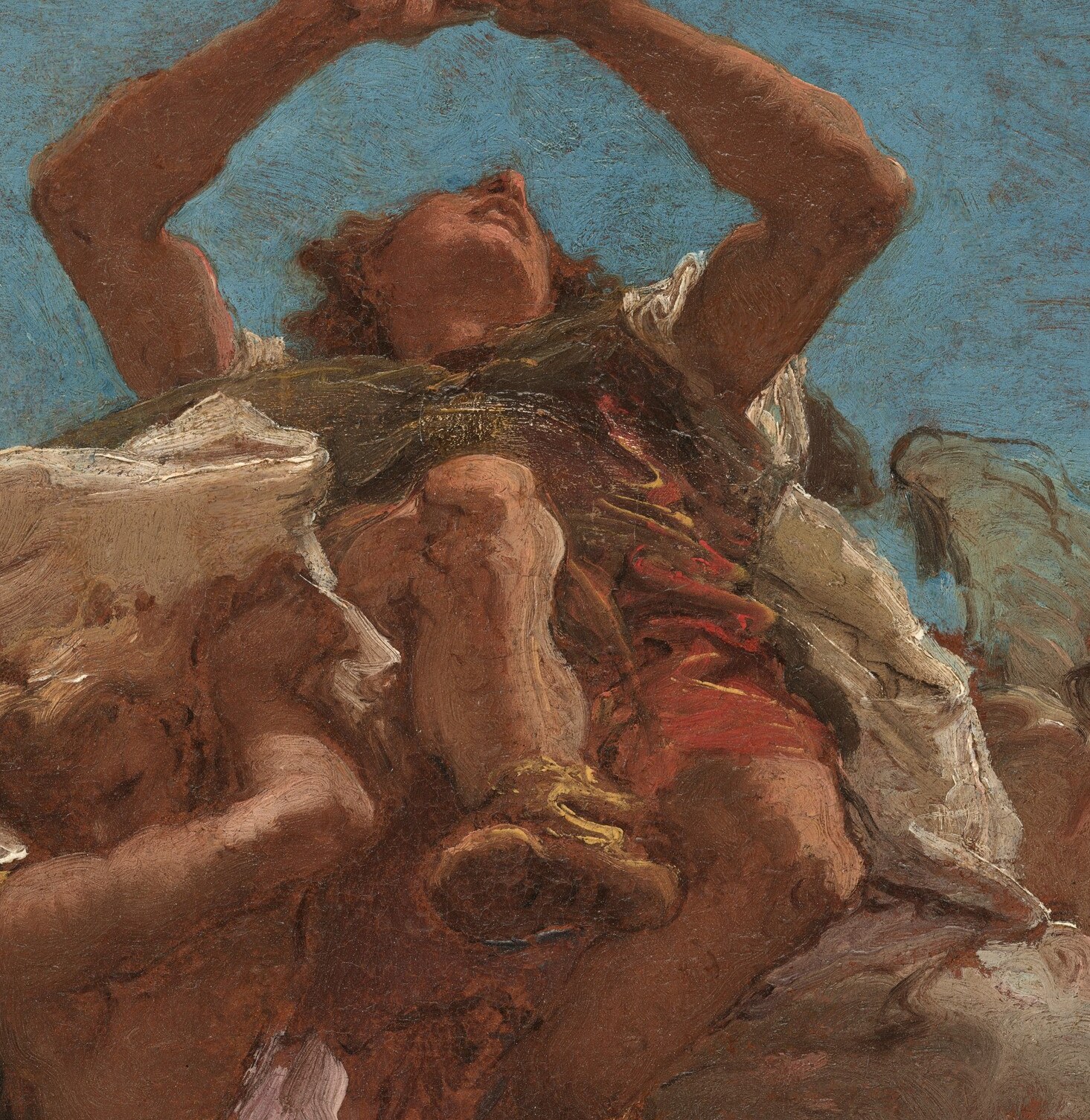
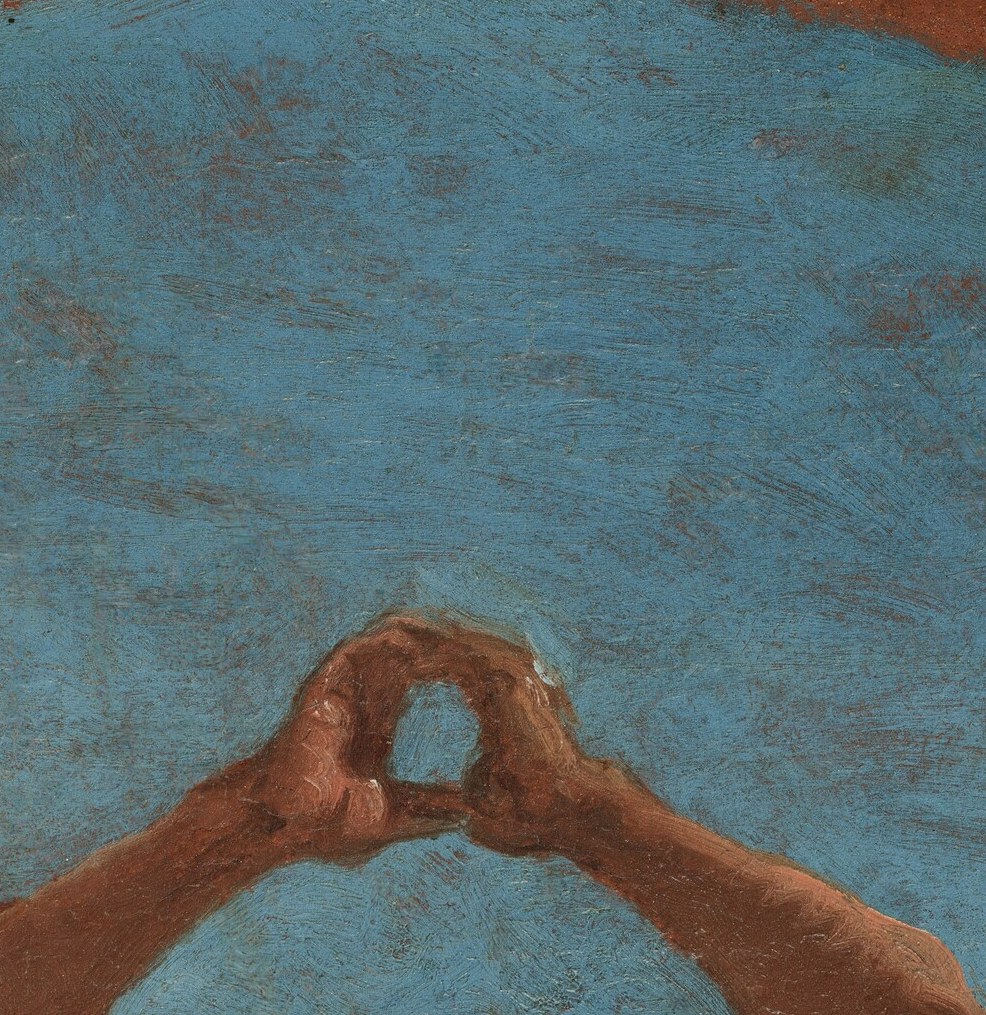
Watch closely what happens to the saint's left arm. It looks foreshortened, almost stumpy, but that is because the painting was built to hang high above the viewer's head. The technique is called *sotto in sù*, "from below upward", and Tiepolo was its supreme practitioner. The moment you imagine yourself standing beneath it, that compressed arm extends downward, and the floating torso resolves into a body ascending through open air.
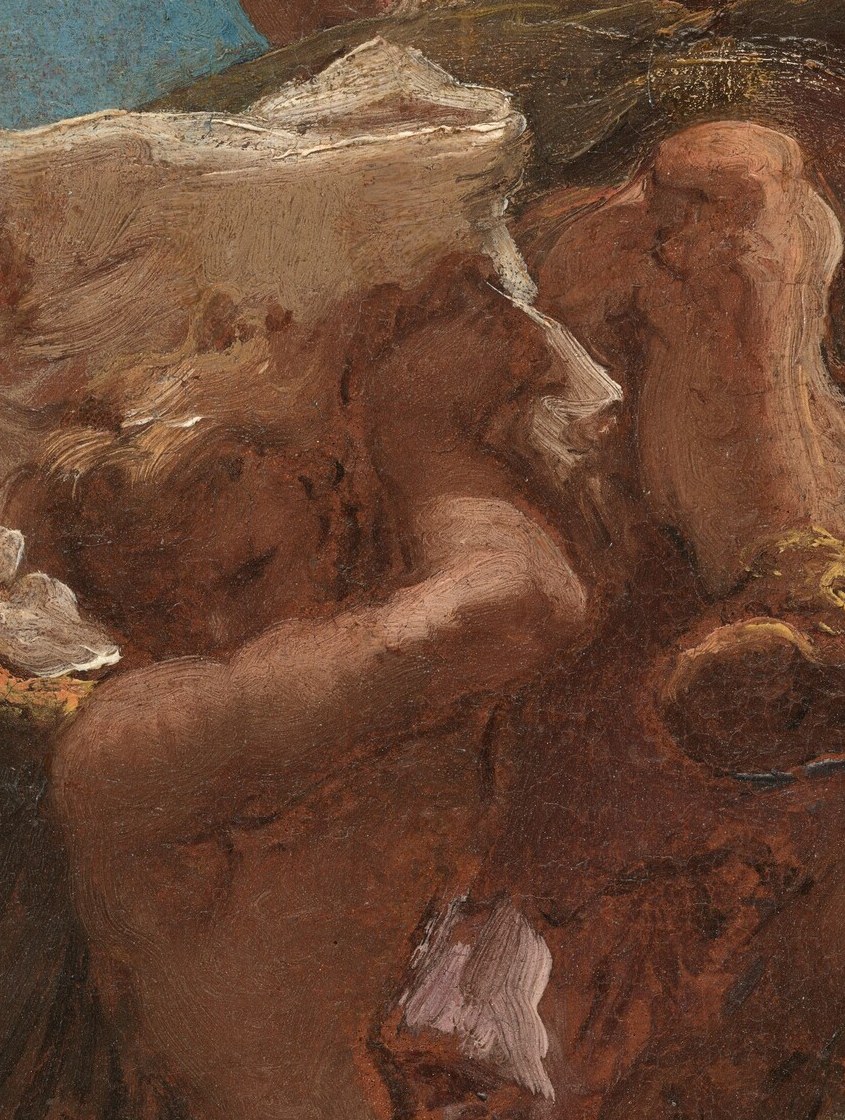
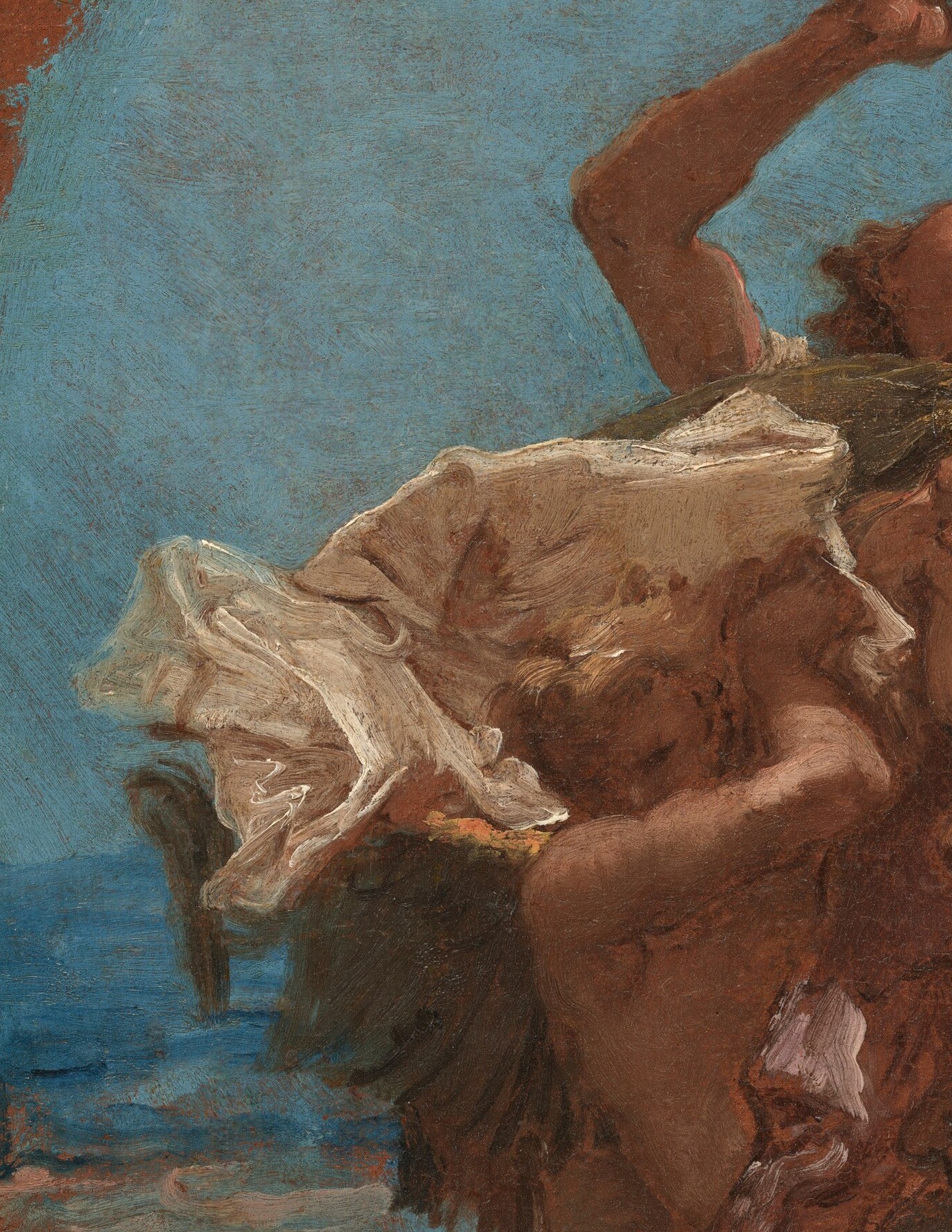
The trick extends to the light. There is no sun, no lamp, no identifiable source for the amber warmth filling the upper canvas. Tiepolo's generation of Venetian painters invented heaven-as-atmosphere: pure suffused glow that makes the supernatural feel physically present. The white linen billowing at left is bravura brushwork, gold catching on white against deep shadow, paint behaving like fabric, which is itself the whole argument of the Rococo.
It is an optical contract between painter and architecture. The painting only works as intended from one spot in the room. Every other view is a preview.
Details
Transcript
There is a trick built into this canvas. Tiepolo painted it to hang above your head. Look at the arm hanging toward us. From directly below, it would read as a full arm, not a stub. His body is compressed the same way. Floating, not standing. Now the white linen. Pure brushwork passing for cloth in motion. And the light has no source. Heaven, for Tiepolo, was atmosphere.