The Tomb of Caecilia Metella by Fleury, Léon-François-Antoine
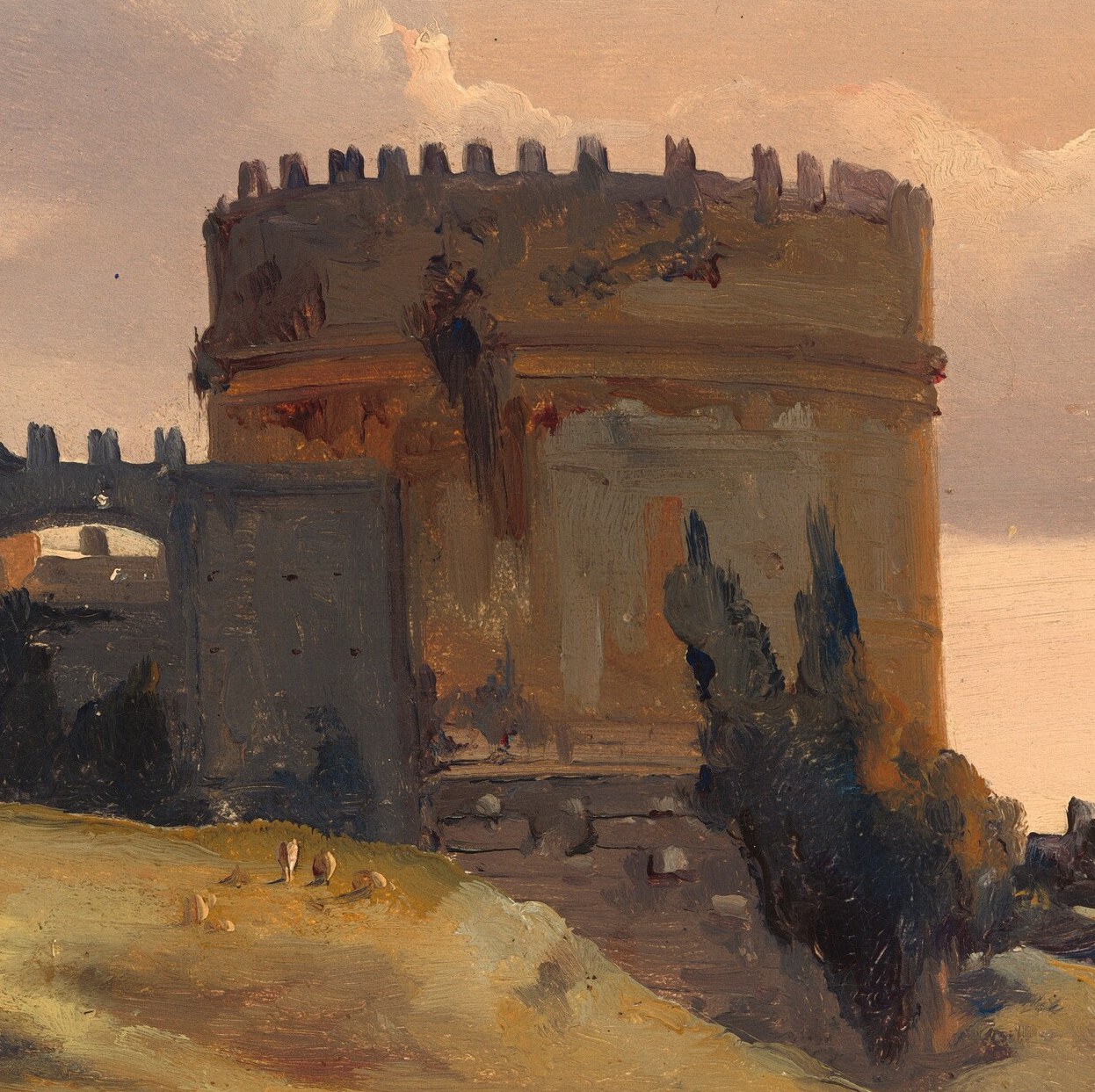
The Tomb of Caecilia Metella, painted by Léon-François-Antoine Fleury around 1830, shows a solitary monument on the Roman Campagna. It is now in the National Gallery of Art in Washington, D.C. The painting records a real place: the tomb of a Roman noblewoman that still stands on the Via Appia today.
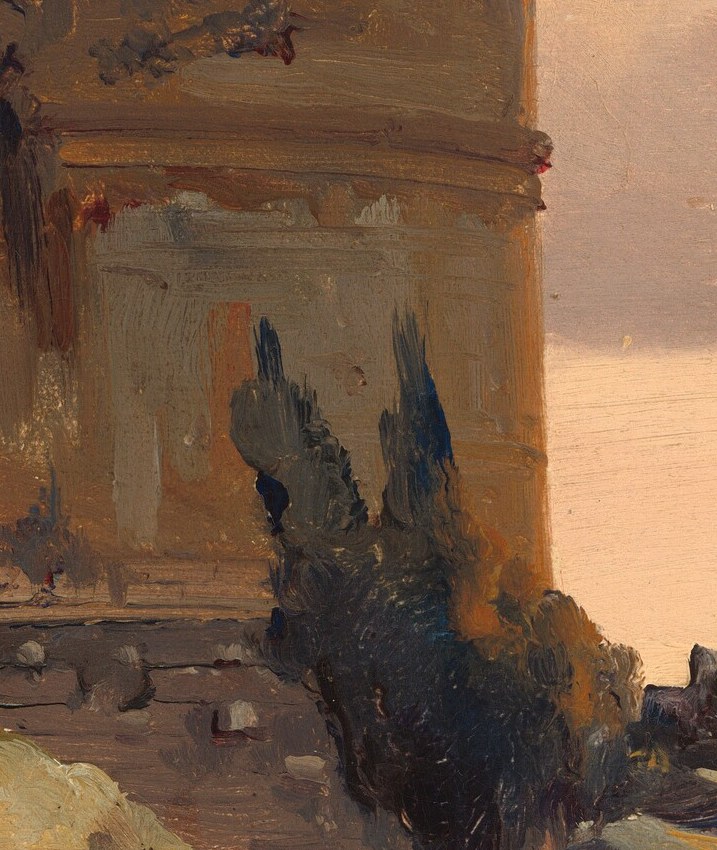
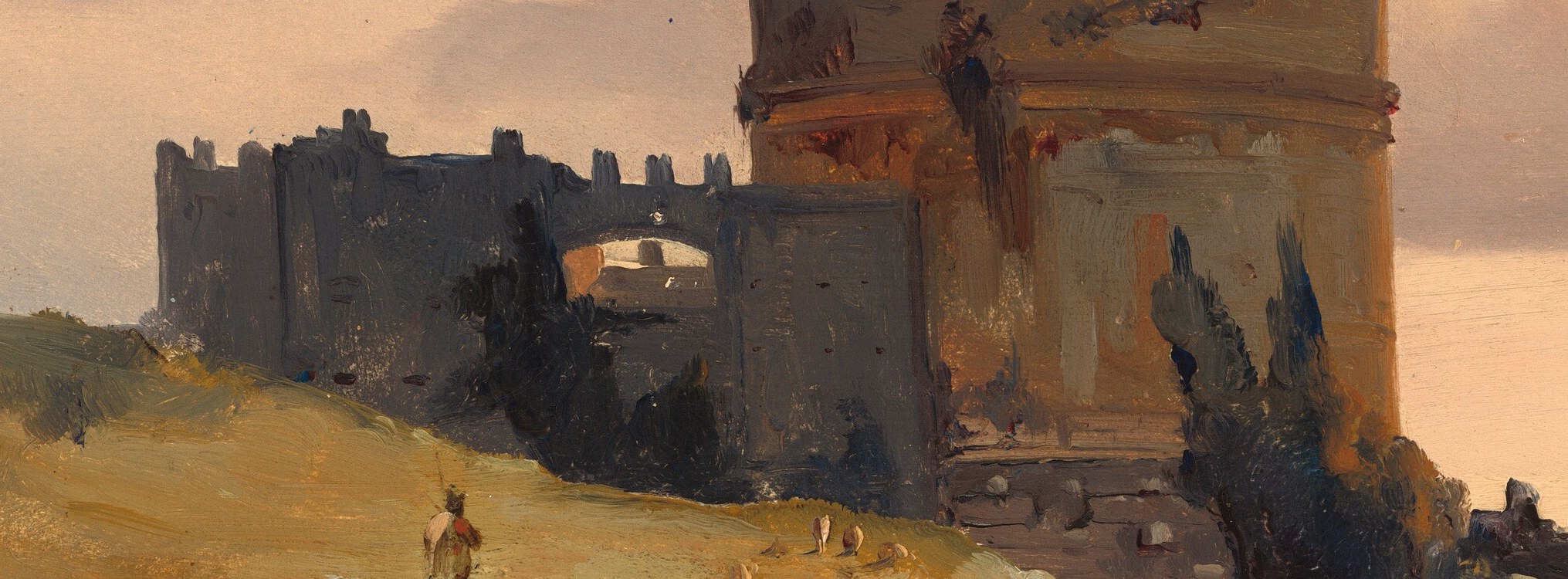
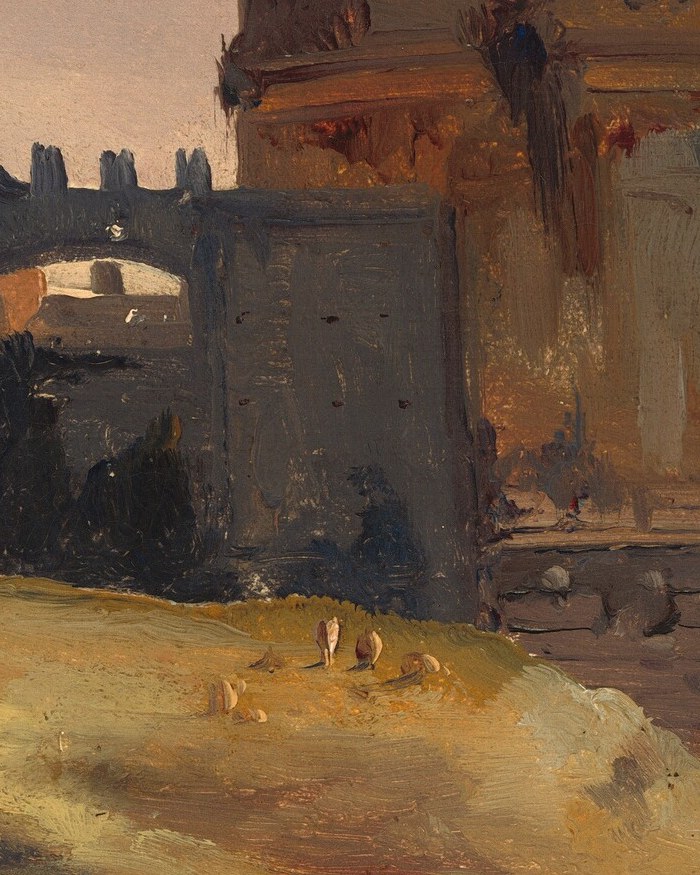
Fleury lets the architecture fill the frame. The sunlit right side reveals the texture of the ancient masonry, while deep shadows on the left give the structure a solemn weight. A tiny figure on the hill in the distance makes the scale of the tomb and the emptiness around it feel immense.
The subject is the tomb of Caecilia Metella, a member of the powerful Metelli family, built in the first century BC. For centuries it was one of the most famous landmarks outside Rome, a marker of endurance. Fleury painted it during a moment when French artists were preoccupied with classical ruins and the passage of time, blending close observation with a Romantic sense of the sublime.
The painting asks you to sit in the quiet of a single enduring fact: a name carved in stone has lasted longer than the empire that carved it.
Details
Transcript
They built this for one woman. Caecilia Metella. A Roman noblewoman. Her name is carved into the stone. Her family was one of the most powerful in the Republic. The city that surrounded it crumbled away. But the name she was given in life has outlasted the empire. Now, a single traveler walks toward it.