Workers on their Way Home by Edvard Munch
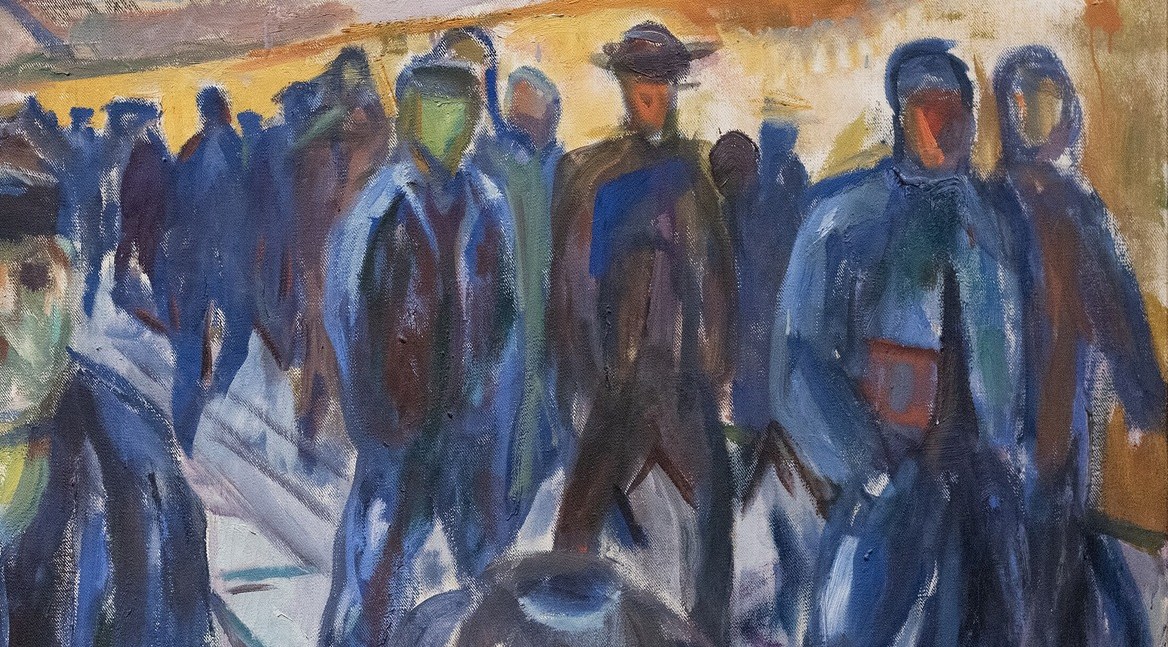
Edvard Munch, widely known for "The Scream," also painted quieter, yet equally profound, moments of human experience. His 1914 oil painting, *Workers on their Way Home*, now at the Statens Museum for Kunst, captures the stoic endurance of daily labor.
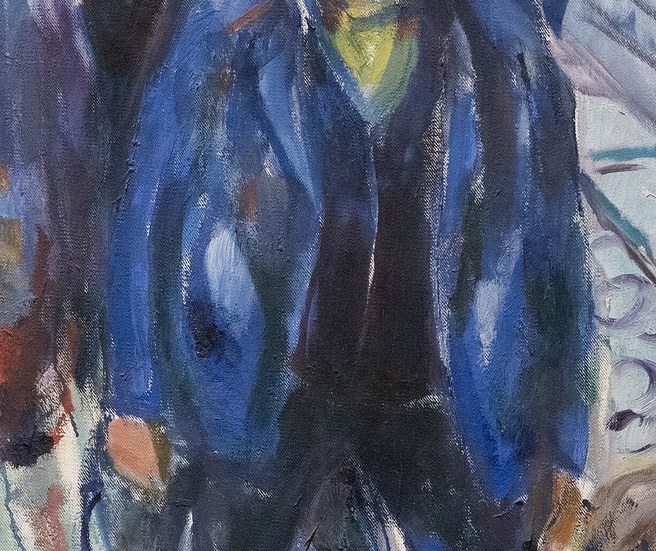
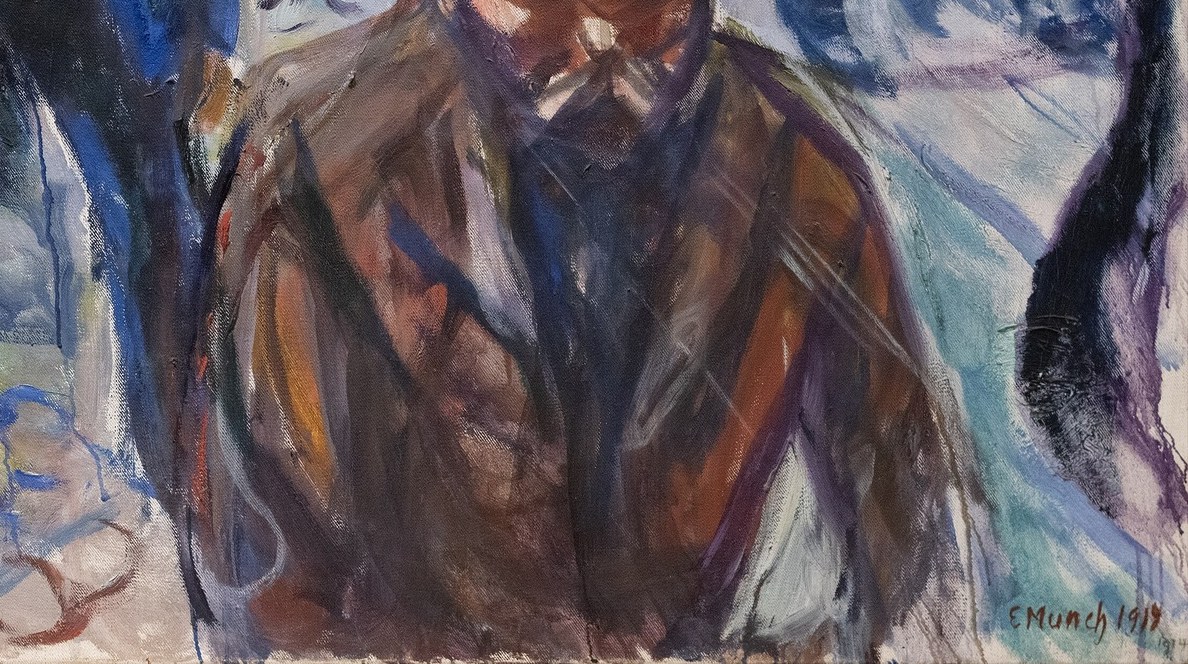
Observe the thick, expressive brushstrokes on the central figure's blue jacket, a hallmark of Munch's technique. The swirling patterns on the ground suggest the harsh realities of their industrial environment, whether mud or snow.
Born in 1863, Munch's life was shaped by illness and loss, influencing his focus on psychological and emotional themes. He developed his distinctive style under the influence of nihilist Hans Jæger, urging him to paint his inner emotional state.
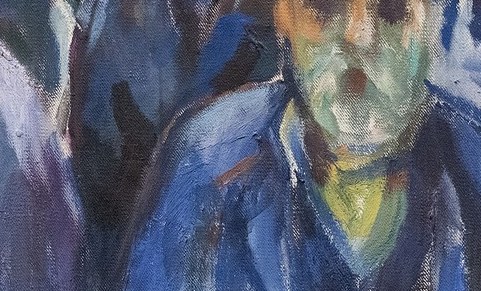
This painting invites us to look beyond the dramatic to find the quiet dignity in everyday struggles. What details do you notice first?
Details
Transcript
This painter is famous for capturing raw emotion. But here, emotion is in the movement of labor. Look at the thick strokes of paint on this jacket. It shows his expressive, hurried technique. The swirling ground suggests mud or snow. It's the grime of their industrial world. Almost hidden, his signature is a tiny detail.