Northeaster by Winslow Homer (American, 1836–1910)
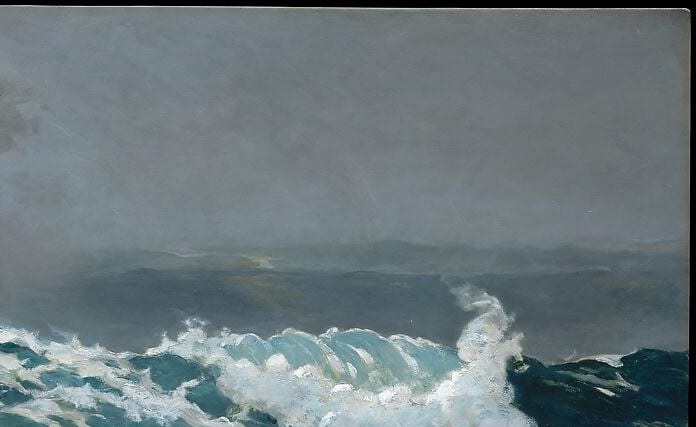
Winslow Homer's "Northeaster" (1895, reworked by 1901) hangs in The Met and remains one of the most technically astonishing American seascapes ever painted. It is not a quick impression of a storm. Homer worked this canvas for six years, scraping paint off and building it back up, chasing an effect that oil paint is not supposed to deliver: the translucent glow of light passing through a solid wave face.
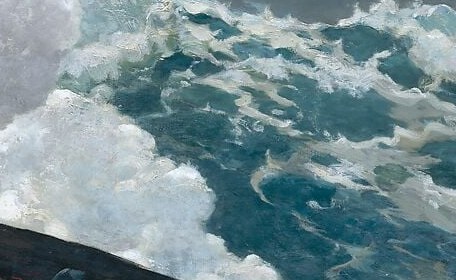
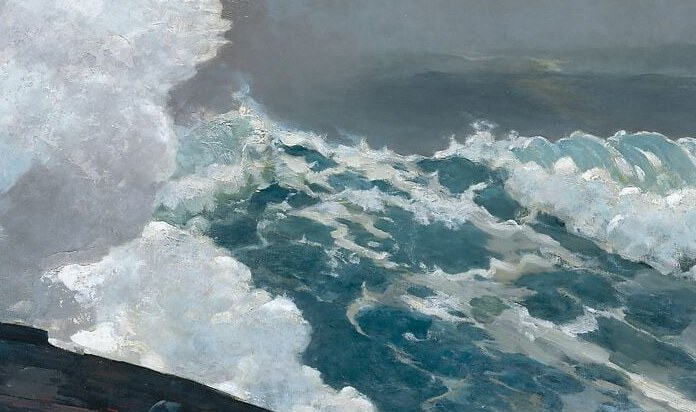
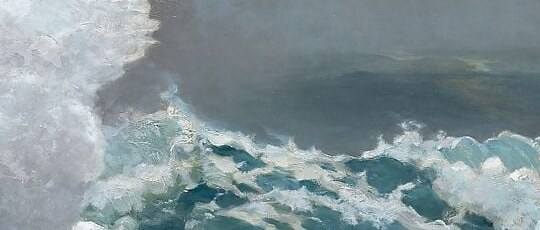
Look at the steep green-gray face of the central breaker. The lower passages are dark, cold, opaque. But higher up, where daylight punches through, the water appears to glow from within. That is not a coincidence. Homer laid down dark, cool underlayers, then floated thin translucent glazes of lighter green-gray over the top. The underpaint shows through, and the eye reads translucency. It is a watercolorist's trick executed in heavy oil paint.
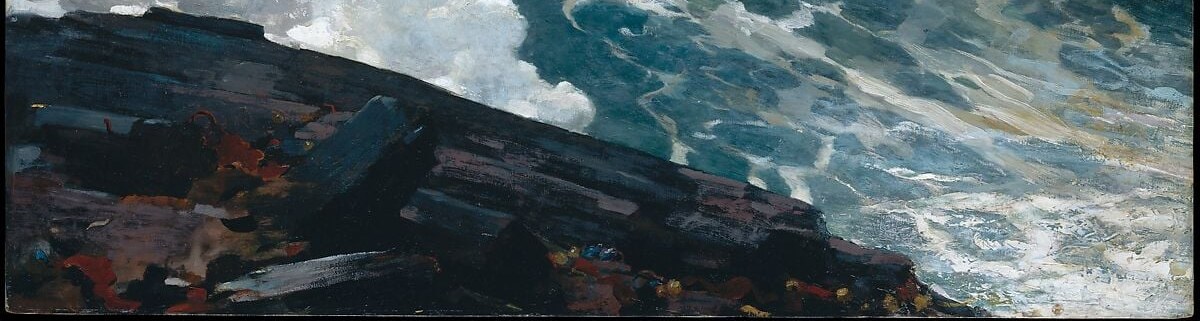
The rest of the composition supports that one effect. A low, compressed horizon robs the sea of open distance and pushes the wave mass up against the storm cloud. The cloud itself echoes the wave's shape, a surging cumulus dome that turns the whole picture into a single churning system. The black rock ledge at the bottom gives you a stable place to stand, but barely. Homer wanted you to feel the weight and menace of that water, not just admire it.
Homer lived on the Maine coast at Prouts Neck and watched real nor'easters batter the rocks from his studio window. He knew this light. What the painting does, after all those years of revision, is give you the light itself, built in paint.
Details
Transcript
A nor'easter slams the Maine coast. Storm cloud and breaking wave surge like one violent system. Now look into the steep face of the wave. The water glows gray-green. Daylight passes through it. Homer scraped and repainted this for six years. That interior light is a translucent glaze layered over opaque dark paint. Oil paint, made to glow like a foot of freezing seawater.