The Harbor by Josef Presser
Josef Presser’s "The Harbor," painted in 1943, is a powerful oil painting held at The Metropolitan Museum of Art. It captures the tumultuous energy of an American port during World War II, a time when these harbors were critical to the war effort.
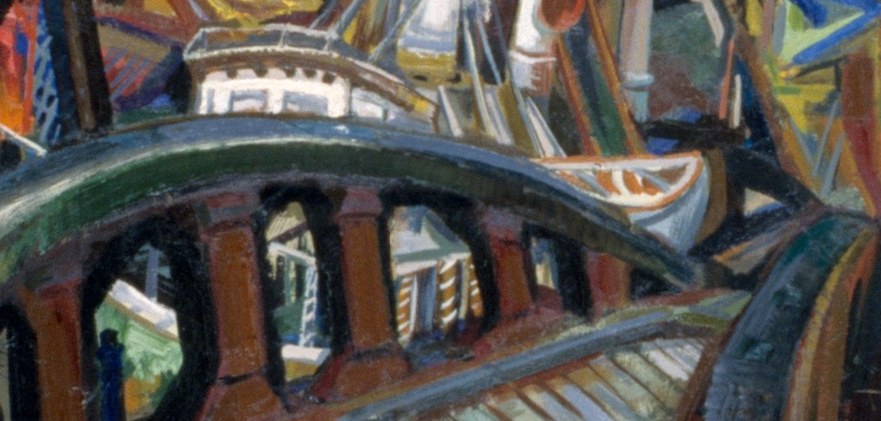
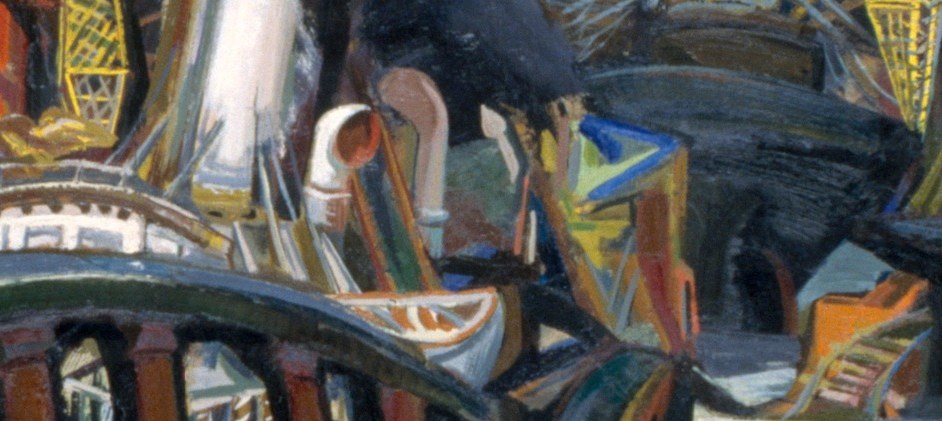
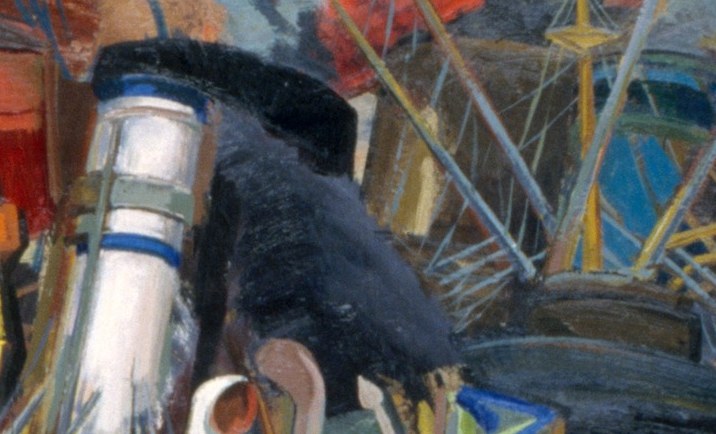
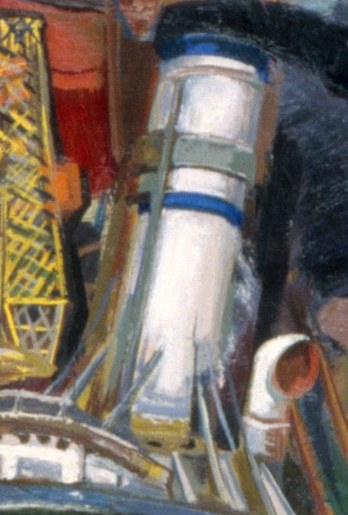
Observe the painting's distinctive style: Presser used thick impasto, almost slapping the paint onto the canvas. This technique gives the work a remarkable texture and a three-dimensional quality, making the forms of ships, cranes, and industrial scaffolding leap from the surface.
Created amidst global conflict, the painting's chaotic forms, sharp angles, and clashing hues of bright blue, yellow, and red convey the heightened activity and uncertainty of the era. Presser, an artist born in Lublin, was a notable figure in mid-century American modernism, known for his vigorous handling of paint and interest in urban-industrial subjects.
"The Harbor" remains a compelling visual articulation of a wartime industrial landscape, reflecting a pivotal moment in history through a bold modernist lens. What details do you notice first in this vibrant scene?
Details
Transcript
This painting captures a harbor, chaotic and alive. It was painted in 1943, during World War II. American ports were vital to the war effort then. Notice the thick impasto, paint slapped onto the canvas. This technique creates a textured, almost three-dimensional effect. The clashing hues suggest the frenetic energy of wartime industry. Josef Presser captured the turmoil and uncertainty of his era.