The Company of Captain Albert Bas and Lieutenant Lucas Conijn by Govert Flinck
Govert Flinck's 'The Company of Captain Albert Bas and Lieutenant Lucas Conijn,' painted in 1645, is a vibrant group portrait of an Amsterdam civic militia, held at the Rijksmuseum. It's more than just a military depiction; it's a study in individual personalities within a collective.
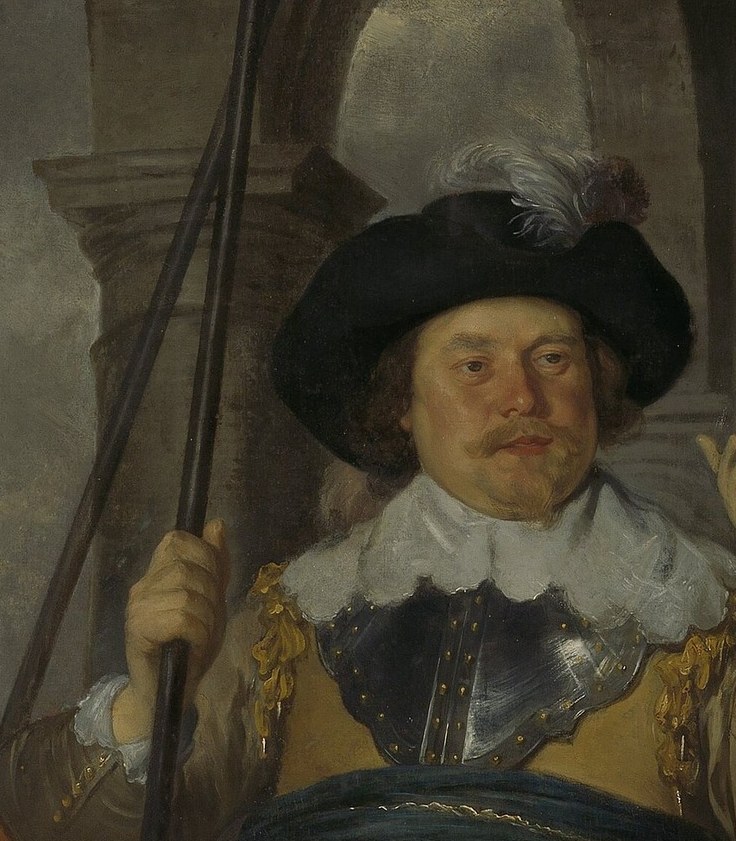
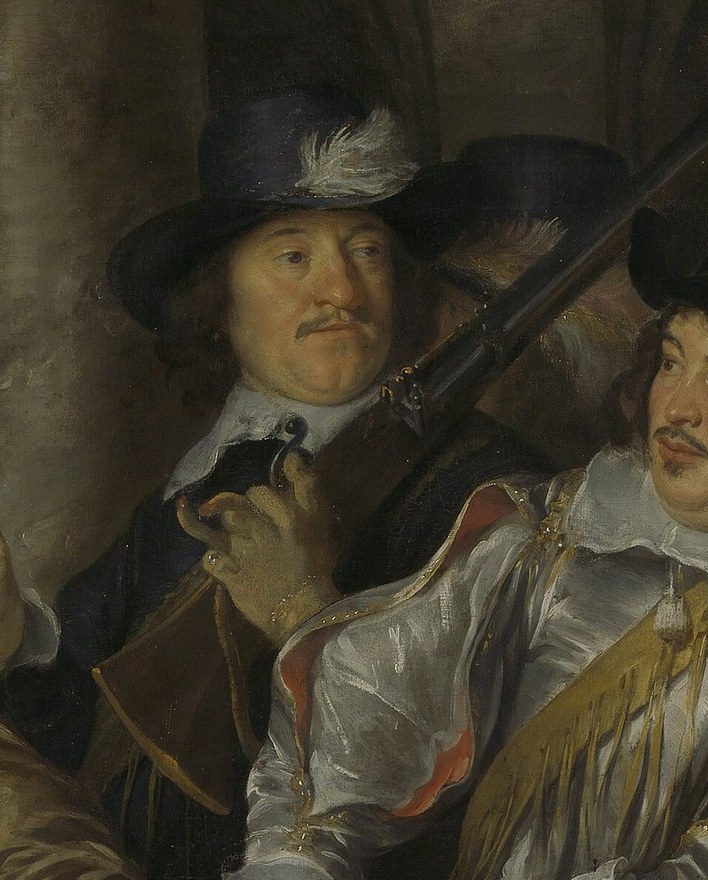
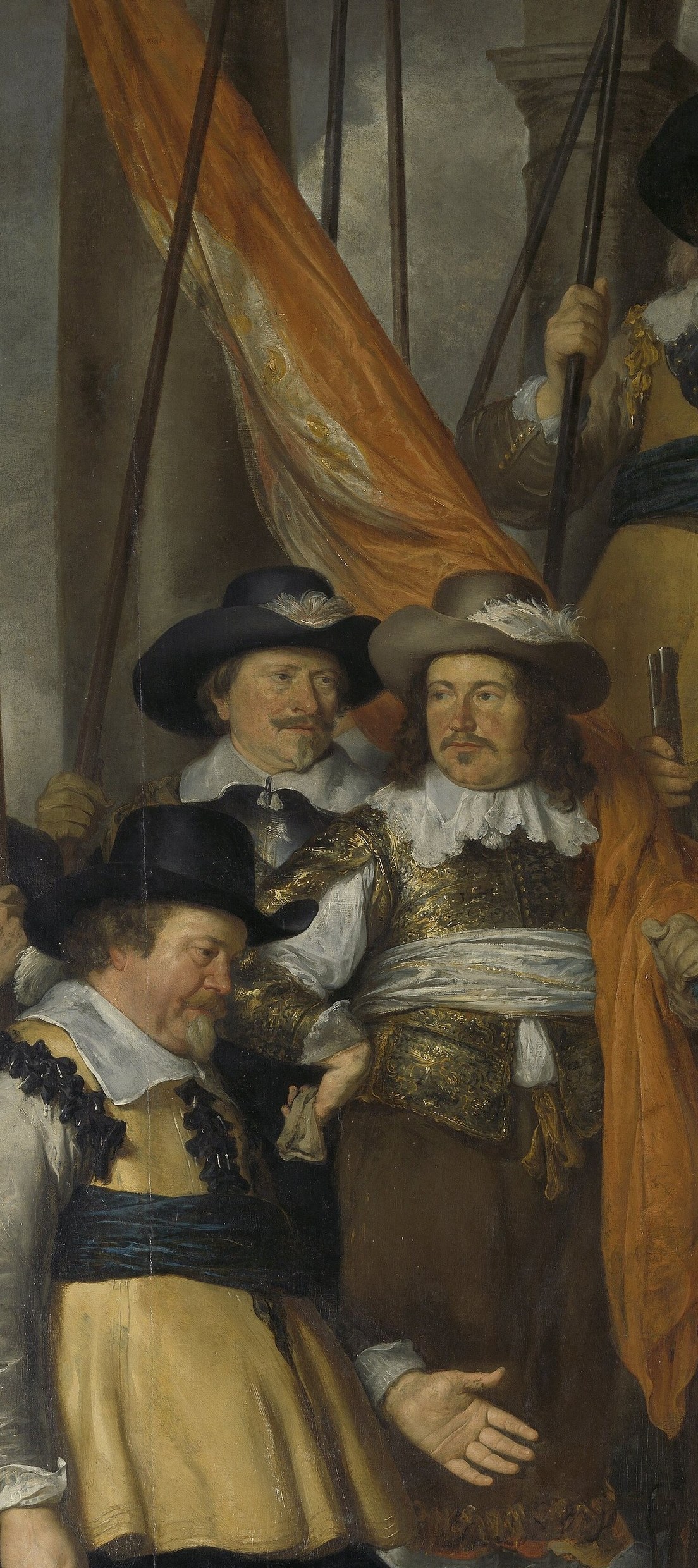
Notice the contrast between Captain Bas's direct gaze and Lieutenant Conijn's more relaxed, sideways glance. Each man, from the halberd bearer to the rifle bearer, contributes to a dynamic scene. The prominent orange flag symbolizes Dutch pride and unity, a key element of the era.
These large-scale civic guard portraits were commissioned by the companies themselves, displayed in their meeting halls. They served as both a record of members and a symbol of communal identity during the Dutch Golden Age. Flinck, a student of Rembrandt, masterfully blends dramatic lighting with a more elegant style, creating a lively snapshot rather than a stiff formality.
Look closely at the seated officer's contemplative expression and folded hands. What do you imagine his story to be amidst this company of men?
Details
Transcript
In 1645, this painter captured an Amsterdam civic guard company. Captain Albert Bas looks directly at us, with purpose. Lieutenant Lucas Conijn, by contrast, glances sideways, more relaxed. This orange flag, held proudly, symbolized Dutch unity. His ornate collar displays the Captain's status and wealth. But the seated officer's folded hands tell a different story. He seems to be calmly reflecting, an older, wiser man.