A Crow Chief, a Warrior, and His Wife by Catlin, George
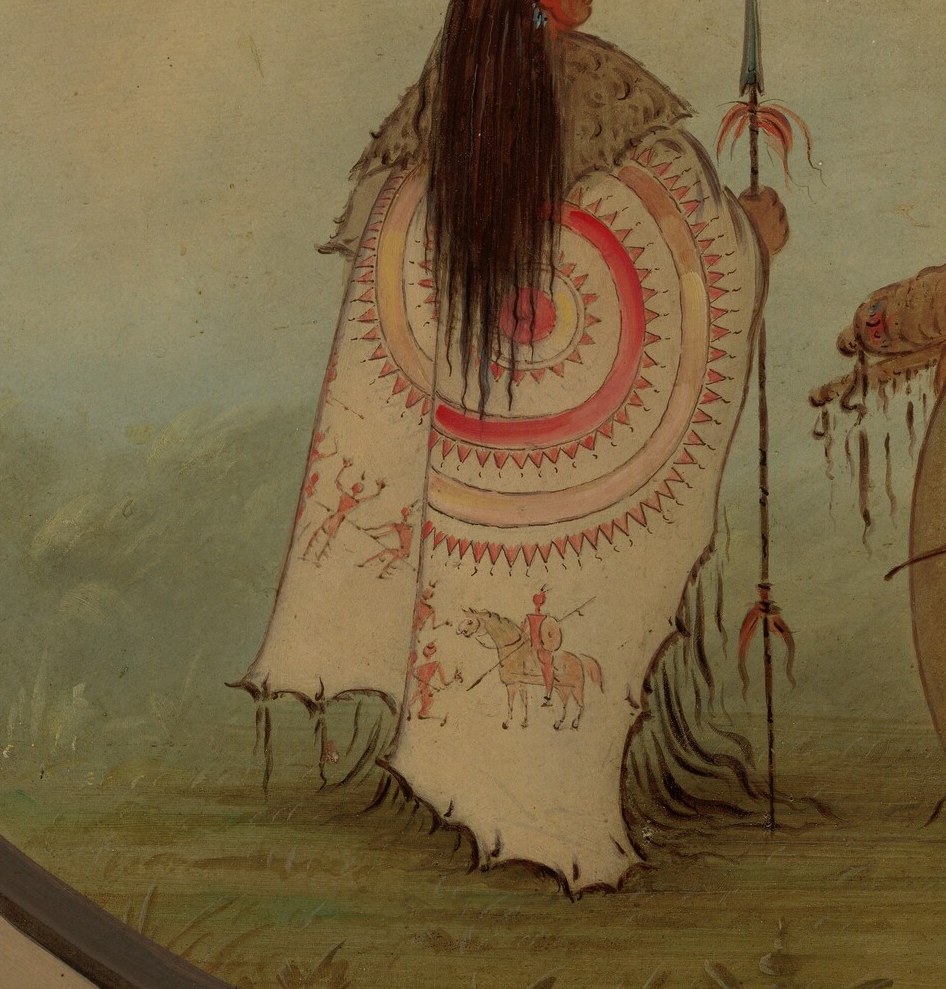
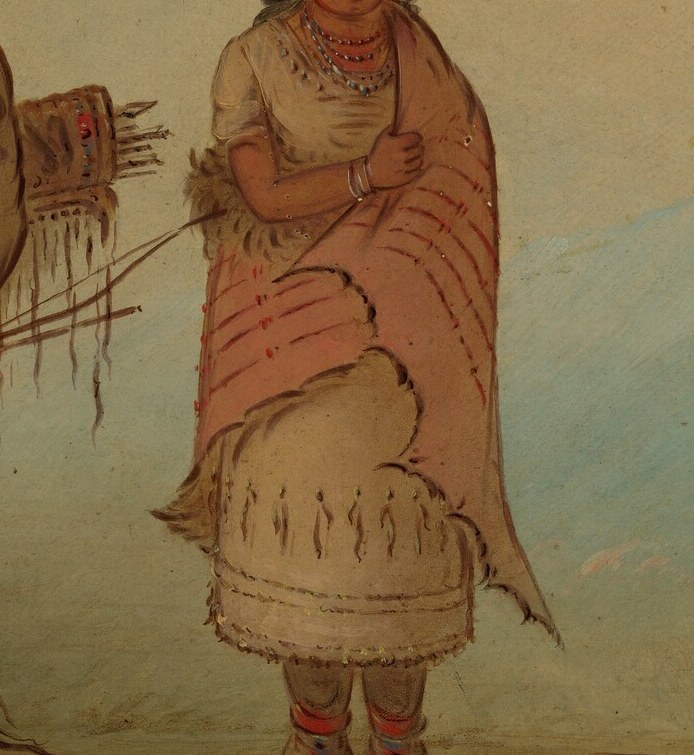
This is George Catlin's 1862 painting 'A Crow Chief, a Warrior, and His Wife,' a work that operates as both a portrait and a visual record. Catlin, who made five expeditions into the American West in the 1830s, dedicated his life to documenting Plains Indian life through writing and painting before it was irrevocably altered.
Look at the shield first. It is not merely armor. Its painted symbols served as an autobiographical record of a warrior's deeds in battle and the spiritual protections he carried. Then shift your eye to the feathered headdress. Every eagle feather was a witnessed, earned honor. The geometric animals woven into the robe tell a similar story of lineage and identity.
Painted in oil on a modest piece of card mounted to paperboard, the work's oval format draws you into this intimate assembly of leadership, martial prowess, and family. Together, the chief's shield, his headdress, and the robe form a complete public identity, a silent language meant to be read by all.
Catlin believed a people's dignity and history were held in these objects. What do you notice in the regalia that you might have passed by before?
Details
Transcript
A chief, a warrior, and his wife. Not just a portrait. Catlin documented Plains cultures, but he also encoded them. His circular shield is a personal manifesto. The symbols announce his war deeds and spirit guardians. Now the robe. Those geometric animals are a family history. The feathers on his head are not decoration alone. Each eagle feather is a recorded act of courage, worn for all to read. A complete identity, told without a single written word.