The Temptation of Christ by Juan de Flandes
View the artwork: The Temptation of Christ →
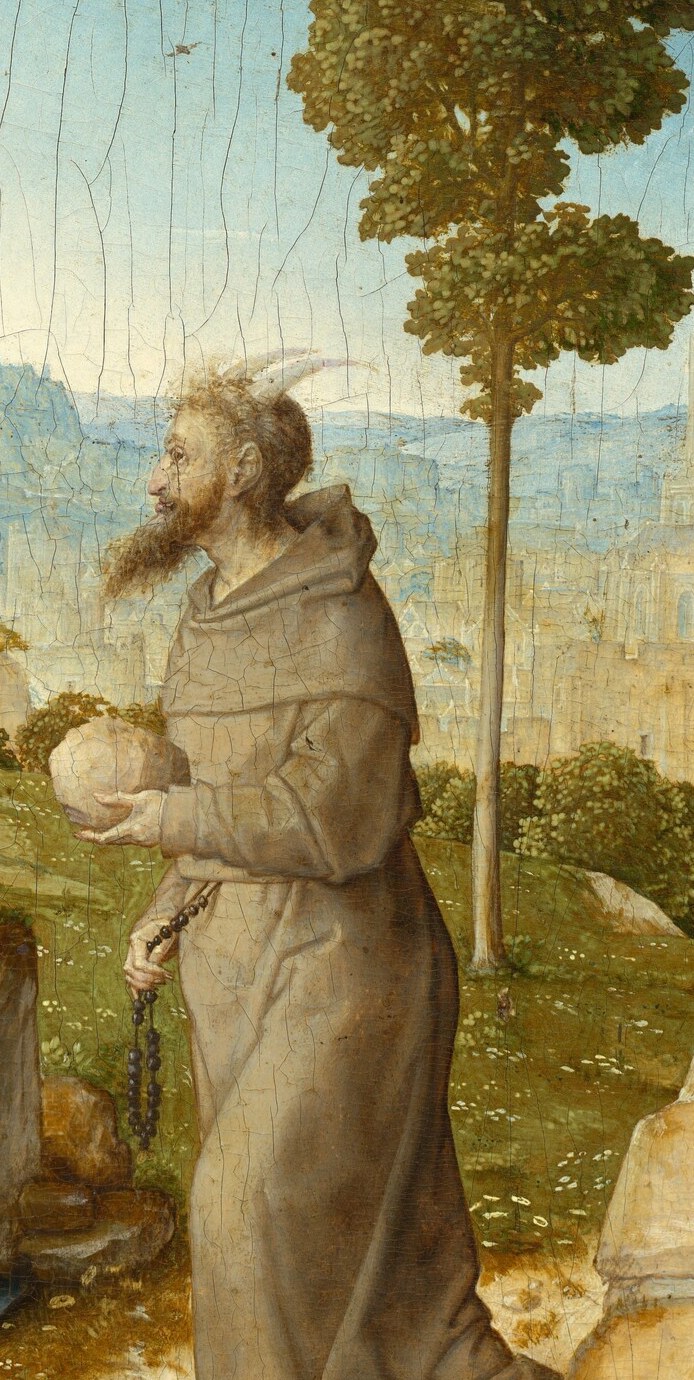
A monk offers Christ a stone disguised as bread. This tiny panel, The Temptation of Christ by Juan de Flandes (c. 1500-1504), was a private devotional tool for Queen Isabella I of Castile, and it hides its most startling details in plain sight.
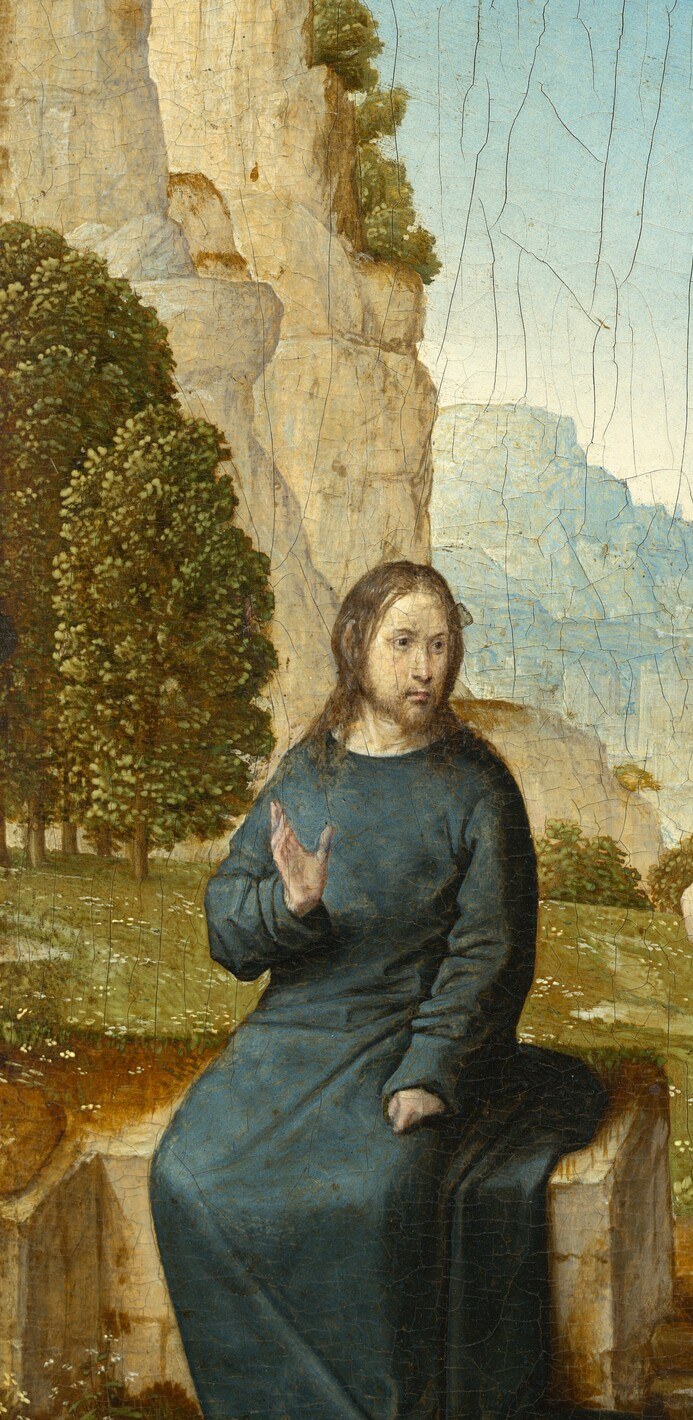
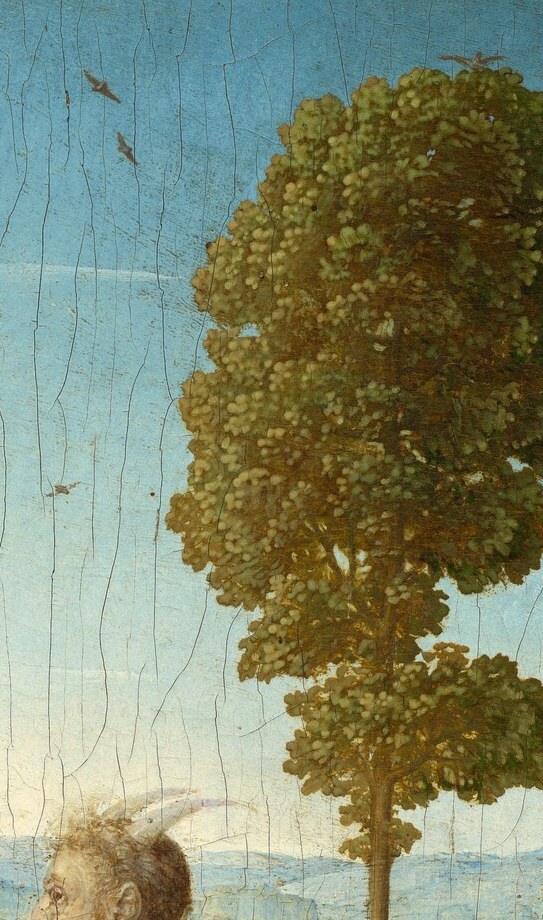
Look first at the tempter. His clerical robes would have looked familiar and trustworthy to a contemporary viewer, but two small horns sprout from his forehead, confirming his true identity. His rosary beads are not an aid to prayer but a prop in a performance. Even the bread he holds is not sustenance but a test, a physical temptation after forty days of fasting. Christ's raised hand is the still center of the storm, a gesture that refuses the entire scene.
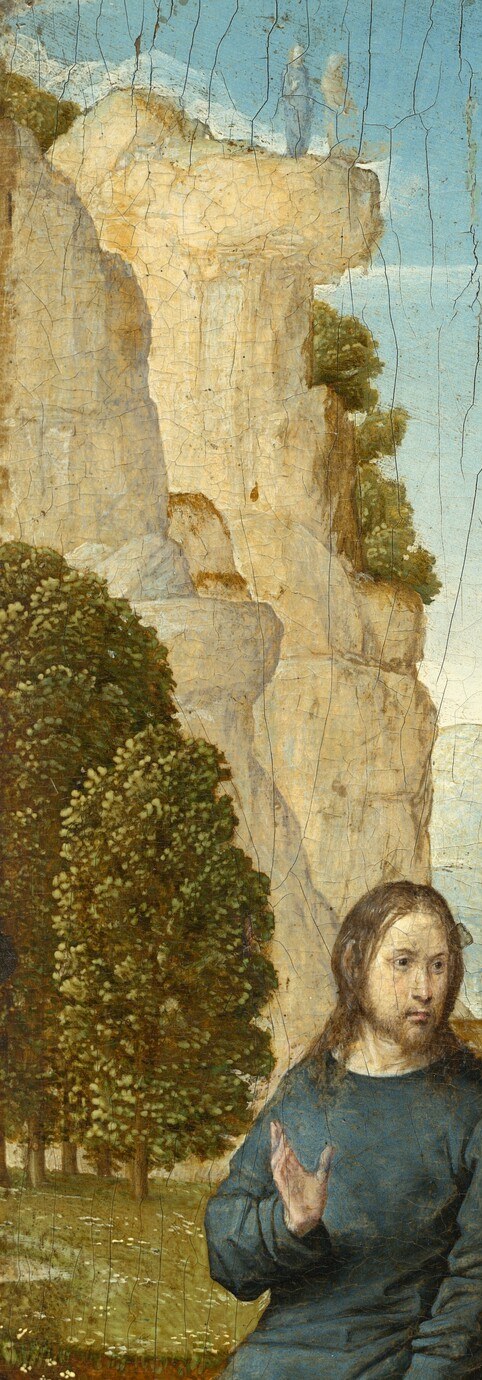
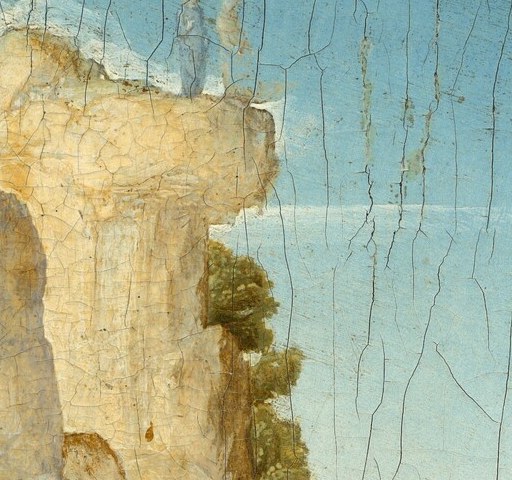
The panel is barely larger than a postcard. Juan de Flandes, trained in the meticulous Flemish tradition, painted every rock and fold of drapery with jewel-like precision. He was the court painter to Isabella, and this was one of forty-seven tiny panels that made up a personal altarpiece she could carry with her. After her death, it passed through the hands of Habsburg emperors and Spanish kings, surviving the French invasion of Spain before surfacing in Rome and eventually finding a home at the National Gallery of Art.
Seen up close, the devil's costume is a coded warning: evil does not arrive with a roar but with a familiar face and a reasonable offer. What looks like piety can be something else entirely.
#arthistory #renaissance #juan_de_flandes
Details
Transcript
He came disguised as a monk. The horns give him away. He offers bread, but it's a trap. He clutches rosary beads, mocking prayer. Flandes packed the code into 21 centimeters. A jewel made for a queen's private prayer.