On Point by Arthur Fitzwilliam Tait
Arthur Fitzwilliam Tait, a prominent British-American artist, captured a quiet moment of post-hunt reflection in his 1874 oil on wood painting, On Point. This work, held in a private collection, showcases his mastery of wildlife scenes.
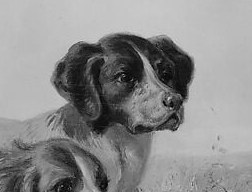
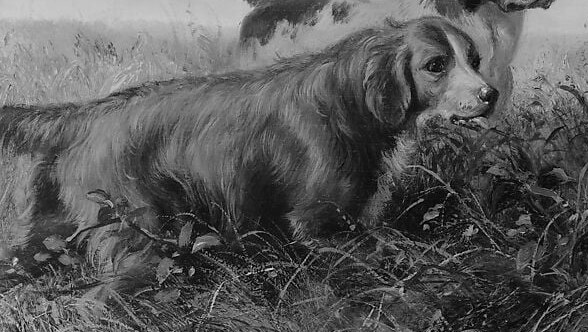
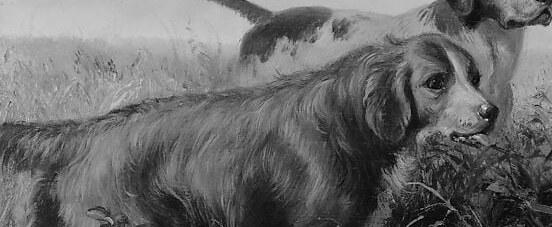
Observe the subtle details: a pointer dog stands alert, while a retriever dog gently places its paw on a fallen quail. The stillness of the scene, particularly the retriever's calm demeanor, emphasizes trained obedience and the aftermath of the hunt, rather than the act of the kill itself.
Tait, closely associated with New York City's art scene, frequently explored hunting themes. His meticulous attention to detail and ability to convey atmosphere place this painting within the American Impressionism movement, reflecting a focus on specific visual effects.
What do these quiet moments of nature and animal interaction reveal to you?
Details
Transcript
This painter was known for wildlife scenes, like this one from 1874. One dog points, guiding the hunter's eye. The other retrieves, its paw gently on the bird. Its quiet posture shows trained obedience, not struggle. The fallen bird, a quail, is the hunt's still focal point. This stillness, not violence, is what the painter emphasized.