Elizabeth Oakes Prince Smith (Mrs. Seba Smith) by Paradise, John Wesley
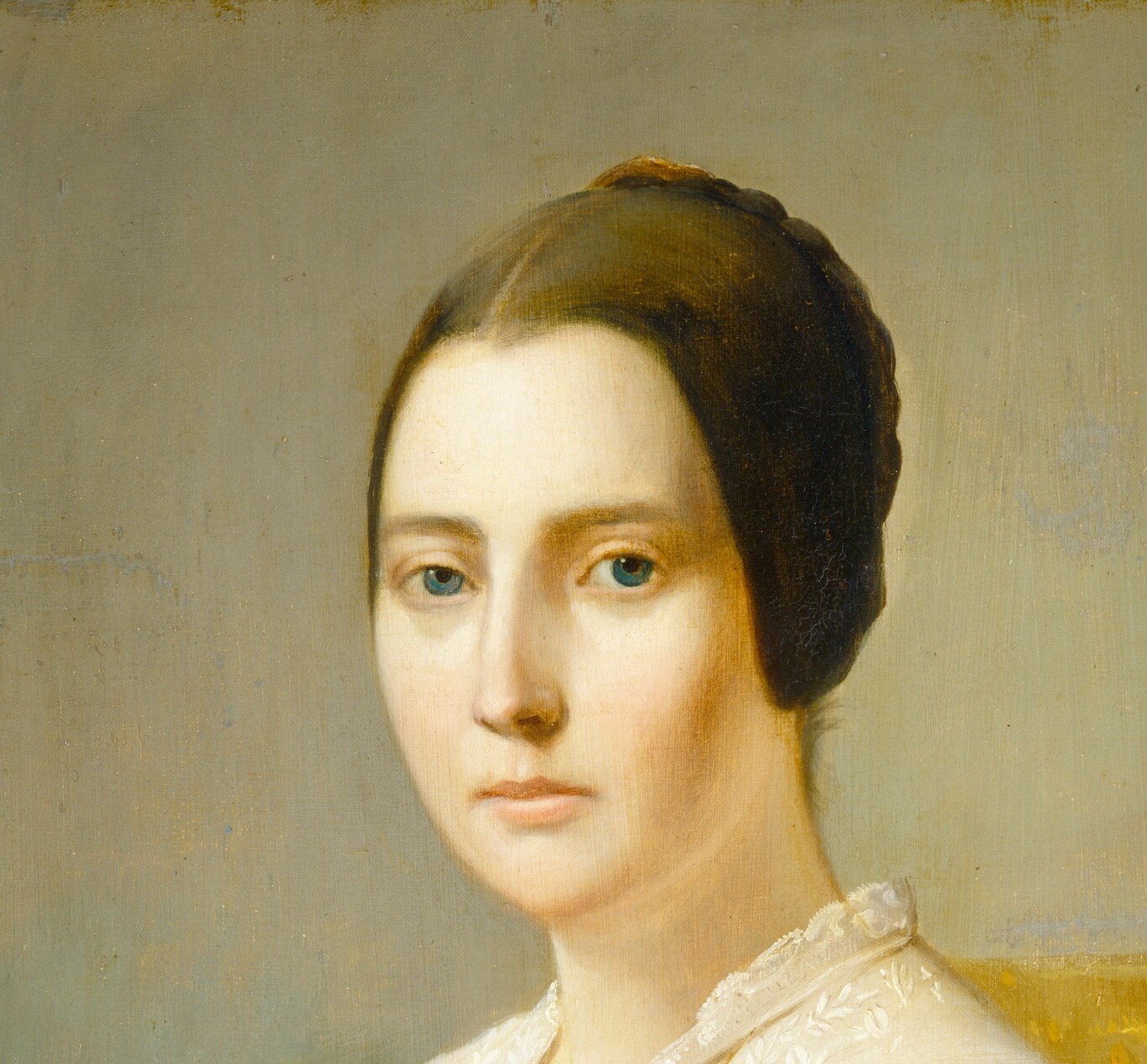
This is Elizabeth Oakes Smith, a celebrated 19th-century American poet, novelist, and women's rights activist, painted by John Wesley Paradise around 1845.
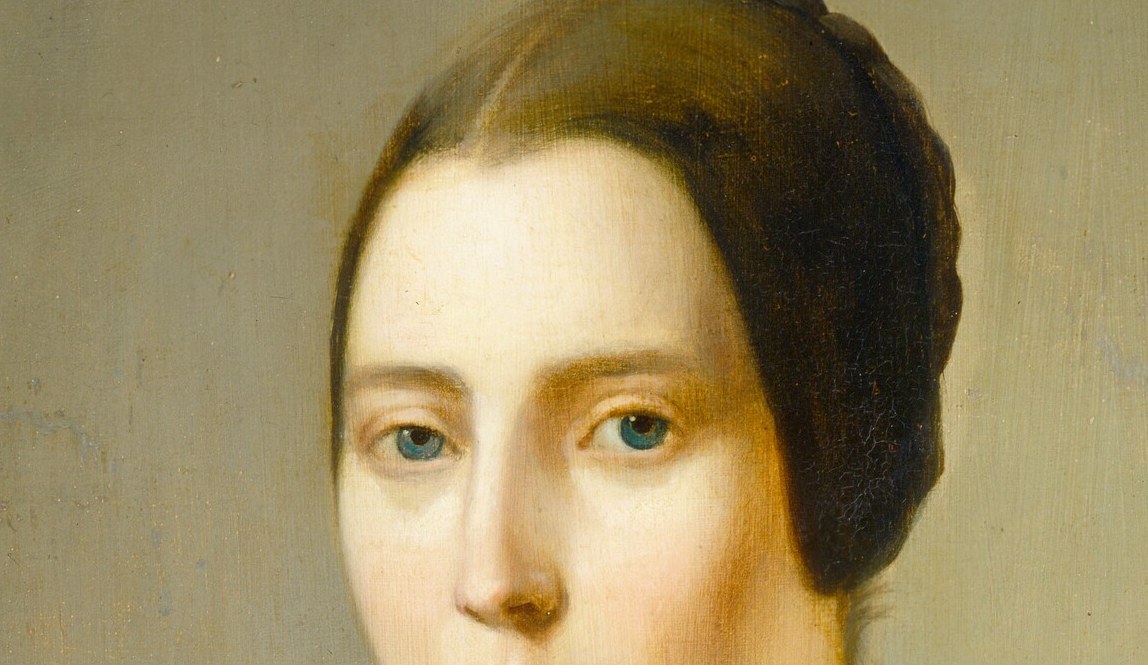
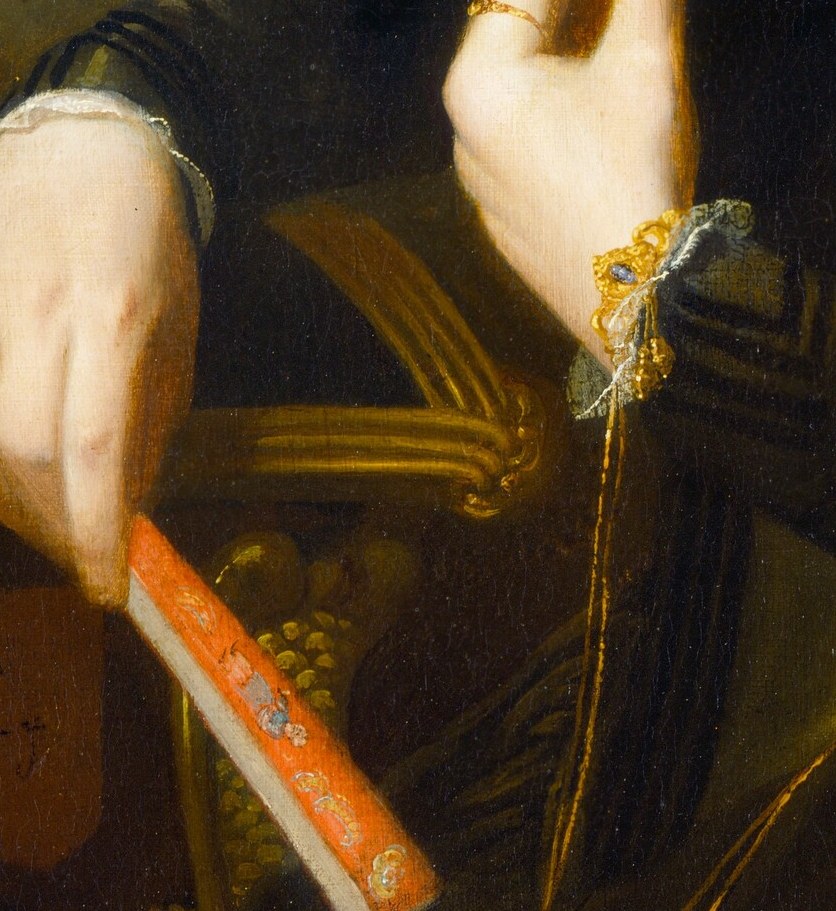
Look at her eyes. In the 1840s, it was unusual for a woman's portrait to meet the viewer's gaze with such direct, unwavering composure. The red brooch at her neck was not merely decorative; it was a conventional signal of passion and self-expression. In her right hand, she holds a folded fan, a prop associated with parlor conversation, but her left hand rests casually beside a book, anchoring her identity firmly in the world of letters.
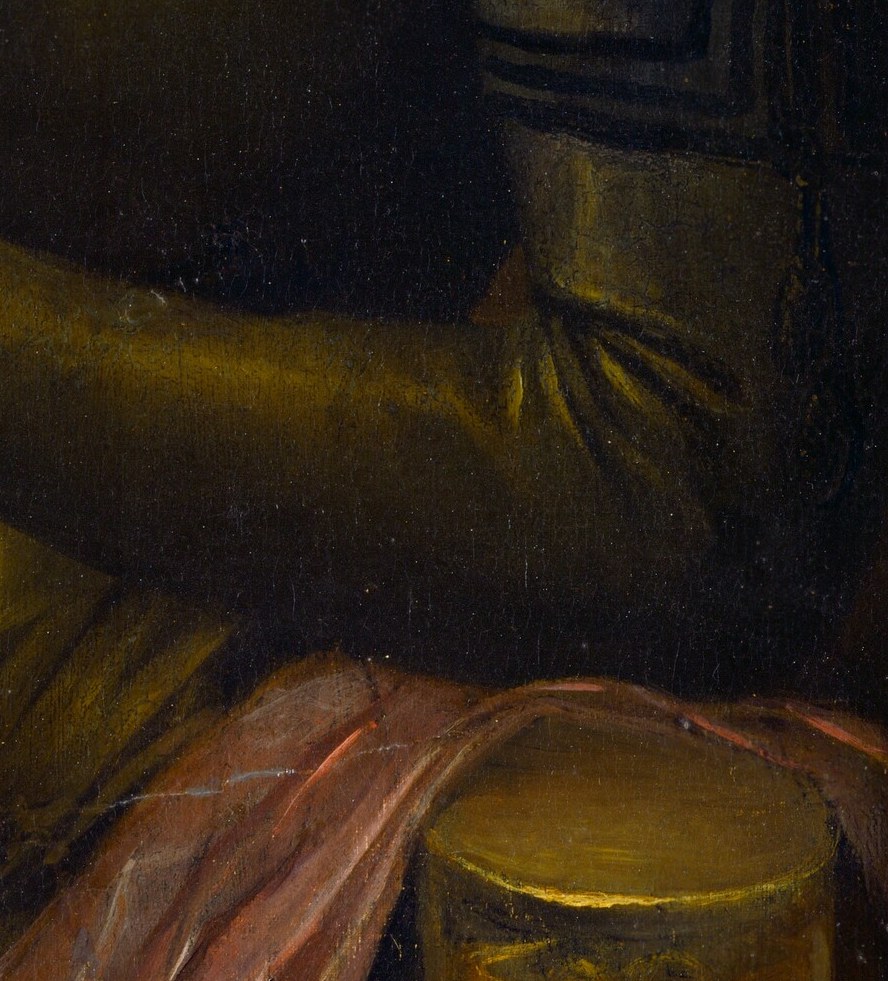
Elizabeth Oakes Smith was a public intellectual who lectured on women's rights and published widely. Paradise painted her not as a decorative figure but as a working writer. The deep shadow in the lower left corner of the canvas subdues the domestic space, a compositional choice that pushes the focus entirely onto her face and her mind.
A portrait that uses every symbolic tool available to insist: this is a woman who thought, wrote, and demanded to be seen on her own terms.
Details
Transcript
Her gaze is a challenge, not an invitation. In the 1840s, women were rarely painted staring back. A red brooch: the only flash of color in a sober dress. For a woman speaking publicly, red meant passion and power. She holds a fan, the tool of coded social conversation. But her other hand rests near a writer's prop: a book. The dark shadow below her might have hidden a domestic scene. She chose to be remembered as a mind, not a wife.