Calm Sea by Courbet, Gustave
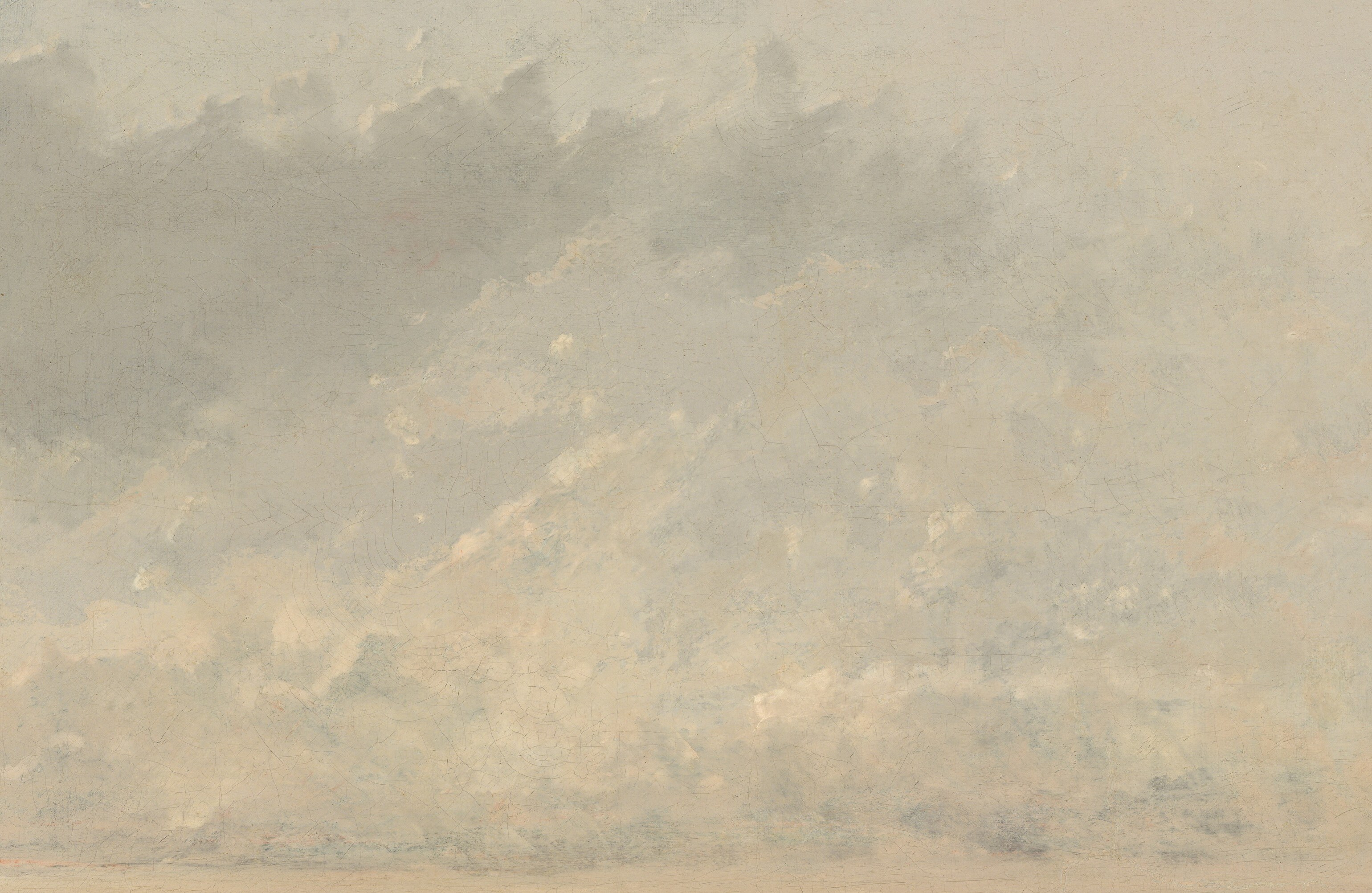
Gustave Courbet's *Calm Sea*, painted in 1866 and now housed at the Metropolitan Museum of Art, exemplifies the artist's dedication to Realism. Courbet, a leading figure of the movement, sought to depict the world as he saw it, rejecting the idealized subjects favored by earlier Romantic and academic traditions.
In this serene seascape, observe the delicate play of light across the water and the gentle breaking waves on the shore. Courbet's visible brushwork in the sky and sand reveals his direct engagement with the material, grounding the scene in tangible reality rather than grand embellishment.
Courbet's revolutionary approach, focusing on ordinary subjects and direct observation, significantly influenced later art movements like Impressionism. He believed in the unvarnished truth of contemporary life, even if it meant challenging established artistic conventions.
What details in this painting draw your eye the most?
Details



Transcript
Gustave Courbet painted this quiet scene in 1866. He was a leader of Realism, painting only what he could see. Notice the subtle light reflecting on the water's surface. This meticulous attention captures nature's inherent serenity. His brushstrokes reveal the painter's hand and the paint itself. Courbet rejected grand narratives for simple, observable beauty.